
newest posts
CLASSIC TEXTS
VOCAB TEXTS

tandem: Argonauts #20
tandem -finally at lastThe adverb tandem, often translated as ‘finally’ or ‘at last’, functions as more than mere temporal punctuation in classical Latin. It frequently carries emotional weight, signifying relief, frustration, or anticipation reaching its resolution. The nuanced tone of tandem is context-bound—sometimes celebratory, sometimes bitter, occasionally ironic. Cicero uses tandem with rhetorical flair, particularly when driving home the culmination of an argument or exposing delayed...
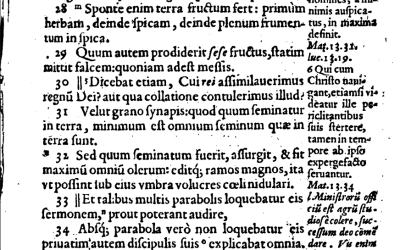
terra: Mark 4 v28-34
terra - land not cottaThe Latin noun terra—meaning ‘earth,’ ‘land,’ or ‘ground’—functions in the Vulgate as both a geographic and theological canvas. Jerome’s rendering infuses terra with layers of meaning that move between mundane soil and sacred significance, capturing the tensions and harmonies of divine interaction with creation. In its most basic use, terra designates the physical world. It appears in terra et mare to encompass the totality of the inhabited globe, often in contrast to the...

rupes: Virgil Aeneid Book 1 Line 310
sacerdos - either male or female In Latin, sacerdos refers to a priest or priestess, a compound of sacer (sacred) and dare (to give)—thus, one who offers sacred things or mediates between the divine and human. It is a gender-inclusive third-declension noun, used for both male and female religious officials, though authors might specify gender as sacerdos vir or sacerdos femina when needed. In Roman culture, the sacerdos held both civic and spiritual authority. Priests were not set apart as a...

refero (in Catilinam 19)
refero - bring it backThe verb refero, meaning ‘to bring back’, ‘to report’, or ‘to relate’, is densely woven into the rhetorical and narrative texture of classical Latin literature. It is a compound of fero with the prefix re-, marking return or repetition, and its usage ranges from formal communication to interpretive reflection. In Cicero, refero is central to the political lexicon. During Senate debates, to referre ad senatum meant to formally present a matter for deliberation. In In...
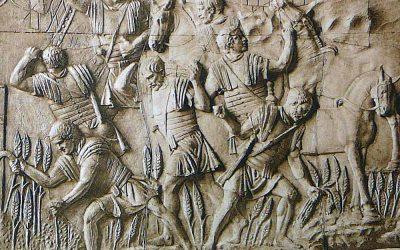
Caesar dBG Bk1 Ch16 frumentum
frumentum - an allowance The Latin word frumentum denotes grain, especially wheat, and by extension refers to a vital resource: food supply for both civilian and military populations. In Caesar’s writings—most notably Commentarii de Bello Gallico—frumentum appears frequently, not as a neutral term, but as a strategic and political instrument. Caesar uses frumentum to illuminate the logistical concerns of warfare. Armies depended on regular access to grain, and controlling frumentum...

filius: Argonauts #19
filius - my sonThe noun filius, meaning ‘son’, occupies a central position in Roman thought, often entwined with legal identity, moral duty, lineage, and political expectation. Its appearances in classical texts are rarely incidental; filius marks both familial relationships and the transmission of values, status, and conflict. In Cicero’s speeches, filius carries juridical and rhetorical significance. In Pro Caelio, Cicero frames Caelius as filius not only of a biological father, but of Roman...
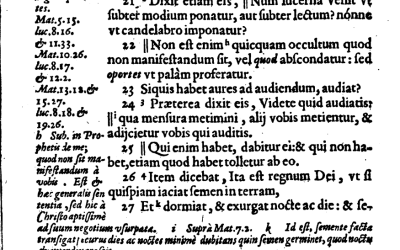
pono: Mark 4 v21-27
pono - put it in placeThe Latin verb pono—meaning ‘to place,’ ‘put,’ ‘lay,’ or ‘establish’—holds exceptional utility and nuance in the text of the Vulgate. Deriving from a foundational semantic field of physical placement, pono stretches well beyond literal spatial arrangements and into the theological, moral, and rhetorical terrain of Jerome’s translation. In straightforward narrative contexts, pono frequently describes physical positioning. Christ is described as positus in praesepio—laid in...

asper: Virgil Aeneid Book 1 Line 291
asper - take the rough with the smooth The word asper—meaning ‘rough’, ‘harsh’, or ‘fierce’—appears prominently in Vergilian verse, particularly in the Aeneid, where it carries tactile, emotional, and moral resonance. Far from being limited to texture, asper in Vergil signals conflict, resistance, and the hostility that characters endure or embody. In Book I, Juno is described as aspera, a characterization that reflects not only divine anger but volatile intensity. Her opposition to Aeneas is...
receptus (in Catilinam 18)
receptus - are you receiving me? The Latin word receptus, derived from the verb recipio, functions both as a noun meaning ‘retreat’, ‘shelter’, or ‘haven’, and as a participle denoting the act of receiving or having been received. Cicero’s prose utilizes both meanings with distinct rhetorical intention, shaping arguments around refuge, acceptance, and strategic withdrawal. In his speeches and legal defenses, Cicero uses receptus to highlight civic protection and ethical asylum. In Pro Sestio,...

Caesar dBG Bk1 Ch15 moveo
moveo - move along please!The Latin verb moveo is fundamentally a word of action, but its literary applications reach far beyond physical motion. It appears frequently across genres as a mechanism to express emotional, rhetorical, and transformative force. In epic poetry, Virgil employs moveo to indicate divine manipulation and emotional disturbance. When Juno unleashes the storm upon Aeneas in Book I of the Aeneid, the waves are motus not just by wind, but by divine wrath. Later, Dido's inner...

mora: Argonauts #18
mora - delays are a hindranceIn Latin, mora is a feminine noun of the first declension meaning 'delay', 'pause', or 'hindrance'. Its forms include mora, morae, morae, moram, morā in the singular and morae, morarum, moris, moras, moris in the plural. The word derives from the verb morari, meaning 'to delay' or 'to linger', and is closely tied to concepts of time, hesitation, and interruption in classical literature. In Roman prose, mora frequently appears in military and political contexts....
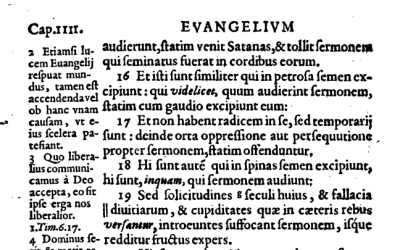
deinde: Mark 4 v14-20
deinde - then, who is next?In Latin, deinde is an adverb meaning 'then', 'next', or 'afterwards', and it plays a vital role in structuring narrative, argument, and sequence across classical literature. Formed from the preposition de ('from') and the demonstrative inde ('from there'), deinde literally means 'from that point' and is used to indicate temporal or logical progression. In prose, deinde is a staple of historical and rhetorical writing. Caesar frequently uses it in Commentarii de...
NEW POSTS
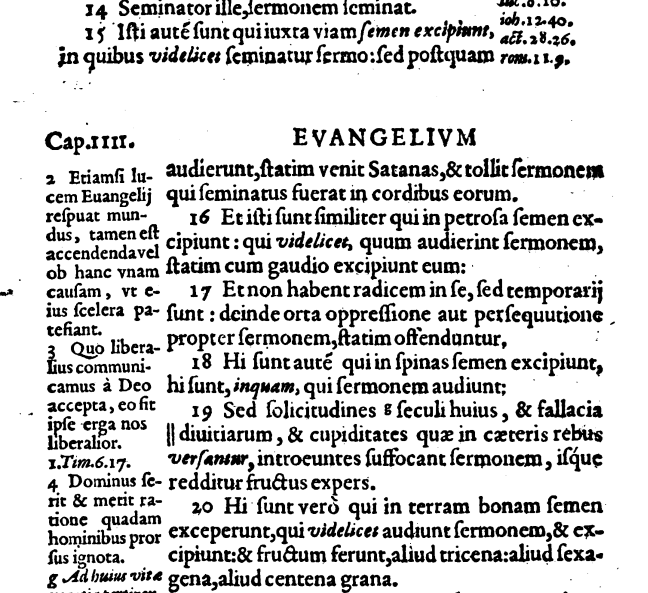
deinde: Mark 4 v14-20
deinde - then, who is next?In Latin, deinde is an adverb meaning 'then', 'next', or 'afterwards', and it plays a vital role in structuring narrative, argument, and sequence across classical...

sacerdos: Virgil Aeneid Book 1 Line 272
sacerdos - either male or female In Latin, sacerdos refers to a priest or priestess, a compound of sacer (sacred) and dare (to give)—thus, one who offers sacred things or mediates between the divine...

quaestio (in Catilinam 17)
quaestio - what do you want to know?In Latin, quaestio primarily means ‘question,’ ‘inquiry,’ or ‘investigation,’ originating from the verb quaerere—‘to seek’ or ‘to ask.’ Its scope extends far...

Caesar dBG Bk1 Ch14.3 victoria
Victoria In Latin, victoria means victory, triumph, or conquest, and it holds a central place in Roman cultural, military, and religious life. A first-declension feminine noun, its forms include...

Animus: Argonauts #17
animus - it's all in the mindIn Latin, animus is a rich and multifaceted noun meaning 'mind', 'spirit', 'soul', or 'intellect'. It belongs to the second declension and is masculine: animus, animi,...
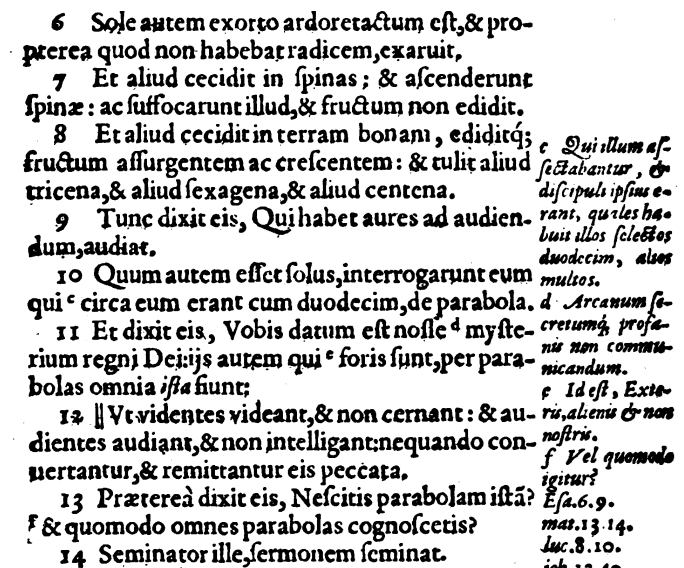
radix: Mark 4 v6-13
radix - the root of all thingsIn Latin, radix means 'root' and serves both literal and metaphorical functions across classical literature. A third-declension feminine noun, its forms include radix,...

tempestas: Virgil Aeneid Book 1 Line 254
tempestas - in a teacup?In Latin, tempestas primarily means ‘storm’ or ‘weather,’ but its semantic range extends to include ‘season,’ ‘period of time,’ or even metaphorical ‘turmoil.’ As a feminine...

conscientia (in Catilinam 16)
conscientia - you know it! In classical Latin literature, the term conscientia holds layered significance, ranging from internal moral awareness to shared knowledge or complicity. Derived from...

Caesar dBG Bk1 Ch13.5 Pater
Pater In Roman classical literature, the concept of 'pater'—Latin for father—embodied far more than biological parenthood. It was a symbol of authority, duty, and moral leadership, deeply woven into...

Lux: Argonauts #16
lux The Latin noun lux (gen. lucis) belongs to the third declension and means ‘light,’ ‘daylight,’ or ‘brightness,’ both in a physical and metaphorical sense. As a fundamental concept in Roman...
mater: Mark 3 v33-4 v5
mater - motherThe Latin noun mater, meaning 'mother', is a first declension feminine noun with the genitive form matris. Its use spans classical, medieval, and ecclesiastical Latin, often reflecting...

tristis: Virgil Aeneid Book 1 Line 238
tristis - it's a sad dayThe Latin adjective tristis, triste (third declension) conveys meanings of 'sad', 'gloomy', 'mournful', or even 'harsh' and 'dreadful'. It carries emotional and atmospheric...

ante (in Catilinam 15)
ante - Let's up it!The Latin preposition ante (meaning 'before' or 'in front of') is fundamental in both spatial and temporal contexts. Derived from an ancient Indo-European root signifying...

Caesar dBG Bk1 Ch13.2 Divico
Divico Divico, a prominent leader of the Helvetii tribe, emerges in Julius Caesar's Commentarii de Bello Gallico as a symbol of Gallic pride, tenacity, and tragic defiance. He is remembered for his...

Absyrtus: Argonauts #15
Absyrtus Absyrtus, a lesser-known but pivotal figure in Greek mythology, played a tragic role in the escape of Jason and Medea following their theft of the Golden Fleece. As the son of King Aeëtes...
non: in Catilinam (17) Vocab
non - no, no, noIn Latin, non is the principal negation particle, meaning ‘not.’ It is an indeclinable adverb that directly negates verbs, adjectives, or entire clauses. Syntactically, it most commonly precedes the word it negates—non venit (‘he...
tam: Caesar dBG Bk1 Ch14.3 Vocab
tam - so much to do The Latin adverb tam is a versatile and frequently used word that expresses intensity or degree. It is typically translated as 'so', 'to such a degree', or 'as much'. Grammatically, tam is most often used in correlation with...
gero: Argonauts #17 Vocab
gero - bear it or wear it!In Latin, gero is a third-conjugation verb meaning 'to carry', 'to bear', 'to wear', or more broadly, 'to conduct', 'to manage', or 'to wage'. Its principal parts are gero, gerere, gessi, gestum, and it is highly...
alius: Mark 4 v6-13 Vocab
alius - another is differentIn Latin, alius is an adjective meaning 'other', 'another', or 'different'. It belongs to the pronominal group of first and second declension adjectives, but its declension is irregular in some forms. The nominative...
atque: Virgil Aeneid Book 1 Line 254 (Vocab)
atque - and thenIn Latin grammar, atque is a coordinating conjunction meaning ‘and,’ ‘and also,’ or more emphatically, ‘and even.’ It is largely synonymous with et, but carries distinct rhetorical and syntactic weight, often used for stylistic...
omnis: in Catilinam (16) Vocab
omnis - a bit of everything In Latin grammar, omnis plays a vital role as an adjective meaning ‘all,’ ‘every,’ or ‘entire.’ It is a third-declension adjective with forms for gender and number: omnis (masculine/feminine singular), omne (neuter...
se: Caesar dBG Bk1 Ch13.5 Vocab
se - time for reflectionIn classical Latin, the reflexive pronoun se is a third-person form used to indicate that the subject of a clause is also the object of the action. It has no nominative case, as it cannot serve as the subject. Its forms...
dies: Argonauts #16 Vocab
dies- name the dayThe Latin noun dies (genitive diei) belongs to the rare fifth declension and denotes the period of daylight or a calendar day. Although most fifth-declension nouns are feminine, dies can be either masculine or feminine: classical...
quando: Mark 3 v33-4 v5 Vocab
quando - when o when? The Latin word quando is an adverb and conjunction meaning 'when'. In both Classical and Ecclesiastical Latin, it plays an important role in temporal expressions and conditional clauses, showing flexibility in tone, structure,...
equidem: Virgil Aeneid Book 1 Line 238 (Vocab)
equidem - enough indeedThe Latin word equidem is an emphatic adverb meaning 'indeed', 'certainly', or 'for my part'. It is often used to reinforce a speaker's assertion, adding conviction or sincerity to a statement. While equidem is typically...
ex: in Catilinam (15) Vocab
ex - but not a partnerThe Latin preposition ex (sometimes shortened to e before consonants) is a fundamental word meaning 'out of', 'from', or 'by'. Governed by the ablative case, ex denotes separation, origin, or cause, making it an essential tool...
adventus: Caesar dBG Bk1 Ch13.2 Vocab
adventus - sudden arrivalThe Latin noun adventus (fourth declension, masculine) means 'arrival' or 'coming', derived from the verb advenire—'to come to' or 'arrive'. It carries a sense of significant presence, often applied to the arrival of a...
ubi: Argonauts #15 Vocab
ubi - where or when?The Latin word ubi, meaning 'where', plays a crucial role in expressing location, time, and condition in Classical Latin. As a relative or interrogative adverb, ubi is primarily used to ask or specify the place in which...
si: Mark 3 v24-32 Vocab
si - condition, conditionThe Latin word si is a cornerstone of conditional expressions, typically translated as ‘if.’ Its usage spans both Classical and Vulgate Latin, though with subtle shifts in nuance and frequency. In Classical Latin,...
acer: Virgil Aeneid Book 1 Line 220 (Vocab)
acer - are you sharp enough? The Latin adjective acer, acris, acre is a third-declension adjective meaning 'sharp', 'fierce', 'keen', or 'vigorous'. It is often associated with intensity, whether in physical sharpness, mental acuity, or emotional...