
asper - take the rough with the smooth
The word asper—meaning ‘rough’, ‘harsh’, or ‘fierce’—appears prominently in Vergilian verse, particularly in the Aeneid, where it carries tactile, emotional, and moral resonance. Far from being limited to texture, asper in Vergil signals conflict, resistance, and the hostility that characters endure or embody.
In Book I, Juno is described as aspera, a characterization that reflects not only divine anger but volatile intensity. Her opposition to Aeneas is marked by aspera saevae memoresque irae, emphasizing that divine vengeance is neither soft nor transient. This use frames asper as a force that shapes fate itself.
The landscapes Aeneas traverses are also asper, such as aspera terra, which conveys not just physical difficulty but an antagonistic environment. Nature, like the gods, resists him. By calling the terrain asper, Vergil does more than describe geography—he casts the journey as morally and cosmologically fraught.
Characters themselves can be asper, and this quality often correlates with martial strength. Turnus is repeatedly called asper, a signal of his uncompromising valor and rigid pride. When Vergil refers to asper Turnus, he suggests not only belligerence but a tragic inability to bend—a trait that both distinguishes and condemns him.
Even abstract entities, such as fate or war, may bear the mark of asper. The battles are aspera, and so are the emotions that drive them. When Vergil writes of aspera bella, he fuses the violence of war with its emotional toll.
Vergil uses asper with deliberate variation: gods, men, land, and fate all wear its edge. It signals hardness without simplicity, aligning external resistance with internal struggle. Across his epic landscape, asper gives form to adversity—defining what is endured, what must be overcome, and what refuses to yield.
Today's Artwork:
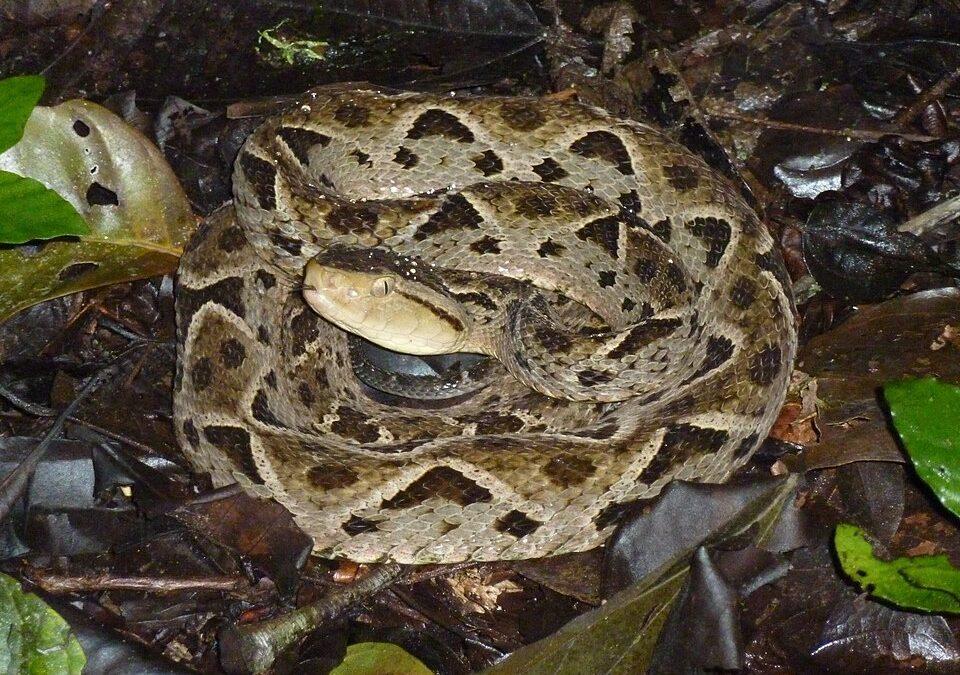
Image: Pit Viper - Bothrops asper Bothrops, comes from the Greek words bothros and ops, which mean 'pit' and 'face' (or 'eye'), respectively. This is a reference to these snakes' highly sensitive heat-detecting pit organs. The specific epithet, asper, which is a Latin word meaning 'rough' or 'harsh', may allude to the species' keeled dorsal scales
Source: wikipedia.org
Here is a text only version. (See below for an interactive version)
Aspera tum positis mitescent saecula bellis;
cana Fides, et Vesta, Remo cum fratre Quirinus,
iura dabunt; dirae ferro et compagibus artis
claudentur Belli portae; Furor impius intus,
saeva sedens super arma, et centum vinctus aenis
post tergum nodis, fremet horridus ore cruento.”
Haec ait, et Maia genitum demittit ab alto,
ut terrae, utque novae pateant Karthaginis arces
hospitio Teucris, ne fati nescia Dido
finibus arceret: volat ille per aera magnum
remigio alarum, ac Libyae citus adstitit oris.
Et iam iussa facit, ponuntque ferocia Poeni
corda volente deo; in primis regina quietum
accipit in Teucros animum mentemque benignam.
At pius Aeneas, per noctem plurima volvens,
ut primum lux alma data est, exire locosque
explorare novos, quas vento accesserit oras,
qui teneant, nam inculta videt, hominesne feraene,
quaerere constituit, sociisque exacta referre.
Need Help Understanding the Latin?
You might find it helpful to start with the Side-by-Side Version which allows you to see my own very literal translation of the text which is almost a word-for-word translation - in an attempt to make it easier to understand the Latin!
Finally come back to this page - Classical Text and you should be able to better understand and competently read the original Latin text.
Vocabulary Version
I have prepared a Vocabulary Version of the passage (link at bottom of the page) which highlights the 3057 Most Common Words in the texts of Vergil, Caesar and Cicero that we will explore on CentumVerba.com
If you are serious about building your vocabulary, the FLASHCARD set should help you learn them.
How To Read the Interactive Text
To Read the Interactive Text Below Without a Dictionary-
On a Computer: you hover over a word and get all the possible parts of speech; declensions; and conjugations of every word.
Need Help Understanding the Latin?
You might find it helpful to start with the Side-by-Side Version which allows you to see my own very literal translation of the text which is almost a word-for-word translation - in an attempt to make it easier to understand the Latin!
Finally come back to this page - Classical Text and you should be able to better understand and competently read the original Latin text.
Vocabulary Version
I have prepared a Vocabulary Version of the passage (link at bottom of the page) which highlights the 3057 Most Common Words in the texts of Vergil, Caesar and Cicero that we will explore on CentumVerba.com
If you are serious about building your vocabulary, the FLASHCARD set should help you learn them.
How To Read the Interactive Text
To Read the Interactive Text Below Without a Dictionary-
On a Phone or Tablet: don't 'hover' -'tap' the word. To remove the 'definition box' you 'tap' to the side of the text box.
INTERACTIVE DICTIONARY FREE TEXT
Aspera tum positis mitescent saecula bellis; cana Fides, et Vesta, Remo cum fratre Quirinus, iura dabunt;
You Need to be a Member to Access the Interactive Dictionary
dirae ferro et compagibus artis claudentur Belli portae; Furor impius intus, saeva sedens super arma, et centum vinctus aenis post tergum nodis, fremet horridus ore cruento.”
Haec ait, et Maia genitum demittit ab alto, ut terrae, utque novae pateant Karthaginis arces hospitio Teucris, ne fati nescia Dido finibus arceret: volat ille per aera magnum remigio alarum, ac Libyae citus adstitit oris.
Et iam iussa facit, ponuntque ferocia Poeni corda volente deo; in primis regina quietum accipit in Teucros animum mentemque benignam.
At pius Aeneas, per noctem plurima volvens, ut primum lux alma data est, exire locosque explorare novos, quas vento accesserit oras, qui teneant, nam inculta videt, hominesne feraene, quaerere constituit, sociisque exacta referre.
Recent Comments