
newest posts
CLASSIC TEXTS
VOCAB TEXTS
Naked Latin Highlighter Strip: Cicero de Oratore
Highlighter Strip of this Full Original Sentence Cogitanti mihi saepe numero et memoria vetera repetenti perbeati fuisse, Quinte frater, illi videri solent, qui in optima re publica, cum et honoribus et rerum gestarum gloria florerent, eum vitae cursum tenere potuerunt, ut vel in negotio sine periculo vel in otio cum dignitate esse possent; ac fuit cum mihi quoque initium requiescendi atque animum ad utriusque nostrum praeclara studia referendi fore iustum et prope ab omnibus concessum...
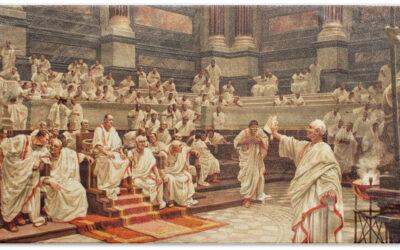
Marcus Tullius Cicero: Life, Works, and Legacy
Explore the profound impact of Cicero on literature and philosophy, and understand his enduring influence on Western thought.Intro Marcus Tullius Cicero (106–43 BC) was a Roman statesman, orator, and writer who played a pivotal role in the politics of the late Roman Republic. Renowned for his eloquence and philosophical writings, Cicero's career was marked by his efforts to uphold the principles of the Republic against the rise of autocratic power. His most notable achievements include his...
turbo: Mark 5 v39-6 v2
turbo - nothing to do with GT The Latin word turbo exists both as a noun and a verb, each with distinct but related meanings that enrich classical Latin literature through imagery of motion, chaos, and force. As a noun, turbo refers to a ‘whirlwind’, ‘spinning top’, or ‘vortex’. It is often used in epic and didactic poetry to evoke violent natural phenomena or rapid, disorienting movement. In Virgil’s Aeneid, turbo describes the storm unleashed by Juno against Aeneas’ fleet, symbolising divine...

qualis: Virgil Aeneid Book 1 Line 430
qualis - of what kind? The Latin adjective qualis, meaning ‘of what kind’ or ‘such as’, is a relative and interrogative term used to describe the nature or quality of a person, object, or action. It functions both descriptively and comparatively, often appearing in similes, rhetorical questions, and moral evaluations across a wide range of classical Latin literature. In epic poetry, qualis is a key device in similes and narrative comparisons. Virgil frequently uses it in the Aeneid to draw...

etenim (in Catilinam 26)
etenim - for indeed The Latin conjunction etenim functions as a nuanced connective, typically translated as 'for indeed' or 'and in fact'. It combines et and enim, reinforcing the causal or explanatory force of a statement while also signalling its rhetorical emphasis. In classical literature, etenim often appears in argumentative or narrative contexts where the speaker seeks to justify, elaborate, or underscore a preceding claim. Cicero makes frequent use of etenim in his orations and...

Caesar dBG Bk1 Ch20.4 peto
peto - they seek him everywhere The Latin verb peto—meaning ‘to seek’, ‘to aim at’, or ‘to request’—is a third-conjugation verb with a wide semantic range, making it a frequent and adaptable element in classical Latin literature. Its principal parts (peto, petere, petivi, petitum) allow for varied syntactic constructions, often with direct objects or prepositional phrases such as ab or ad to indicate the source or goal of the action. In prose, peto commonly appears in political, legal, and...
puer: Perseus #2
puer - not only boy but child The Latin noun puer, meaning ‘boy’ or ‘child’, is a frequent and versatile term in classical literature, often carrying social, emotional, and symbolic weight beyond its basic definition. While its primary sense denotes a young male, its usage varies widely depending on context, genre, and authorial intent. In Roman comedy, particularly in Plautus and Terence, puer often refers to a household slave or servant, typically young and clever. These pueri are central to...

video: Mark 5 v32-38
video - I can see clearly now The Latin verb video, meaning ‘I see’, is one of the most frequently used and conceptually rich verbs in classical Latin literature. It expresses not only physical sight but also perception, understanding, and mental insight. Its range of meanings allows authors to explore themes of knowledge, revelation, and illusion across genres. In epic poetry, video often marks moments of recognition or divine intervention. Virgil uses it in the Aeneid to describe both...

talis: Virgil Aeneid Book 1 Line 410
talis - of such a kind is this The Latin adjective talis, meaning ‘such’ or ‘of such a kind’, is a demonstrative term used to indicate quality, type, or nature, often in relation to something previously mentioned or implied. Its function is both grammatical and rhetorical, allowing authors to draw comparisons, establish equivalence, or emphasise particular characteristics. In epic poetry, talis frequently appears in similes and narrative transitions. Virgil uses it in the Aeneid to introduce...

patrius (in Catilinam 25)
patrius - inherited duty The Latin verb careo (first person careo, infinitive carere, perfect carui) means ‘to be without’, ‘to lack’, or ‘to be free from’, and it governs the ablative case. It is used in classical Latin literature to express absence, deprivation, or voluntary renunciation, often with moral, emotional, or philosophical implications. In Cicero’s prose, careo frequently appears in ethical and rhetorical contexts. He uses it to describe the absence of virtues, resources, or...

Caesar dBG Bk1 Ch20 lacrima
lacrima - tears of grief or joy The Latin noun lacrima, meaning ‘tear’, is a word rich in emotional and poetic resonance throughout classical Latin literature. As a feminine first-declension noun, lacrima appears in contexts ranging from grief and mourning to joy and tenderness, often serving as a marker of deeply felt human experience. In epic poetry, lacrima frequently accompanies scenes of farewell, death, or divine pity. Virgil’s Aeneid uses lacrimae to underscore the cost of war and...
narro: Perseus #1
narro - let me tell you The Latin verb narro, meaning ‘to relate’ or ‘to tell’, is a key term in classical literature, often used to signal the act of storytelling or recounting events with clarity and purpose. It derives from gnarus, meaning ‘knowing’, and thus carries a connotation of informed narration—more than mere speech, it implies a speaker who understands what they convey. In prose, narro frequently appears in historical and rhetorical contexts. Cicero, for instance, uses it in...
NEW POSTS
Naked Latin Highlighter Strip: Cicero de Oratore
Highlighter Strip of this Full Original Sentence Cogitanti mihi saepe numero et memoria vetera repetenti perbeati fuisse, Quinte frater, illi videri solent, qui in optima re publica, cum et...
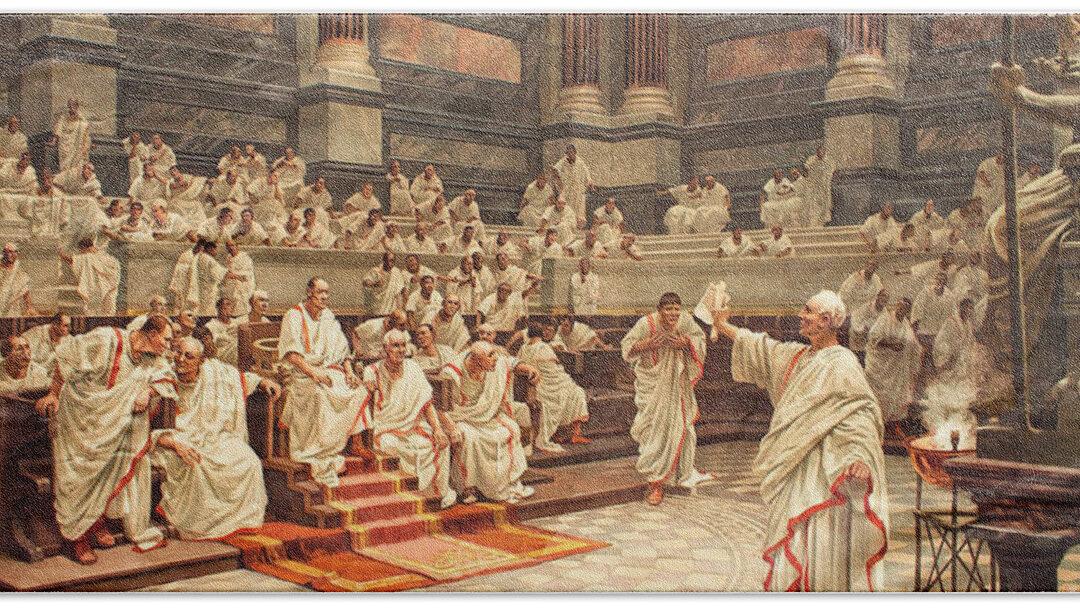
Marcus Tullius Cicero: Life, Works, and Legacy
Explore the profound impact of Cicero on literature and philosophy, and understand his enduring influence on Western thought.Intro Marcus Tullius Cicero (106–43 BC) was a Roman statesman, orator,...

turbo: Mark 5 v39-6 v2
turbo - nothing to do with GT The Latin word turbo exists both as a noun and a verb, each with distinct but related meanings that enrich classical Latin literature through imagery of motion, chaos,...

qualis: Virgil Aeneid Book 1 Line 430
qualis - of what kind? The Latin adjective qualis, meaning ‘of what kind’ or ‘such as’, is a relative and interrogative term used to describe the nature or quality of a person, object, or action. It...

etenim (in Catilinam 26)
etenim - for indeed The Latin conjunction etenim functions as a nuanced connective, typically translated as 'for indeed' or 'and in fact'. It combines et and enim, reinforcing the causal or...

Caesar dBG Bk1 Ch20.4 peto
peto - they seek him everywhere The Latin verb peto—meaning ‘to seek’, ‘to aim at’, or ‘to request’—is a third-conjugation verb with a wide semantic range, making it a frequent and adaptable element...
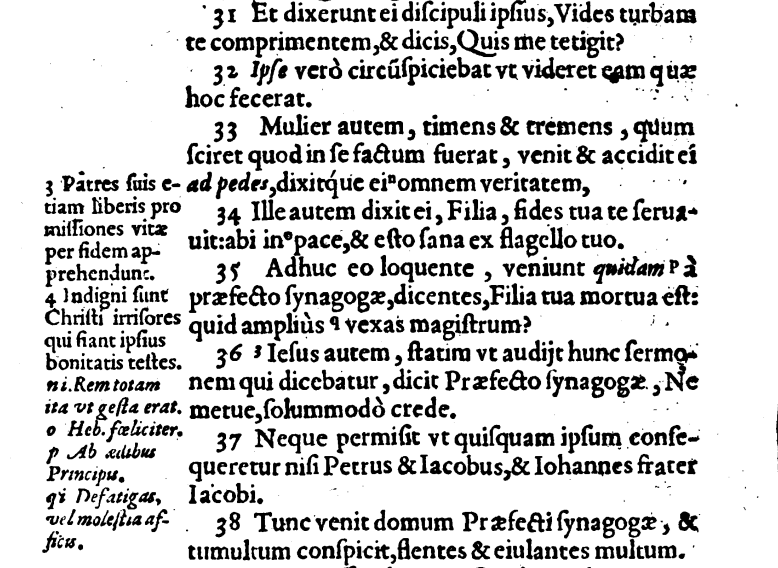
video: Mark 5 v32-38
video - I can see clearly now The Latin verb video, meaning ‘I see’, is one of the most frequently used and conceptually rich verbs in classical Latin literature. It expresses not only physical...

talis: Virgil Aeneid Book 1 Line 410
talis - of such a kind is this The Latin adjective talis, meaning ‘such’ or ‘of such a kind’, is a demonstrative term used to indicate quality, type, or nature, often in relation to something...

patrius (in Catilinam 25)
patrius - inherited duty The Latin verb careo (first person careo, infinitive carere, perfect carui) means ‘to be without’, ‘to lack’, or ‘to be free from’, and it governs the ablative case. It is...

Caesar dBG Bk1 Ch20 lacrima
lacrima - tears of grief or joy The Latin noun lacrima, meaning ‘tear’, is a word rich in emotional and poetic resonance throughout classical Latin literature. As a feminine first-declension noun,...
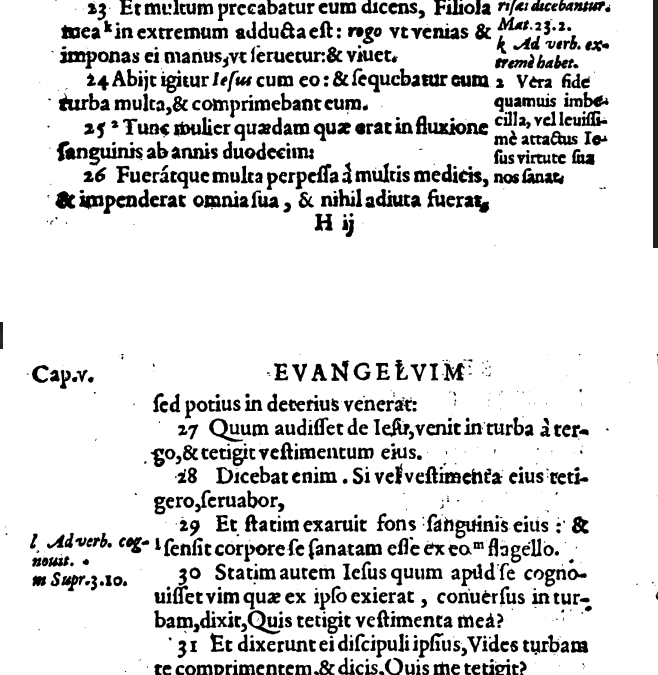
abeo: Mark 5 v24-31
abeo - I go away from here The Latin verb abeo means ‘I go away’, ‘I depart’, or ‘I pass’. It is a compound of ab- and eo, and its primary sense is spatial, indicating movement away from a place or...

aspicio: Virgil Aeneid Book 1 Line 393
aspicio - to behold The Latin verb aspicio (infinitive aspicere, perfect aspexi, supine aspectum) means ‘to look at’, ‘to behold’, or ‘to observe’, and is used in classical Latin literature to...

vita (in Catilinam 24)
careo - nothing to do with care The Latin verb careo (first person careo, infinitive carere, perfect carui) means ‘to be without’, ‘to lack’, or ‘to be free from’, and it governs the ablative case....

Caesar dBG Bk1 Ch19.2 frater
frater - brotherly loveThe Latin noun frater, meaning 'brother', is a third-declension masculine noun with the genitive form fratris. In classical Latin literature, frater appears frequently, not...

vix: Argonauts #24
vix - it can be difficultThe Latin adverb vix means 'hardly', 'scarcely', or 'with difficulty', and is used across classical Latin literature to express limitation, effort, or the narrow margin by...
aio: Mark 5 v39-6 v2 Vocab
aio - he said, she said The Latin verb aio, meaning ‘I say’ or ‘I affirm’, is an irregular and archaic form that appears frequently in classical Latin literature, especially in dialogue, reported speech, and philosophical discourse. Unlike dico,...
apis: Virgil Aeneid Book 1 Line 430 (Vocab)
apis - busy bees The Latin noun apis, meaning ‘bee’, is a word rich in symbolic and practical resonance throughout classical literature. Though modest in form, apis carries associations with industry, community, and natural order, making it a...
an: in Catilinam (26) Vocab
an - whether or not The Latin particle an is primarily used in interrogative constructions, especially in alternative or rhetorical questions. It introduces the second element of a disjunctive query, often implying doubt, challenge, or irony....
dexter: Caesar dBG Bk1 Ch20.4 Vocab
dexter - on the right The Latin adjective dexter, meaning ‘right’ or ‘on the right side’, carries both literal and symbolic significance in classical Latin literature. As a first/second declension adjective, it appears in forms such as dextera or...
mulier: Mark 5 v32-38 Vocab
mulier - the merry wives The Latin noun mulier, meaning ‘woman’, is a term of social and cultural significance in classical Latin literature. Unlike femina, which can denote a woman more generally or biologically, mulier often carries connotations...
gressus: Virgil Aeneid Book 1 Line 410 (Vocab)
gressus - a step too far The Latin noun gressus, meaning ‘step’ or ‘stride’, is derived from the verb gradior, ‘to walk’ or ‘to step’. In classical Latin literature, gressus is used both literally and metaphorically, often to describe movement,...
invidia: in Catilinam (25) Vocab
invidia - disrupting jealousy The Latin noun invidia denotes envy, resentment, or ill will, often arising from the perception of another’s success, beauty, or fortune. Its semantic field extends beyond personal jealousy to encompass public...
complexus: Caesar dBG Bk1 Ch20 Vocab
complexus - a physical or metaphorical cuddle The Latin noun complexus, derived from the verb complector, denotes an embrace, a surrounding, or a close connection—both physical and metaphorical. As a fourth-declension masculine noun, it appears...
multus: Mark 5 v24-31 Vocab
multus - the more the merrier The Latin adjective multus means ‘much’, ‘many’, or ‘a great number’, and is one of the most frequently used descriptive terms in classical Latin. It functions both quantitatively and qualitatively, appearing in...
bis: Virgil Aeneid Book 1 Line 393 (Vocab)
bis - double or quits The Latin adverb bis means ‘twice’ or ‘on two occasions’, and is used in classical Latin literature to indicate repetition, duality, or numerical precision. Though semantically straightforward, its literary function varies...
solum: in Catilinam (24) Vocab
solum - noun and adverb The Latin word solum has multiple meanings and functions in classical Latin literature, depending on context and grammatical usage. As a noun (neuter, solum, soli), it typically means ‘ground’, ‘soil’, or ‘foundation’. As an...
repugno: Caesar dBG Bk1 Ch19.2 Vocab
repugno - fight backThe Latin verb repugno (repugnare, repugnavi, repugnatum) is a first-conjugation intransitive verb meaning 'to fight back', 'to resist', or 'to oppose'. In Caesar’s military prose, particularly in the Commentarii de Bello...
sol: Argonauts #24 Vocab
sol - here comes the sunThe Latin noun sol, meaning ‘sun’, appears frequently in classical Latin literature, not only as a physical entity but also as a symbol, temporal marker, and poetic motif. As a masculine noun of the third declension, sol...
coepi: Mark 5 v17-23 Vocab
coepi - I have begun, so I'll finish The Latin verb coepi means ‘I began’ or ‘I have begun’, and is used to mark the initiation of an action or process. It is a defective verb, appearing only in the perfect system, with no present tense forms. For...
hostis: Virgil Aeneid Book 1 Line 378 (Vocab)
hostis - stranger danger The Latin noun hostis (masculine, third declension) originally referred to a ‘stranger’ or ‘foreigner’, but in classical Latin it came to mean ‘enemy’, particularly one of the state or a public adversary. This semantic...