
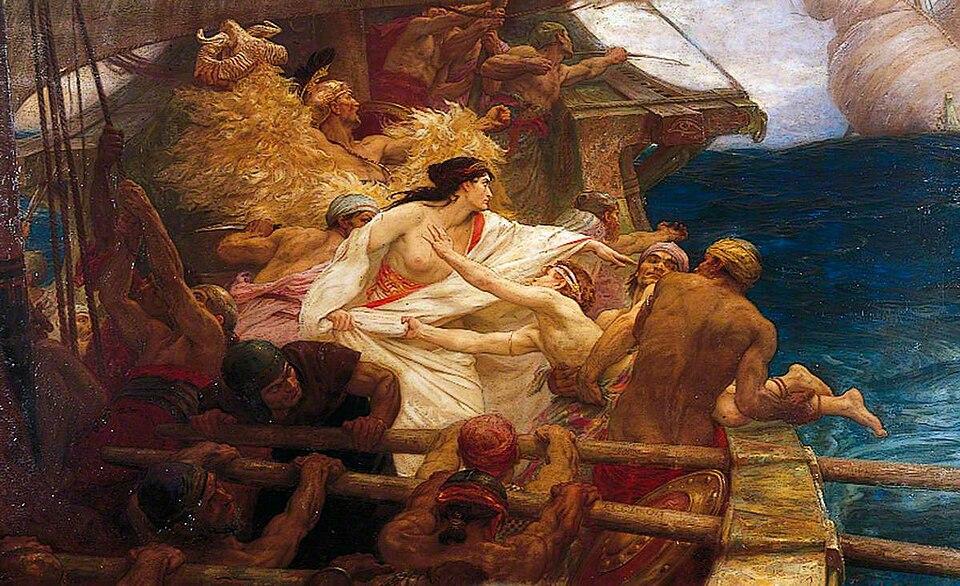
Absyrtus
Absyrtus, a lesser-known but pivotal figure in Greek mythology, played a tragic role in the escape of Jason and Medea following their theft of the Golden Fleece. As the son of King Aeëtes of Colchis and brother (or half-brother) to Medea, Absyrtus was caught in the violent currents of divine betrayal, sibling loyalty, and political intrigue that defined this mythic flight.
According to varying accounts—most notably Apollonius of Rhodes in the Argonautica and later Roman retellings—Absyrtus either accompanied Medea voluntarily or was taken by force as a hostage when she fled with Jason. The most infamous version of the tale sees Medea coldly exploiting her brother as a diversion. Pursued by Aeëtes, Jason and Medea, fearing capture, killed Absyrtus and dismembered his body, scattering the pieces into the sea. The logic was grim: their father would be forced to halt and gather his son’s remains, granting the fugitives crucial time to escape.
In some renditions, particularly the Roman version found in Ovid, the story assumes a crueler edge. Absyrtus is portrayed as a trusting younger brother whom Medea lures into a false meeting under the pretense of negotiation, only for Jason to ambush and kill him. This betrayal illustrates the darker layers of Medea's cunning and the ruthless measures taken to ensure her and Jason's freedom.
Symbolically, Absyrtus represents innocence caught between conflicting loyalties. His murder casts a long shadow over the couple’s triumph, foreshadowing the destructive choices Medea will continue to make. It also underscores a recurring theme in Greek myth: that heroic quests often come at a dire moral cost.
Ultimately, Absyrtus’ fate is a sobering reminder that in myth, escape rarely comes clean. He is not merely collateral damage, but a measure of how far one is willing to go in pursuit of love, power, or destiny. The sea, that vast and mythic highway, was stained with a brother’s blood—an omen of turbulence to follow in Jason and Medea’s doomed saga. A sacrifice, intentional or not, that bought them only temporary reprieve.
Today's Artwork: The Golden Fleece
Painted by: By Herbert James Draper in 1904 (1864-1920)
Oil on canvas, 155 x 272.5 cm
Source: bradfordmuseums.org
Here is a text only version. (See below for an interactive version)
15 At rex Aeetes, ubi cognovit Iasonem laborem propositum confecisse, ira graviter commotus est, intellegebat enim id per dolum factum esse, nec dubitabat quin Medea auxilium ei tulisset. Medea autem, cum intellegeret se in magno fore periculo, si in regia mansisset, fuga salutem petere constituit. Omnibus igitur ad fugam paratis media nocte insciente patre cum fratre Absyrto evasit et quam celerrime ad locum ubi Argo subducta erat se contulit.
Eo cum venisset, ad pedes Iasonis se proiecit et multis cum lacrimis obsecravit eum, ne in tanto discrimine mulierem desereret, quae ei tantum profuisset. Ille, quod memoria tenebat se per eius auxilium e magno periculo evasisse, libenter eam excepit et postquam causam veniendi audivit hortatus est ne patris iram timeret. Promisit autem se quam primum eam in navi sua avecturum.
How To Read the Interactive Text
To Read the Interactive Text Below Without a Dictionary-
On a Computer: you hover over a word and get all the possible parts of speech; declensions; and conjugations of every word.
How To Read the Interactive Text
To Read the Interactive Text Below Without a Dictionary-
On a Phone or Tablet: don't 'hover' -'tap' the word. To remove the 'definition box' you 'tap' to the side of the text box.
INTERACTIVE DICTIONARY FREE TEXT
15 At rex Aeetes, ubi cognovit Iasonem laborem propositum confecisse, ira graviter commotus est, intellegebat enim id per dolum factum esse, nec dubitabat quin Medea auxilium ei tulisset.
You Need to be a Member to Access the Interactive Dictionary
Medea autem, cum intellegeret se in magno fore periculo, si in regia mansisset, fuga salutem petere constituit.
Omnibus igitur ad fugam paratis media nocte insciente patre cum fratre Absyrto evasit et quam celerrime ad locum ubi Argo subducta erat se contulit.
Eo cum venisset, ad pedes Iasonis se proiecit et multis cum lacrimis obsecravit eum, ne in tanto discrimine mulierem desereret, quae ei tantum profuisset.
Ille, quod memoria tenebat se per eius auxilium e magno periculo evasisse, libenter eam excepit et postquam causam veniendi audivit hortatus est ne patris iram timeret.
Promisit autem se quam primum eam in navi sua avecturum.
Recent Comments