
newest posts
CLASSIC TEXTS
VOCAB TEXTS
sermo (in Catilinam 22)
sermo - let's have a word The Latin noun sermo (genitive sermonis) refers primarily to spoken discourse, conversation, or dialogue, and is distinct from more formal or elevated terms like oratio or dictio. In classical Latin literature, sermo often connotes informal, everyday speech, and is frequently used to contrast with stylized or rhetorical language. Cicero employs sermo in philosophical dialogues to denote the exchange of ideas in a conversational tone, as opposed to declamatory or...
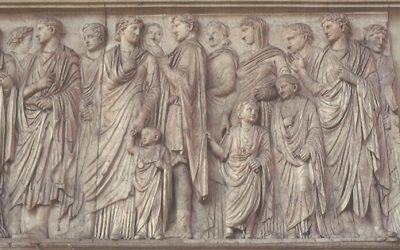
Caesar dBG Bk1 Ch18.4 familiaris
familiaris - keep it in the family The Latin adjective and noun familiaris carries meanings related to intimacy, household, and personal association. As an adjective, it denotes something 'of the household', 'intimate', or 'friendly'; as a noun, it refers to a close associate, friend, or member of one’s domestic circle. In Caesar’s Commentarii de Bello Gallico, familiaris appears in contexts that highlight personal relationships within the broader framework of military and diplomatic...

filia: Argonauts #22
filia - dads and their daughtersThe Latin noun filia, meaning 'daughter', is a first-declension feminine noun that appears in a range of classical Latin texts, often in contexts involving family, inheritance, and social relationships. While not as frequently discussed as filius, filia nonetheless plays a meaningful role in literature that reflects Roman domestic life and legal structures. In Cicero’s speeches and letters, filia is used to illustrate familial bonds and obligations. He...
fretum: Mark 5 v1-9
fretum - dire straits The Latin noun fretum refers to a strait or narrow sea channel, often turbulent or dangerous, and is typically used to describe maritime passages between landmasses. Its semantic field includes both geographical and metaphorical dimensions, making it a versatile term in classical literature. In epic poetry, fretum frequently appears in contexts of travel, exile, or divine intervention. Virgil uses fretum in the Aeneid to evoke the perilous waters Aeneas must cross, such...

coniunx: Virgil Aeneid Book 1 Line 343
coniunx - to have and to hold from this day forwardThe Latin noun coniunx (also spelt coniux) denotes ‘spouse’, encompassing both ‘husband’ and ‘wife’. It derives from the verb coniungo, meaning ‘to join together’, and thus implies a bond formed through union—legal, emotional, or divine. In Latin literature, coniunx is not merely a social designation but a term rich in nuance, often used to explore themes of loyalty, separation, and identity. In epic poetry, coniunx frequently appears in...

induco (in Catilinam 21)
induco - follow my leadThe Latin verb induco, meaning 'to lead in', 'to bring forward', or 'to introduce', appears in a variety of contexts in Cicero’s corpus, often with rhetorical or philosophical nuance. Its basic sense of physical or metaphorical introduction lends itself well to Cicero’s style, particularly in his orations and dialogues, where argumentation and persuasion hinge on the careful presentation of ideas, characters, or emotions. In his rhetorical works, such as De Oratore,...

Caesar dBG Bk1 Ch17.5 noster
noster - our town The Latin adjective noster (feminine nostra, neuter nostrum) means 'our' and functions as a possessive determiner, indicating shared ownership or association with the speaker and others. It belongs to the first/second declension and must agree in gender, number, and case with the noun it modifies. In classical Latin literature, noster is more than a grammatical tool—it often carries rhetorical and emotional weight, especially in political, military, and poetic contexts. In...

cupiditas: Argonauts #21
cupiditas - desireThe Latin noun cupiditas, feminine and of the third declension, denotes desire, longing, or ambition, and features prominently in moral, philosophical, and political discourse throughout classical Latin literature. It is often used to express not only general yearning but also specific forms of immoderate or misguided desire, such as greed, lust, or the pursuit of power. Cicero employs cupiditas extensively in his philosophical works, particularly in De Officiis and...
transeo: Mark 4 v35-41
transeo - cross to the other sideThe Latin verb transeo—meaning ‘to go across,’ ‘to pass over,’ ‘to go beyond,’ or ‘to cross’—appears in the Vulgate with layered usage that navigates physical movement, moral transformation, and eschatological vision. As a compound of eo with the preposition trans, it carries inherent motion and transition, which Jerome deploys to great effect in both narrative flow and theological depth. In historical recounting and geographic descriptions, transeo often...
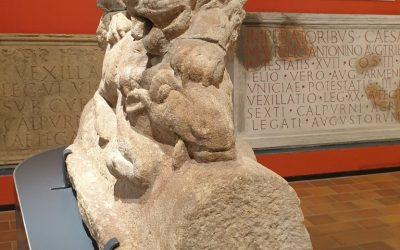
namque: Virgil Aeneid Book 1 Line 327
namque - a particle indeed for trulyThe Latin particle namque—a compound of nam and -que, meaning ‘for indeed’ or ‘for truly’—plays a distinctive role in Virgil’s literary architecture. More emphatic than nam alone, namque introduces explanations, elaborations, or narrative expansions with a tone of solemnity or urgency. In Virgil’s epic style, it functions not merely as connective tissue but as a signal of narrative weight, often preceding moments of revelation, transition, or heightened...

quiesco (in Catilinam 20)
quiesco - I take a restThe Latin verb quiesco, meaning 'to rest', 'to be quiet', or 'to be inactive', is derived from quies, denoting rest or repose. In classical Latin literature, quiesco often conveys more than mere physical stillness—it suggests a withdrawal from action, a suspension of movement, or a deliberate pause in the rhythm of life. Its semantic range allows it to appear in contexts both literal and metaphorical, from battlefield lulls to philosophical meditations. In Virgil’s...

Caesar dBG Bk1 Ch16.6 emo
emo - shop till you drop The Latin verb emo, meaning 'to buy' or 'to acquire through purchase', is a third-conjugation verb with principal parts emo, emere, emi, emptum. In classical Latin literature, emo appears in both literal and figurative contexts, often reflecting economic, political, or moral dimensions of Roman life. Julius Caesar, in his Commentarii de Bello Gallico and Commentarii de Bello Civili, uses emo sparingly but purposefully, typically in logistical or administrative...
NEW POSTS
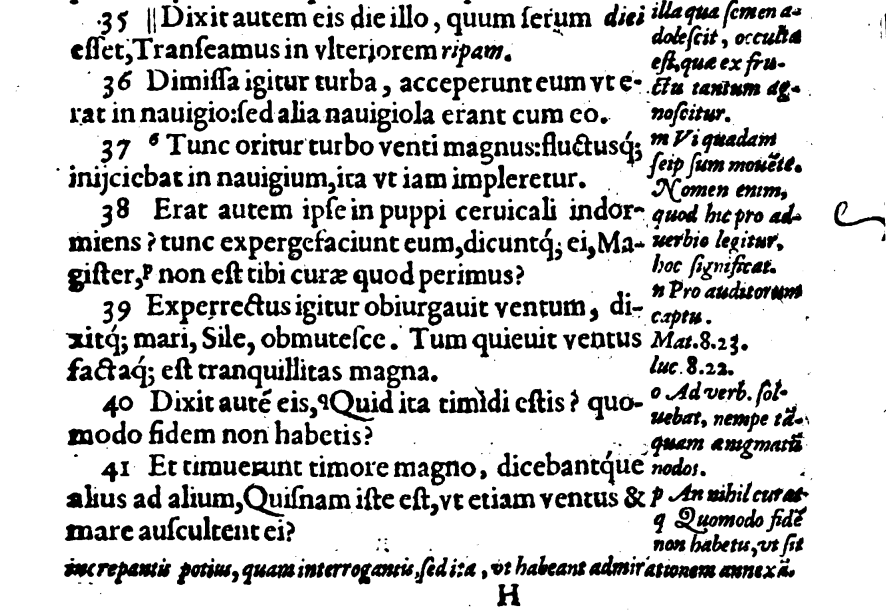
transeo: Mark 4 v35-41
transeo - cross to the other sideThe Latin verb transeo—meaning ‘to go across,’ ‘to pass over,’ ‘to go beyond,’ or ‘to cross’—appears in the Vulgate with layered usage that navigates physical...

namque: Virgil Aeneid Book 1 Line 327
namque - a particle indeed for trulyThe Latin particle namque—a compound of nam and -que, meaning ‘for indeed’ or ‘for truly’—plays a distinctive role in Virgil’s literary architecture. More...

quiesco (in Catilinam 20)
quiesco - I take a restThe Latin verb quiesco, meaning 'to rest', 'to be quiet', or 'to be inactive', is derived from quies, denoting rest or repose. In classical Latin literature, quiesco often...

Caesar dBG Bk1 Ch16.6 emo
emo - shop till you drop The Latin verb emo, meaning 'to buy' or 'to acquire through purchase', is a third-conjugation verb with principal parts emo, emere, emi, emptum. In classical Latin...

tandem: Argonauts #20
tandem -finally at lastThe adverb tandem, often translated as ‘finally’ or ‘at last’, functions as more than mere temporal punctuation in classical Latin. It frequently carries emotional weight,...
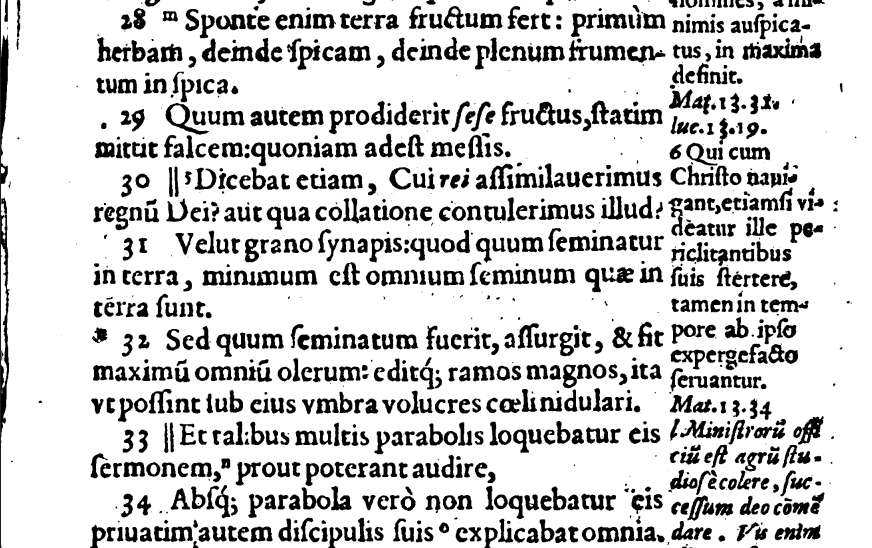
terra: Mark 4 v28-34
terra - land not cottaThe Latin noun terra—meaning ‘earth,’ ‘land,’ or ‘ground’—functions in the Vulgate as both a geographic and theological canvas. Jerome’s rendering infuses terra with layers of...

rupes: Virgil Aeneid Book 1 Line 310
sacerdos - either male or female In Latin, sacerdos refers to a priest or priestess, a compound of sacer (sacred) and dare (to give)—thus, one who offers sacred things or mediates between the divine...

refero (in Catilinam 19)
refero - bring it backThe verb refero, meaning ‘to bring back’, ‘to report’, or ‘to relate’, is densely woven into the rhetorical and narrative texture of classical Latin literature. It is a...

Caesar dBG Bk1 Ch16 frumentum
frumentum - an allowance The Latin word frumentum denotes grain, especially wheat, and by extension refers to a vital resource: food supply for both civilian and military populations. In...

filius: Argonauts #19
filius - my sonThe noun filius, meaning ‘son’, occupies a central position in Roman thought, often entwined with legal identity, moral duty, lineage, and political expectation. Its appearances in...
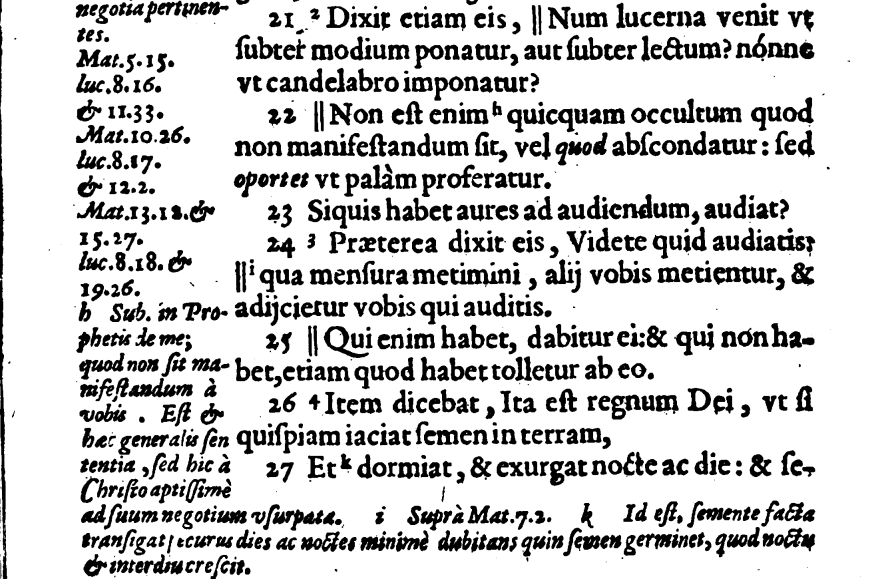
pono: Mark 4 v21-27
pono - put it in placeThe Latin verb pono—meaning ‘to place,’ ‘put,’ ‘lay,’ or ‘establish’—holds exceptional utility and nuance in the text of the Vulgate. Deriving from a foundational semantic...

asper: Virgil Aeneid Book 1 Line 291
asper - take the rough with the smooth The word asper—meaning ‘rough’, ‘harsh’, or ‘fierce’—appears prominently in Vergilian verse, particularly in the Aeneid, where it carries tactile, emotional,...
receptus (in Catilinam 18)
receptus - are you receiving me? The Latin word receptus, derived from the verb recipio, functions both as a noun meaning ‘retreat’, ‘shelter’, or ‘haven’, and as a participle denoting the act of...

Caesar dBG Bk1 Ch15 moveo
moveo - move along please!The Latin verb moveo is fundamentally a word of action, but its literary applications reach far beyond physical motion. It appears frequently across genres as a mechanism...

mora: Argonauts #18
mora - delays are a hindranceIn Latin, mora is a feminine noun of the first declension meaning 'delay', 'pause', or 'hindrance'. Its forms include mora, morae, morae, moram, morā in the singular and...
carus: in Catilinam (20) Vocab
carus - dear, dearThe Latin adjective carus, meaning 'dear', 'beloved', or 'precious', carries emotional weight in classical Latin literature, often signaling deep affection, loyalty, or personal value. Its use spans genres, appearing in epic,...
cum: Caesar dBG Bk1 Ch16.6 Vocab
cum - simple as well as complexThe Latin word cum is a syntactic cornerstone of classical Latin, functioning both as a preposition and as a subordinating conjunction. Its dual role allows it to express simple accompaniment as well as complex...
multus: Argonauts #20 Vocab
multus - much ado about nothingThe adjective multus, meaning ‘much’ or ‘many’, appears frequently across classical Latin texts, serving not just a quantitative function but also conveying emotional, rhetorical, and philosophical emphasis. Its...
ultro: Mark 4 v28-34 Vocab
ultro - to go beyond expectationThe adverb ultro—often translated as ‘voluntarily’, ‘of one’s own accord’, or ‘beyond expectation’—reveals a surprising dynamism in Latin literary usage. Far from a passive modifier, ultro consistently signals...
in: Virgil Aeneid Book 1 Line 310 (Vocab)
in - the accusative or ablative?The Latin preposition in is deceptively simple yet remarkably versatile, appearing across classical Latin literature with a range of syntactic and semantic functions. Its primary role is to indicate location or...
inquam: in Catilinam (19) Vocab
inquam - he said, she said The verb inquam, meaning ‘I say’, functions as a parenthetical or interruptive form used primarily in direct speech. It is irregular in its conjugation and appears most commonly in first-person present or perfect forms....
interim: Caesar dBG Bk1 Ch16 Vocab
interim- in the meanwhileThe adverb interim, meaning ‘in the meantime’ or ‘meanwhile’, serves as a temporal hinge throughout classical Latin prose. Often appearing in transitional moments, interim allows authors to mark narrative pauses, shifts in...
quidam: Argonauts #19 Vocab
quidam - a certain someoneThe word quidam, meaning ‘a certain one’ or ‘someone’, functions as both pronoun and adjective, often introducing unspecified or lightly characterized individuals in narrative, legal, or philosophical contexts. Its use...
aut: Mark 4 v21-27 Vocab
aut - a deceptively simple conjunctionThe Latin conjunction aut—meaning ‘or’ in a disjunctive sense—is deceptively simple but holds significant syntactic and stylistic importance across Latin literature. Distinguished from vel, which often suggests...
tum: Virgil Aeneid Book 1 Line 291 (Vocab)
tum - then at that timeThe Latin adverb tum, meaning 'then' or 'at that time', plays a subtle yet powerful role in Virgil’s poetic architecture. It functions not merely as a temporal marker but as a rhythmic and thematic device that guides the...
etiam: in Catilinam (18) Vocab
etiam - even stillThe Latin adverb etiam, commonly translated as ‘also’, ‘even’, or ‘still’, carries flexible emphasis across authors and genres. Rather than simply adding elements, it shades meaning, modifies tone, and calibrates rhetorical...
posterus: Caesar dBG Bk1 Ch15 Vocab
posterus - coming after nextThe Latin adjective posterus, meaning ‘coming after’ or ‘next,’ operates both temporally and genealogically in classical literature. Its semantic field includes time (e.g. future days or events) and lineage (e.g....
tutus: Argonauts #18 Vocab
tutus - are you safe and protected? In Latin, tutus is an adjective meaning 'safe', 'secure', or 'protected'. It belongs to the first and second declension, with forms tutus, tuta, tutum in the nominative singular and tuti, tutae, tuta in the...
confestim: Mark 4 v14-20 Vocab
confestim - immediately without delay!In Latin, confestim is an adverb meaning 'immediately', 'at once', or 'without delay'. It conveys urgency and swift action, and is frequently used in classical prose and poetry to mark decisive moments. The...
ter: Virgil Aeneid Book 1 Line 272 (Vocab)
ter - a ladyIn Latin, ter is an adverb meaning ‘three times,’ formed regularly from the cardinal number tres (‘three’) using the adverbial suffix -ter. It belongs to a small family of numeric adverbs: semel (‘once’), bis (‘twice’), ter (‘thrice’),...