
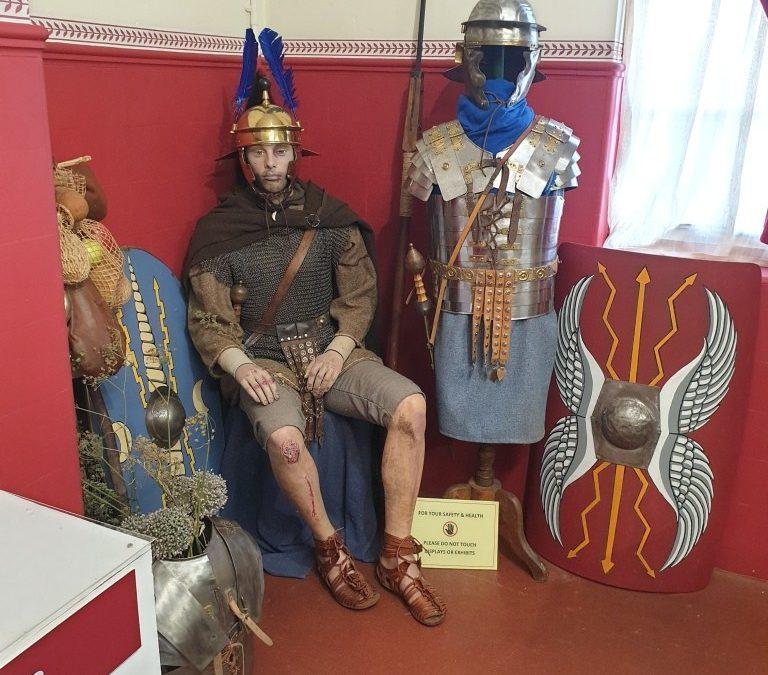
quiesco - I take a rest
The Latin verb quiesco, meaning 'to rest', 'to be quiet', or 'to be inactive', is derived from quies, denoting rest or repose. In classical Latin literature, quiesco often conveys more than mere physical stillness—it suggests a withdrawal from action, a suspension of movement, or a deliberate pause in the rhythm of life. Its semantic range allows it to appear in contexts both literal and metaphorical, from battlefield lulls to philosophical meditations.
In Virgil’s Aeneid, quiesco is used to describe the calm that settles over nature or men, often preceding or following moments of intense activity. The verb’s presence in such scenes underscores the contrast between motion and stillness, chaos and order. When warriors quiescunt, they are not merely sleeping—they are momentarily removed from the violence that defines their existence. This usage lends quiesco a poignant quality, as rest becomes a fragile interlude in a world governed by fate and conflict.
Cicero employs quiesco in his philosophical writings to describe the state of the soul in repose. In works like Tusculanae Disputationes, the verb is associated with the ideal of inner tranquility, a condition achieved through reason and detachment. Here, quiesco reflects the Stoic aspiration toward ataraxia, though Cicero adapts it to his Roman audience with a more pragmatic tone. The soul that quiescit is not passive but harmonized, free from the disturbances of passion and external turmoil.
Ovid, in his Metamorphoses, uses quiesco to mark transitions—moments when characters pause before transformation or revelation. The verb often appears in nocturnal settings, where sleep and silence veil impending change. In these instances, quiesco functions as a narrative device, heightening suspense and emphasizing the liminality of rest.
Thus, quiesco in classical Latin literature is not a static term but a dynamic one, capable of expressing physical rest, psychological peace, and narrative tension. Its versatility allows authors to explore themes of mortality, reflection, and transformation, making it a subtle yet potent element in Latin expression.
Today's Image: A soldier takes a rest
Source: My Own Photo
Here is a text only version
de te autem, Catilina, cum quiescunt, probant, cum patiuntur, decernunt, cum tacent, clamant, neque hi solum quorum tibi auctoritas est videlicet cara, vita vilissima, sed etiam illi equites Romani, honestissimi atque optimi viri, ceterique fortissimi cives qui circumstant senatum, quorum tu et frequentiam videre et studia perspicere et voces paulo ante exaudire potuisti. quorum ego vix abs te iam diu manus ac tela contineo, eosdem facile adducam ut te haec quae vastare iam pridem studes relinquentem usque ad portas prosequantur.
CAPUT IX
[22] quamquam quid loquor? te ut ulla res frangat, tu ut umquam te corrigas, tu ut ullam fugam meditere, tu ut ullum exsilium cogites?
Need Help Understanding the Latin?
You might find it helpful to start with the Side-by-Side Version which allows you to see my own very literal translation of the text which is almost a word-for-word translation - in an attempt to make it easier to understand the Latin!
Finally come back to this page - Classical Text and you should be able to better understand and competently read the original Latin text.
Vocabulary Version
I have prepared a Vocabulary Version of the passage (link at bottom of the page) which highlights the 3057 Most Common Words in the texts of Vergil, Caesar and Cicero that we will explore on CentumVerba.com
If you are serious about building your vocabulary, the FLASHCARD set should help you learn them.
How To Read the Interactive Text
To Read the Interactive Text Below Without a Dictionary-
On a Computer: you hover over a word and get all the possible parts of speech; declensions; and conjugations of every word.
Need Help Understanding the Latin?
You might find it helpful to start with the Side-by-Side Version which allows you to see my own very literal translation of the text which is almost a word-for-word translation - in an attempt to make it easier to understand the Latin!
Finally come back to this page - Classical Text and you should be able to better understand and competently read the original Latin text.
Vocabulary Version
I have prepared a Vocabulary Version of the passage (link at bottom of the page) which highlights the 3057 Most Common Words in the texts of Vergil, Caesar and Cicero that we will explore on CentumVerba.com
If you are serious about building your vocabulary, the FLASHCARD set should help you learn them.
How To Read the Interactive Text
To Read the Interactive Text Below Without a Dictionary-
On a Phone or Tablet: don't 'hover' -'tap' the word. To remove the 'definition box' you 'tap' to the side of the text box.
INTERACTIVE DICTIONARY FREE TEXT
de te autem, Catilina, cum quiescunt, probant, cum patiuntur, decernunt, cum tacent, clamant,
You Need to be a Member to Access the Interactive Dictionary
Become a Member
neque hi solum quorum tibi auctoritas est videlicet cara, vita vilissima, sed etiam illi equites Romani, honestissimi atque optimi viri,
ceterique fortissimi cives qui circumstant senatum, quorum tu et frequentiam videre et studia perspicere et voces paulo ante exaudire potuisti.
quorum ego vix abs te iam diu manus ac tela contineo,
eosdem facile adducam ut te haec quae vastare iam pridem studes relinquentem usque ad portas prosequantur.
CAPUT IX
[22] quamquam quid loquor? te ut ulla res frangat, tu ut umquam te corrigas, tu ut ullam fugam meditere, tu ut ullum exsilium cogites?
Recent Comments