
newest posts
CLASSIC TEXTS
VOCAB TEXTS
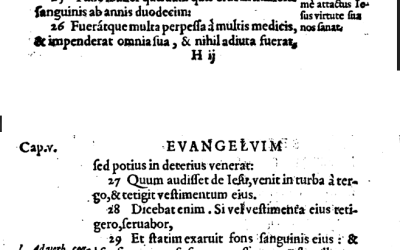
abeo: Mark 5 v24-31
abeo - I go away from here The Latin verb abeo means ‘I go away’, ‘I depart’, or ‘I pass’. It is a compound of ab- and eo, and its primary sense is spatial, indicating movement away from a place or person. However, in classical literature, abeo acquires broader metaphorical and narrative functions, often signalling transition, disappearance, or transformation. In Virgil’s Aeneid, abeo is used to describe both physical departure and metaphysical change. When souls abeunt from life to the...

aspicio: Virgil Aeneid Book 1 Line 393
aspicio - to behold The Latin verb aspicio (infinitive aspicere, perfect aspexi, supine aspectum) means ‘to look at’, ‘to behold’, or ‘to observe’, and is used in classical Latin literature to convey both physical sight and metaphorical attention or recognition. It belongs to the third conjugation and is often employed in vivid narrative and descriptive passages, particularly in poetry and epic. In Virgil’s Aeneid, aspicio appears in moments of heightened perception, often marking a shift in...

vita (in Catilinam 24)
careo - nothing to do with care The Latin verb careo (first person careo, infinitive carere, perfect carui) means ‘to be without’, ‘to lack’, or ‘to be free from’, and it governs the ablative case. It is used in classical Latin literature to express absence, deprivation, or voluntary renunciation, often with moral, emotional, or philosophical implications. In Cicero’s prose, careo frequently appears in ethical and rhetorical contexts. He uses it to describe the absence of virtues, resources,...

Caesar dBG Bk1 Ch19.2 frater
frater - brotherly loveThe Latin noun frater, meaning 'brother', is a third-declension masculine noun with the genitive form fratris. In classical Latin literature, frater appears frequently, not only in familial contexts but also in political, military, and rhetorical settings. Julius Caesar, in his Commentarii de Bello Gallico and Commentarii de Bello Civili, uses frater to denote kinship ties that often carry strategic or diplomatic significance. In Caesar’s narratives, frater is...

vix: Argonauts #24
vix - it can be difficultThe Latin adverb vix means 'hardly', 'scarcely', or 'with difficulty', and is used across classical Latin literature to express limitation, effort, or the narrow margin by which something occurs. It often introduces a sense of tension or immediacy, whether in physical action, emotional response, or narrative pacing. In Caesar’s Commentarii de Bello Gallico, vix frequently appears in military contexts to describe situations where success or survival was achieved with...

rogo: Mark 5 v17-23
rogo - any questions? The Latin verb rogo means ‘I ask’, ‘I request’, or ‘I propose’, and its usage in classical literature spans legal, political, and poetic domains. It is a foundational term in Roman civic life, especially in the context of legislation, where rogare legem refers to proposing a law to the people. This formal sense of rogo is central to the language of the Republic and its institutions. In Cicero’s speeches, rogo appears frequently, often in the first person, as part of his...

pius: Virgil Aeneid Book 1 Line 378
pius - a dutiful son In Virgil’s Aeneid, the adjective pius is most famously associated with Aeneas, who is repeatedly referred to as pius Aeneas. The term carries a rich and layered significance that extends beyond its basic meaning of ‘dutiful’ or ‘pious’. In the epic, pius encapsulates a complex set of virtues: devotion to the gods, loyalty to family, respect for fate, and commitment to civic duty. It is not limited to religious observance but includes moral integrity and self-sacrifice....

careo (in Catilinam 23)
careo - nothing to do with care The Latin verb careo (first person careo, infinitive carere, perfect carui) means ‘to be without’, ‘to lack’, or ‘to be free from’, and it governs the ablative case. It is used in classical Latin literature to express absence, deprivation, or voluntary renunciation, often with moral, emotional, or philosophical implications. In Cicero’s prose, careo frequently appears in ethical and rhetorical contexts. He uses it to describe the absence of virtues, resources,...

Caesar dBG Bk1 Ch18.9 imperium
imperium - absolute power The Latin word imperium in Caesar’s writings denotes a complex and potent concept: the legal and military authority vested in a Roman magistrate or commander. Derived from imperare, meaning 'to command', imperium in Caesar’s usage is not abstract power but a concrete jurisdiction—often territorial, always hierarchical, and deeply tied to Roman political identity. In the Commentarii de Bello Gallico and Commentarii de Bello Civili, imperium appears frequently in...
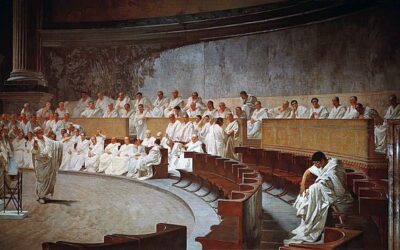
consilium: Argonauts #23
consilium - when a plan comes togetherThe Latin noun consilium, a neuter second-declension word, encompasses meanings such as 'plan', 'advice', 'counsel', and 'deliberation'. Its semantic range allows it to function in both abstract and concrete contexts, making it a versatile term in classical Latin literature. In Cicero’s oratory and philosophical works, consilium is frequently employed to denote strategic thinking or prudent judgment. He uses it to distinguish between rash action and...

deprecor: Mark 5 v10-16
deprecor - pleading heart? The Latin verb deprecor carries the sense of pleading, entreating, or seeking to avert something through prayer or supplication. It is a compound of de- and precor, intensifying the act of praying or begging, often with an undertone of urgency or desperation. In classical literature, deprecor is employed in both religious and rhetorical contexts, reflecting its dual role in public and private appeals. In epic poetry, deprecor frequently appears in moments of crisis...

fuga: Virgil Aeneid Book 1 Line 360
fuga - escape and flee to exile! The Latin noun fuga (feminine, first declension) means ‘flight’, ‘escape’, or ‘exile’, and is used in classical Latin literature to convey both literal movement away from danger and metaphorical withdrawal from situations, obligations, or emotions. Its semantic range allows it to appear in epic, lyric, elegiac, and philosophical contexts, often with distinct tonal and thematic implications. In Virgil’s Aeneid, fuga frequently denotes physical flight from war,...
NEW POSTS

rogo: Mark 5 v17-23
rogo - any questions? The Latin verb rogo means ‘I ask’, ‘I request’, or ‘I propose’, and its usage in classical literature spans legal, political, and poetic domains. It is a foundational term in...

pius: Virgil Aeneid Book 1 Line 378
pius - a dutiful son In Virgil’s Aeneid, the adjective pius is most famously associated with Aeneas, who is repeatedly referred to as pius Aeneas. The term carries a rich and layered significance...

careo (in Catilinam 23)
careo - nothing to do with care The Latin verb careo (first person careo, infinitive carere, perfect carui) means ‘to be without’, ‘to lack’, or ‘to be free from’, and it governs the ablative case....

Caesar dBG Bk1 Ch18.9 imperium
imperium - absolute power The Latin word imperium in Caesar’s writings denotes a complex and potent concept: the legal and military authority vested in a Roman magistrate or commander. Derived from...

consilium: Argonauts #23
consilium - when a plan comes togetherThe Latin noun consilium, a neuter second-declension word, encompasses meanings such as 'plan', 'advice', 'counsel', and 'deliberation'. Its semantic range...
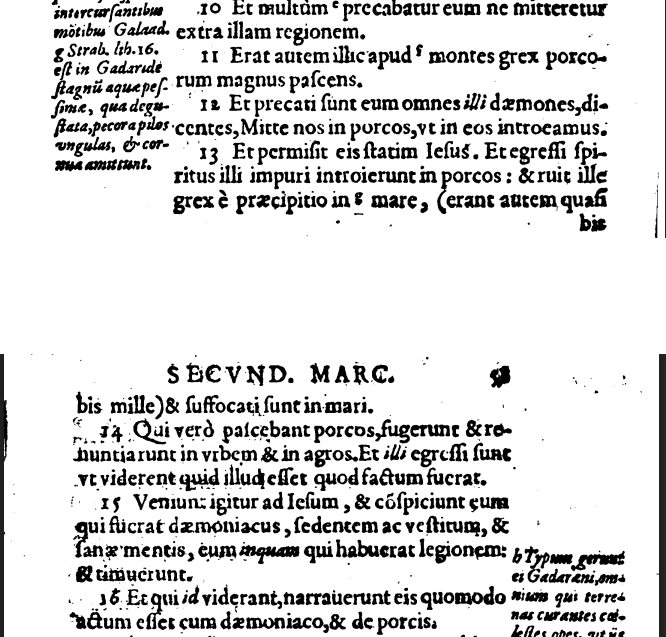
deprecor: Mark 5 v10-16
deprecor - pleading heart? The Latin verb deprecor carries the sense of pleading, entreating, or seeking to avert something through prayer or supplication. It is a compound of de- and precor,...

fuga: Virgil Aeneid Book 1 Line 360
fuga - escape and flee to exile! The Latin noun fuga (feminine, first declension) means ‘flight’, ‘escape’, or ‘exile’, and is used in classical Latin literature to convey both literal movement away...
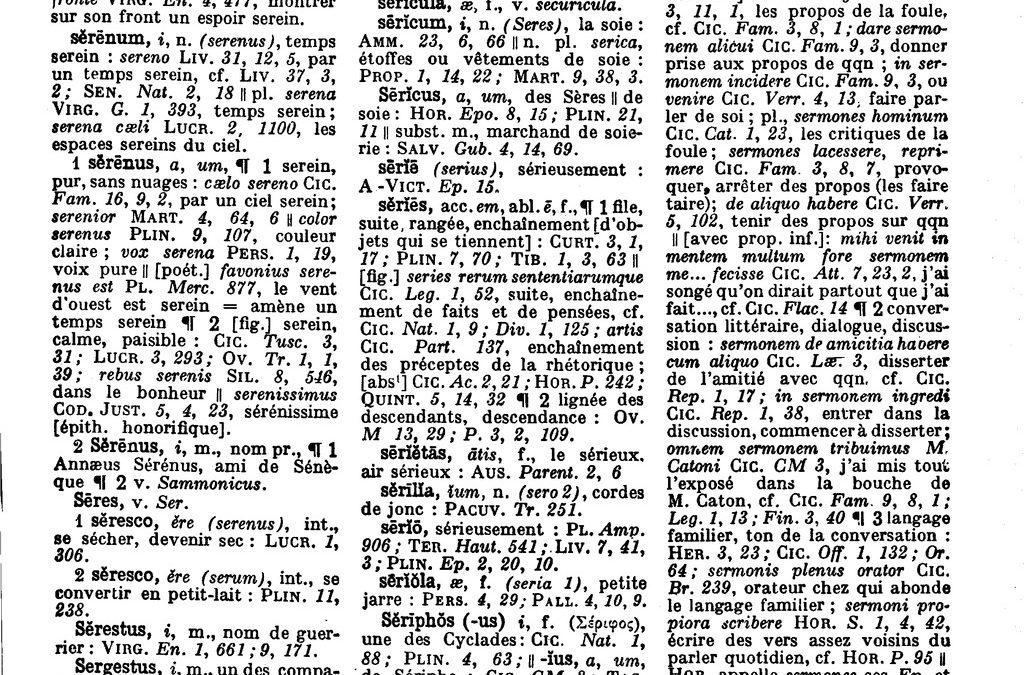
sermo (in Catilinam 22)
sermo - let's have a word The Latin noun sermo (genitive sermonis) refers primarily to spoken discourse, conversation, or dialogue, and is distinct from more formal or elevated terms like oratio or...

Caesar dBG Bk1 Ch18.4 familiaris
familiaris - keep it in the family The Latin adjective and noun familiaris carries meanings related to intimacy, household, and personal association. As an adjective, it denotes something 'of the...

filia: Argonauts #22
filia - dads and their daughtersThe Latin noun filia, meaning 'daughter', is a first-declension feminine noun that appears in a range of classical Latin texts, often in contexts involving family,...
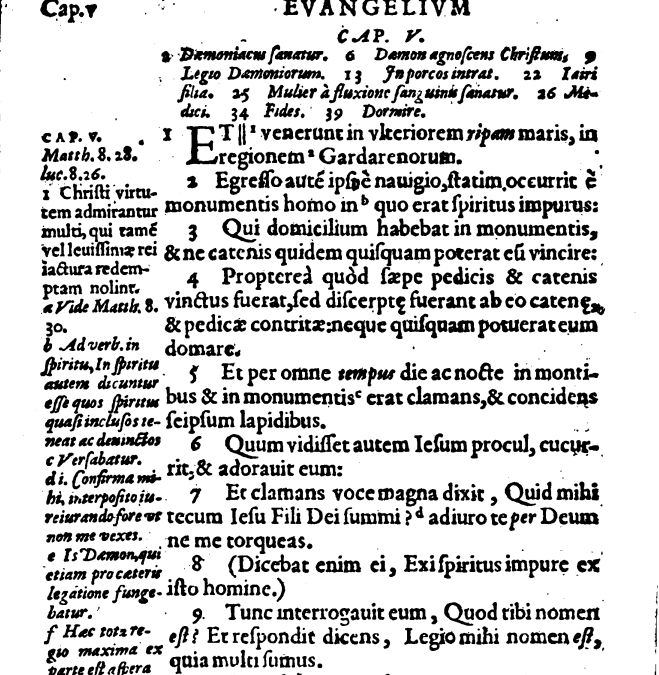
fretum: Mark 5 v1-9
fretum - dire straits The Latin noun fretum refers to a strait or narrow sea channel, often turbulent or dangerous, and is typically used to describe maritime passages between landmasses. Its...

coniunx: Virgil Aeneid Book 1 Line 343
coniunx - to have and to hold from this day forwardThe Latin noun coniunx (also spelt coniux) denotes ‘spouse’, encompassing both ‘husband’ and ‘wife’. It derives from the verb coniungo, meaning ‘to...

induco (in Catilinam 21)
induco - follow my leadThe Latin verb induco, meaning 'to lead in', 'to bring forward', or 'to introduce', appears in a variety of contexts in Cicero’s corpus, often with rhetorical or philosophical...

Caesar dBG Bk1 Ch17.5 noster
noster - our town The Latin adjective noster (feminine nostra, neuter nostrum) means 'our' and functions as a possessive determiner, indicating shared ownership or association with the speaker and...

cupiditas: Argonauts #21
cupiditas - desireThe Latin noun cupiditas, feminine and of the third declension, denotes desire, longing, or ambition, and features prominently in moral, philosophical, and political discourse...
saepe: in Catilinam (23) Vocab
saepe - more often than not The Latin adverb saepe means ‘often’ or ‘frequently’, and is used across classical Latin literature to indicate repeated or habitual action. Its semantic range is relatively stable, but its rhetorical and poetic function...
de: Caesar dBG Bk1 Ch18.9 Vocab
de - semantically richThe Latin preposition de is one of the most frequently used and semantically rich elements in classical Latin literature. Governing the ablative case, de primarily expresses notions of origin, separation, topic, and cause. Its...
quam: Argonauts #23 Vocab
quam - more than...The Latin word quam is remarkably versatile, functioning as an adverb, conjunction, and relative particle across a wide array of syntactic environments. Its core meaning—‘how’ or ‘than’—shifts depending on context, allowing...
ne: Mark 5 v10-16 Vocab
ne - no - with purpose The Latin particle ne is primarily used to introduce negative purpose clauses, indirect questions, and expressions of fear or prohibition. It is a syntactic marker rather than a lexical item with a standalone meaning. Yet its...
odium: Virgil Aeneid Book 1 Line 360 (Vocab)
odium - I hate to tell you... The Latin noun odium (neuter, second declension) means ‘hatred’, ‘disgust’, or ‘aversion’, and is used in classical Latin literature to express both personal animosity and broader social or political hostility. It can...
iste: in Catilinam (22) Vocab
iste - near the L-ISTE-NER The Latin demonstrative iste (feminine ista, neuter istud) is used to indicate something near the person addressed, often with a tone that reflects the speaker’s attitude toward the referent. Unlike hic, which points to...
augeo: Caesar dBG Bk1 Ch18.4 Vocab
augeo - augmented realityThe Latin verb augeo (augere, auxi, auctum) belongs to the second conjugation and carries the core meaning 'to increase', 'to enlarge', or 'to enhance'. Its semantic flexibility allows it to operate in both literal and...
dum: Argonauts #22 Vocab
dum - while, provided thatThe Latin word dum serves as a conjunction with a range of temporal and concessive meanings, making it a subtle yet potent tool in classical Latin literature. Its primary function is to denote simultaneity—'while'—but it...
trans: Mark 5 v1-9 Vocab
trans - one side or the other The Latin preposition trans means ‘across’, ‘beyond’, or ‘through’, and is used to indicate movement or extension from one side to another. It governs the accusative case and appears frequently in classical Latin...
magnus: Virgil Aeneid Book 1 Line 343 (Vocab)
magnus - the bigger they are...The Latin adjective magnus means ‘great’, ‘large’, or ‘important’, and its semantic range extends from physical size to moral stature, political power, and cosmic significance. It is one of the most frequently used...
utinam: in Catilinam (21) Vocab
utinam - a wishful desireThe Latin particle utinam expresses wish or desire, typically introducing optative subjunctive constructions. It conveys a hope for something that is either possible or, more often, contrary to fact. In classical Latin...
ab: Caesar dBG Bk1 Ch17.5 Vocab
ab - separation anxietyThe Latin preposition ab (alongside its variant a) is a foundational element of classical Latin syntax, expressing separation, origin, agency, and distance. It governs the ablative case and appears across genres, from...
et: Argonauts #21 Vocab
et - and, andThe Latin word et, meaning 'and', is among the most frequently encountered particles in classical Latin literature. Far from being a mere connective, et operates with remarkable flexibility, serving not only to link words and clauses...
contra: Mark 4 v35-41 Vocab
contra - opposition, critique, and deliberate resistanceThe Latin preposition and adverb contra—meaning ‘against’, ‘opposite’, or ‘in return’—is a word of confrontation, spatial and ideological. Compact yet loaded, contra threads through Latin...
haud: Virgil Aeneid Book 1 Line 327 (Vocab)
haud - not at allThe Latin adverb haud, meaning ‘not’ or ‘not at all’, is a nuanced tool of negation that carries more precision than the more common non. While non serves as a general negator, haud is reserved for contexts requiring emphasis,...