
newest posts
CLASSIC TEXTS
VOCAB TEXTS
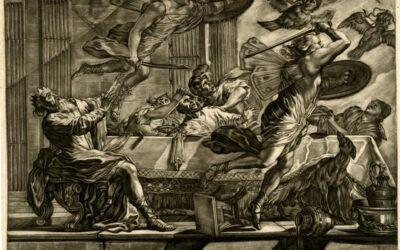
Phineus: Argonauts #8
Phineus Phineus, a significant figure in Greek mythology, is best known for his encounter with the Argonauts during their quest for the Golden Fleece. Phineus was a blind prophet who possessed the gift of foresight, but his clairvoyance came at a cost. According to myth, Phineus was punished by Zeus for abusing his prophetic abilities. Harpies As a result, he was blinded and tormented by the Harpies—foul creatures with the body of a bird and the face of a woman. These Harpies would constantly...
Capernaum – Mark 2 v1-7
Jesus is once more at Capernaum, where we find Him preaching and healing the sick. Jesus appears to have spent more time in Capernaum than any other city during his time on earth. Many of his miracles were performed here, as were many sermons. But nothing that Jesus said or did seems to have affected the inhabitants' hearts. They crowded to hear Him, amazed and astonished. They were filled with wonder at His mighty works. But they were not converted despite the fact that they heard the most...
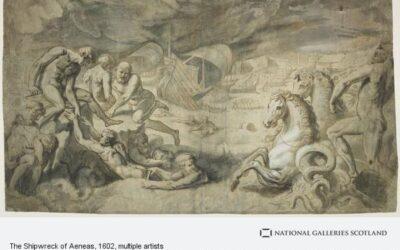
Orontes: Virgil Aeneid Book 1 Line 104
Orontes The first ship to be lost is that of Orontes and his Lycians. The violent storm sent by Aeolous and Juno leads to the shipwreck of many of Aeneas' fleet. According to Leslie S Smith this was not until the seventh year of his wanderings. Aeneas himself brought seven ships safely to anchorage – the that were saved from the rocks (line 108), three saved from Syrtes (ln 110) and the seventh was the flagship of Aeneas. Orontes There is not much known about Orontes apart from the fact that...
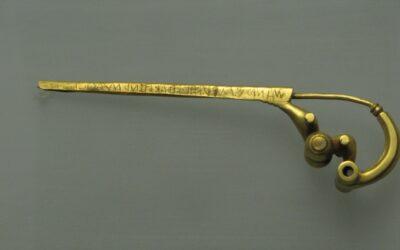
Praeneste (in Catilinam 7)
Praeneste Praeneste - a city not foar from Rome. Cicero continues his speech by gloating about Praeneste. He taunts Catiline with "What? When you made sure that you would be able to seize Praeneste on the first of November by a nocturnal attack. Did you not find that that colony was fortified by my order, by my garrison, by my watchfulness and care?" This city still exists as Prenstina in Lazio, about 35 kilometres (22 miles) east of Rome and is connected by the Via Prenestina. Praeneste...
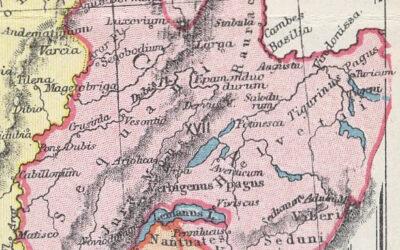
Caesar dBG Bk1 Ch6 inter montem et flumen
inter montem et flumeninter montem Iuram et flumen Rhodanum - The Helvetii are in the process of working out which of the two options they have available to them to take. The first is through the lands of the Sequani which is narrow and difficult as it passes between the Jura mountains and the river Rhone and the other which is easier but requires passing through Roman-held territory.Inter - preposition which requires the accusative.Todays word is inter which is a preposition meaning much the...
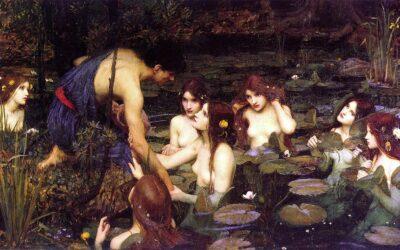
Hylas: Argonauts #7
Hylas Hylas, a handsome youth from Greek mythology, is famously known as the beloved companion of Heracles (Hercules). His story intertwines with the mythical Argonauts' journey in search of the Golden Fleece. While the Argonauts were anchored in Mysia, Hylas ventured to fetch water from a spring. Beauty However, his striking beauty caught the attention of the nymphs residing in the waters. Enchanted by his appearance, the nymphs reached out and pulled Hylas into the depths of the spring,...
Leper – Mark 1 v39-45
Leper A leper is cured by Jesus in Mark 1:39-45. This passage highlights Jesus’ ministry throughout Galilee, emphasizing His authority over demons and His compassion in healing. A leper is a person suffering from leprosy which affects the skin, nerves, and mucous membranes, leading to symptoms such as numbness, muscle weakness, and skin lesions. In the New Testament, leprosy is often associated with physical suffering and social exclusion.. Lepers symbolized impurity, and those afflicted were...
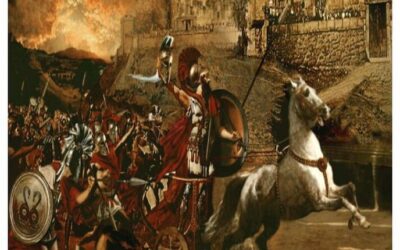
Troy: Virgil Aeneid Book 1 Line 87
Troy Under high Troy town is where Aeneas in his reported speech wishes he had died in battle and glory. Troy was a city in the region of Asia Minor in modern-day Turkey, which was the setting of one of the most famous events in Greek mythology, the Trojan War. The Greek fleet set sail for Troy after the city's prince, Paris, abducted or, according to other sources, eloped with Helen, the wife of King Menelaus of Sparta. Menelaus Menelaus, his brother Agamemnon, and other Greek leaders bound...
Gaius Manlius (in Catilinam 6)
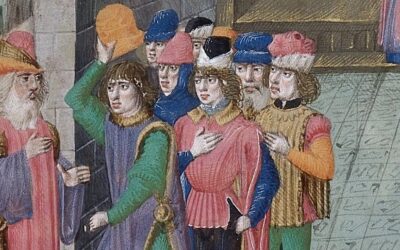
Gaius Manlius Manlius was a war veteran that fought under Sulla for many years. Cicero names him in this passage as one of Catiline’s main allies. After his years of service, he, like many of Sulla’s ex-soldiers, settled in Etruria where he came under financial difficulties. Due to Gaius Manlius’ and many of the veterans’ economic problems, they became a prime target in Catiline’s search for an army. Catiline for Consul Although Manlius desired debt relief and Catiline wanted the office of...
Caesar dBG Bk1 Ch4.3 post eius mortem
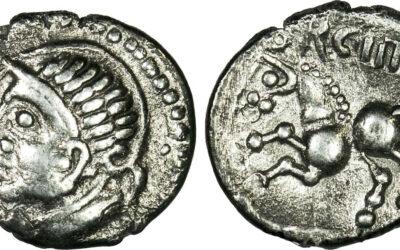
post eius mortemIn todays post the Helvetii discover that Orgetorix is dead - possibly from suicide. The Helvetii determine to set off on their expedition into foreign territory and to concentrate the minds of their citizens they order then to stock up and then burn everything else. This ensures that there is no turning back!Post - preposition or adverb?Todays word is post which exists as a preposition or as an adverb, both interestingly mean much the same in English: behind or after. However,...
Cyzicus: Argonauts #6
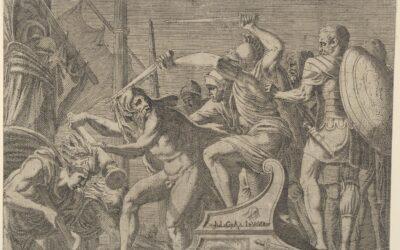
Cyzicus In Greek mythology, Cyzicus was the king of the Dolionians, a people living in the region of Cyzicus in Mysia. He played a tragic role in the journey of the Argonauts. When Jason and the Argonauts first arrived at his kingdom, Cyzicus welcomed them hospitably. However, a tragic misunderstanding led to his untimely death. Argonauts After leaving Cyzicus's land, the Argonauts encountered a severe storm that caused them to unintentionally return to the same shores. Mistaking them for...
Healing – Mark 1 v30-38
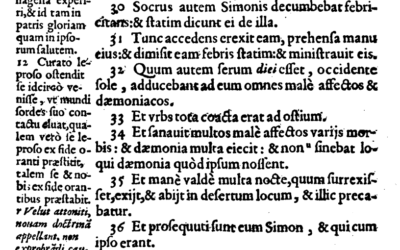
Healing Power Jesus’ healing power highlights Mark 1:30-38 and His commitment to spreading His message beyond a single location. The passage begins with Jesus visiting Simon Peter’s house, where He finds Peter’s mother-in-law suffering from a fever. He takes her by the hand, healing her instantly, and she immediately begins serving them. This act demonstrates Jesus’ authority over illness and His compassion for those in need. His healing is immediate and complete, reinforcing His divine power....
NEW POSTS
Virgil Aeneid Book 1 Line 1
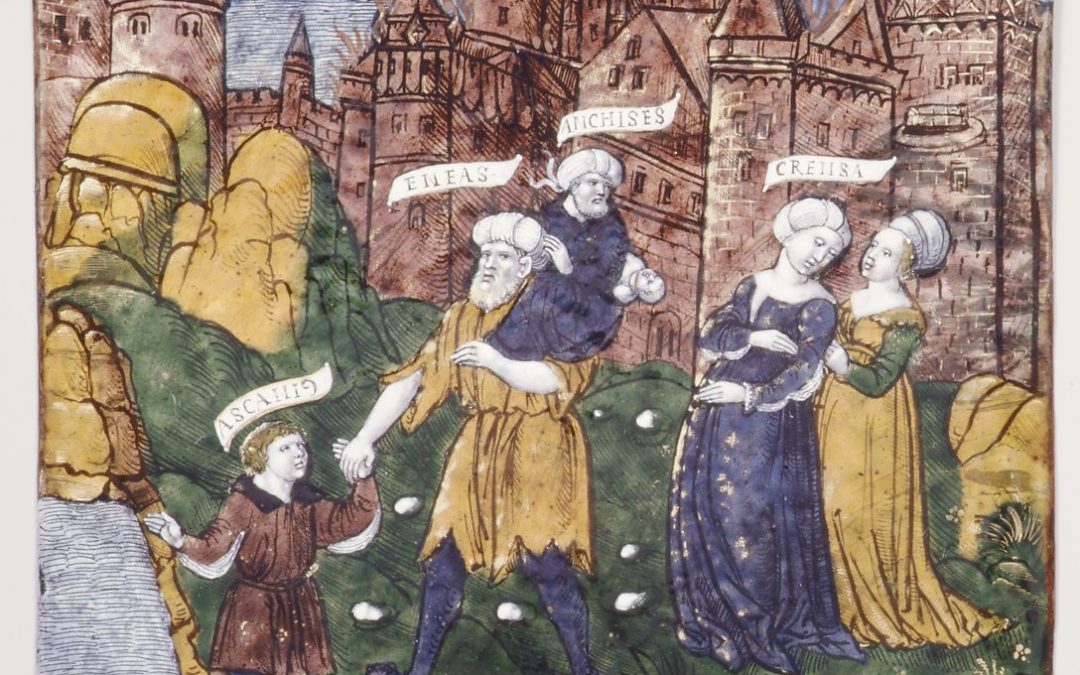
Exploring Vergil’s Aeneid: Book One, Part One The Aeneid, one of the cornerstones of classical literature, opens with the iconic phrase “arma virumque cano,” which translates to “I sing of arms and...
Gaius Gracchus (in Catilinam 3)
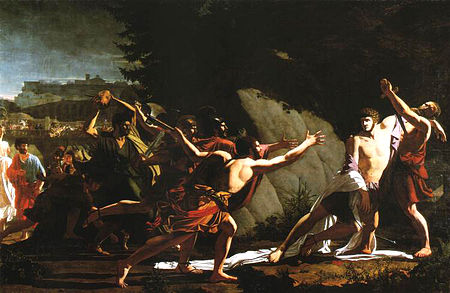
Gaius Gracchus Assassination Cicero uses the assassination of Gaius Gracchus to build his case against Catiline. He continues with his narration about previous events such as when the senate took it...

Publius Scipio (in Catilinam 2)
Publius Scipio In todays text Cicero raises the history of Publius Scipio, who was Pontifex Maximus when he attacked and killed Tiberius Gracchus a tribune in 133 BC. Publius Scipio whose full name...
Furor iste tuus (in Catilinam 1)
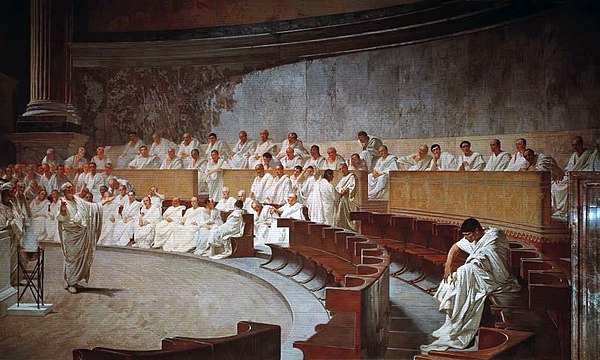
in Catilinam The main theme of the opening section is the anger (furor) of both protagonists Cicero and Cataline. Interestingly, the 'in' in in Catilinam does not mean the usual 'in' or 'on' but the...
Caesar dBG Bk1 Ch2.3 undique Helvetii continentur
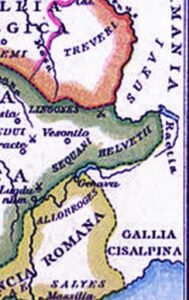
undique Helvetii continentur Caesar continues with his description of the Helvetii and that they are constrained undique by their geography relative to the Germanic tribes and the rest of Gaul. If...

Caesar dBG Bk1 Ch1.5 quam dictum est
quam dictum est Dictum - Caesar describes the three parts of Gail and one of these which it has been said (quam dictum est) takes its boundaries from the major rivers in the area. The Belgae, any of...

Caesar dBG Bk1 Ch1 Gallia est omnis divisa
Gallia est omnis divisa All three of our classical texts begin with a few famous words of Latin. Julius Caesar's de Bello Gallico starts with "Gallia est omnis divisa in partes tres" which is one of...
Missing Shoe: Argonauts #3
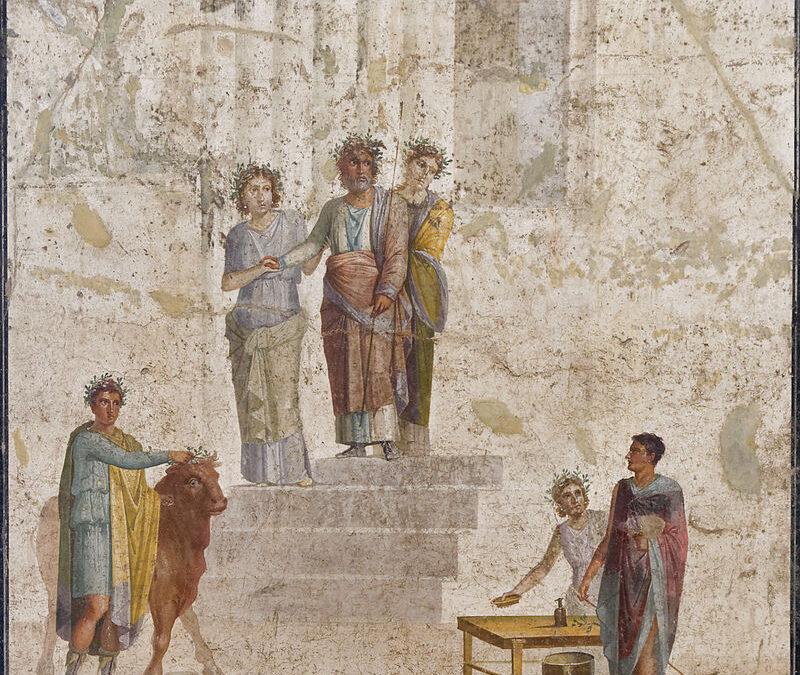
Jason's Missing Shoe The tale of Jason and his missing shoe is a fascinating piece of Greek mythology! It all begins with Pelias, the king of Iolcus, who had usurped the throne from Jason's father,...
Delphi: Argonauts #2
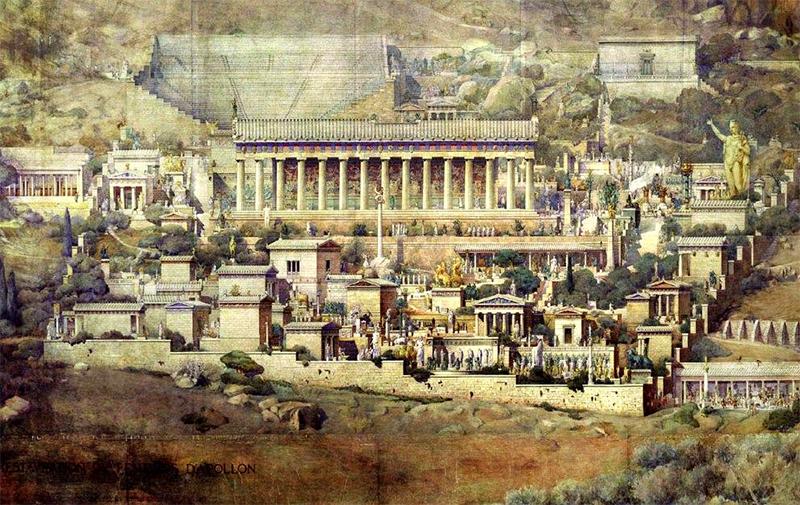
Delphi Delphi was almost certainly the most important religious center in antiquity. Delphi is located on the southern slopes of Mount Parnassos above the Corinthian Gulf in Greece. According to...

Pelias: Argonauts #1
Pelias The relationship between Jason and Pelias is steeped in rivalry and prophecy. Pelias, the king of Iolcus, had usurped the throne from Jason's father, Aeson, and was wary of losing his...
Phillipic 2 (1-2)
FULL DICTIONARY VERSION [1] Quonam meo fato, patres conscripti, fieri dicam, ut nemo his annis viginti rei publicae fuerit hostis, qui non bellum eodem tempore mihi quoque indixerit? Nec vero...
fortis: in Catilinam (2) Vocab
fortis - feeling strong?The Latin adjective fortis holds significant value as it translates to strong, brave, or courageous. This versatile word is integral to many classical texts, highlighting strength and valor in various contexts. fortis is a...
usque: in Catilinam (1) Vocab
usque - we could going all the way!The Latin adverb usque is a versatile term that generally means continuously, all the way, or up to. It is often used to express the extent or duration of an action or state, and can be combined with other words...
facile: de Bello Gallico Bk 1 Ch 2.3 Vocab
The Latin adverb facile translates to 'easily' in English and stems from the adjective facilis, meaning 'easy.' It is used to describe the manner in which an action is performed, emphasizing the ease or simplicity of the task. As an adverb, facile...
unus: de Bello Gallico Bk 1 Ch 1.5 Vocab
The Latin word unus translates to 'one' and serves as the numeral for the number 1. It is a fundamental term in Latin, often used in various contexts, including mathematics, literature, and everyday conversation. unus is an irregular adjective with...
sum: de Bello Gallico Bk 1 Ch 1 Vocab
The Latin verb sum translates to "I am" and stands as one of the most fundamental verbs in the Latin language, representing the essence of existence and being. As an irregular verb, sum plays a crucial role in forming compound tenses with other...
pes: Argonauts #3 Vocab
pes - what's afoot?The Latin term pes, meaning foot, plays a fundamental role in ancient language, literature, and culture. Used in both literal and figurative contexts, connects to various aspects of Roman daily life, military affairs, and...
tempus: Argonauts #2 Vocab
tempus fugit!tempus, the Latin word for time, is a cornerstone of Roman culture and thought, threading through both everyday life and deeper philosophical musings. The term belongs to the third declension, with its plural form being tempora. It’s...
duo: Argonauts #1 Vocab
duo - What a pair!The word duo means two and is the root of many familiar English words. Originating from the Proto-Italic *duō*, which in turn comes from the Proto-Indo-European *dwoh*, duo has certainly come a long way. In classical Latin, duo...