
newest posts
CLASSIC TEXTS
VOCAB TEXTS
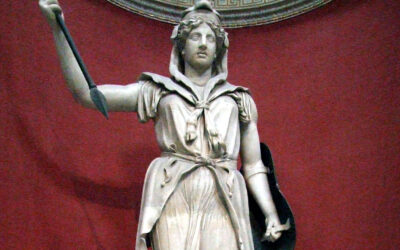
Juno: Virgil Aeneid Book 1 Line 39
The Significance of Juno in Roman Mythology Juno, the daughter of Saturn, is a pivotal figure in Roman mythology, revered as the queen of the gods and the female counterpart to Jupiter. Her role transcends mere symbolism; she embodies the essence of womanhood, marriage, and family life. As a member of the Capitoline triad, which includes Jupiter and Minerva, Juno was integral to the spiritual and social dynamics of ancient Rome, influencing both religious practices and daily life. Juno’s...
Paris: Virgil Aeneid Book 1 Line 19
Paris and Juno’s Grudge: The Judgement of Paris The tale of the Judgement of Paris is a fascinating episode in Greek mythology that highlights themes of beauty, rivalry, and the far-reaching consequences of seemingly trivial decisions. At the heart of this story is Juno, the daughter of Saturn, who harbors a deep-seated grudge stemming from a fateful competition for an apple on Mount Olympus. The myth begins at the wedding of Peleus and Thetis, where all the gods were invited—except for...
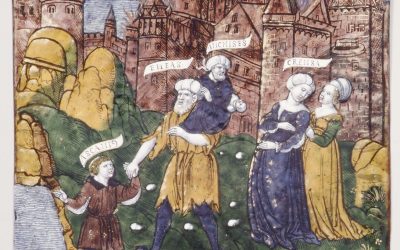
Virgil Aeneid Book 1 Line 1
Exploring Vergil’s Aeneid: Book One, Part One The Aeneid, one of the cornerstones of classical literature, opens with the iconic phrase “arma virumque cano,” which translates to “I sing of arms and the man.” This powerful introduction sets the stage for an epic journey, invoking themes of war and heroism. Virgil’s choice of words is not only memorable but also deeply significant, as it encapsulates the essence of the narrative that follows. Muses In this first segment, Virgil calls upon the...
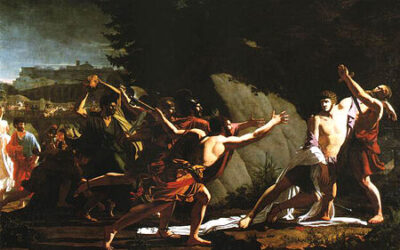
Gaius Gracchus (in Catilinam 3)
Gaius Gracchus Assassination Cicero uses the assassination of Gaius Gracchus to build his case against Catiline. He continues with his narration about previous events such as when the senate took it into it's hands to deal with rebels like when Lucius Opimius, the consul, had Gaius Gracchus, a man whose family had borne the most unblemished reputation for many generations, put to death. Mass Protest The background to this episode is that when Gaius Gracchus and M. Fulvius Flaccus were defeated...
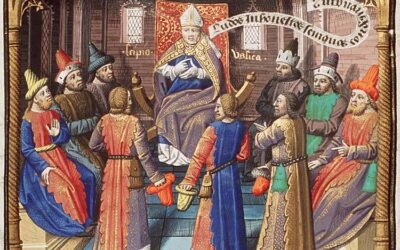
Publius Scipio (in Catilinam 2)
Publius Scipio In todays text Cicero raises the history of Publius Scipio, who was Pontifex Maximus when he attacked and killed Tiberius Gracchus a tribune in 133 BC. Publius Scipio whose full name was Publius Cornelius Scipio Nasica Serapio as he was a member of the great patrician gens Cornelia, and was one of many Scipios filling important roles in Roman history such as his cousin Scipio Aemilianus or Scipio Africanus the Younger, who was a Roman general and statesman noted for his military...
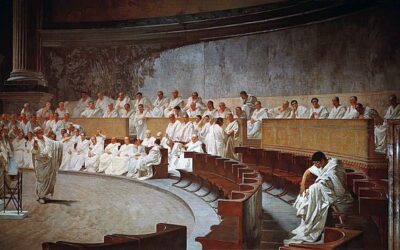
Furor iste tuus (in Catilinam 1)
in Catilinam The main theme of the opening section is the anger (furor) of both protagonists Cicero and Cataline. Interestingly, the 'in' in in Catilinam does not mean the usual 'in' or 'on' but the less frequently seen 'against'. In Catilinam is a series of speeches - the Catiline or Catilinarian Orations - delivered to the Roman Senate given in 63 BC by Marcus Tullius Cicero, one of the year's consuls, accusing a senator, Lucius Sergius Catilina (Catiline), of leading a plot to overthrow the...
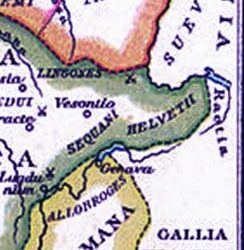
Caesar dBG Bk1 Ch2.3 undique Helvetii continentur
undique Helvetii continentur Caesar continues with his description of the Helvetii and that they are constrained undique by their geography relative to the Germanic tribes and the rest of Gaul. If you look at the map above you can clearly see why the Helvetii felt themselves to be constrained. This feeling prompted the suggested migration from the Swiss plateau through the neighbouring states to seek pastures new for their people. The Helvetii or Helvetians, were a Celtic tribe occupying most...

Caesar dBG Bk1 Ch1.5 quam dictum est
quam dictum est Dictum - Caesar describes the three parts of Gail and one of these which it has been said (quam dictum est) takes its boundaries from the major rivers in the area. The Belgae, any of the inhabitants of Gaul north of the Sequana and Matrona (Seine and Marne) rivers was a term apparently first applied by Julius Caesar. Evidence suggests that the Roman influence penetrated into those areas about 150 BC. The Belgae of Gaul formed a coalition against Caesar after his first Gallic...
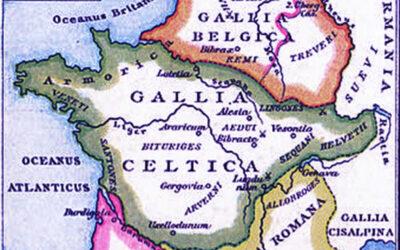
Caesar dBG Bk1 Ch1 Gallia est omnis divisa
Gallia est omnis divisa All three of our classical texts begin with a few famous words of Latin. Julius Caesar's de Bello Gallico starts with "Gallia est omnis divisa in partes tres" which is one of the best known Latin introductions. At CentumVerba.com my idea is to work through the classical texts that were studied over a century ago when Latin was popular. With De Bello Gallico, the plan is to work through the text of Book 1 roughly 100 words at a time, in manageable chunks. In this post...
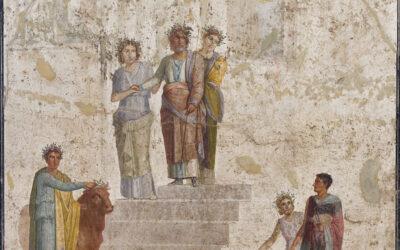
Missing Shoe: Argonauts #3
Jason's Missing Shoe The tale of Jason and his missing shoe is a fascinating piece of Greek mythology! It all begins with Pelias, the king of Iolcus, who had usurped the throne from Jason's father, Aeson. An oracle had prophesied that Pelias would be overthrown by a man wearing only one sandal. Naturally, Pelias was on high alert for such a person. One Sandal Enter Jason, the rightful heir to the throne. As fate would have it, on his journey back to Iolcus, Jason encountered an old woman (who...
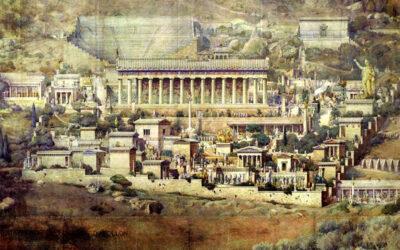
Delphi: Argonauts #2
Delphi Delphi was almost certainly the most important religious center in antiquity. Delphi is located on the southern slopes of Mount Parnassos above the Corinthian Gulf in Greece. According to mythology, Zeus, who ruled as king of the gods on Mount Olympus, released two eagles to find the centre of the world. The two eagles apparently came together in Delphi and that is why this place is considered the Navel of Earth. Pythia The development of the sanctuary and the oracle began in the 8th...
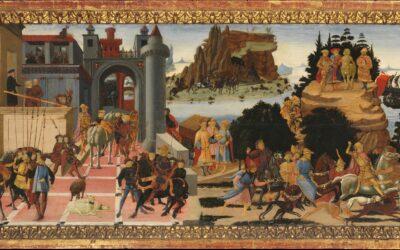
Pelias: Argonauts #1
Pelias The relationship between Jason and Pelias is steeped in rivalry and prophecy. Pelias, the king of Iolcus, had usurped the throne from Jason's father, Aeson, and was wary of losing his ill-gotten power. An oracle had prophesied that Pelias would be overthrown by a man wearing one sandal. This prophecy became a pivotal element in their relationship. Jason, the rightful heir to the throne, unwittingly fulfilled the prophecy when he arrived in Iolcus with only one sandal, having lost the...
NEW POSTS
No Results Found
The page you requested could not be found. Try refining your search, or use the navigation above to locate the post.
No Results Found
The page you requested could not be found. Try refining your search, or use the navigation above to locate the post.