
by Ian | Jun 30, 2025 | Argonauts Vocab
dies- name the day The Latin noun dies (genitive diei) belongs to the rare fifth declension and denotes the period of daylight or a calendar day. Although most fifth-declension nouns are feminine, dies can be either masculine or feminine: classical authors often treat...
by Ian | Jun 27, 2025 | Mark SbS
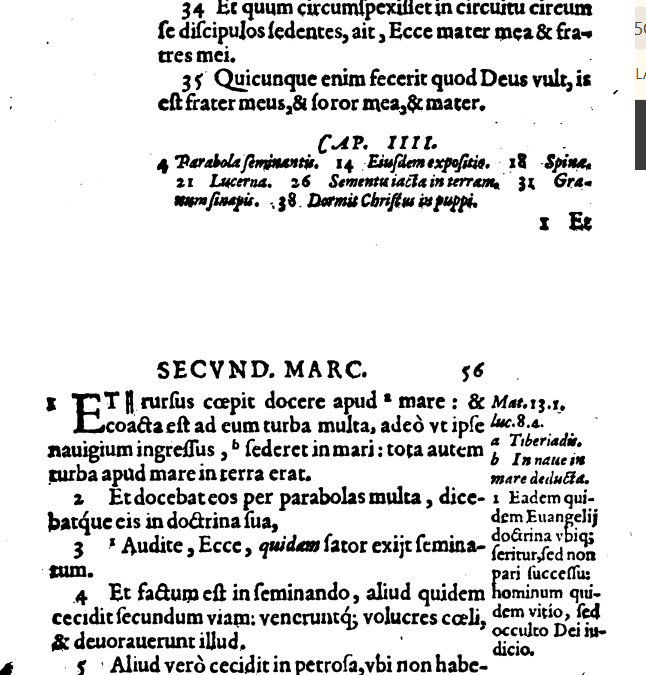
33 And he answered them, saying, Who is my mother, or my brethren?34 And he looked round about on them which sate about him, and saide, Behold my mother and my brethren.35 For whosoeuer shall doe the will of God, the same is my brother, and my sister, and mother....
by Ian | Jun 27, 2025 | Mark Vocab
quando - when o when? The Latin word quando is an adverb and conjunction meaning 'when'. In both Classical and Ecclesiastical Latin, it plays an important role in temporal expressions and conditional clauses, showing flexibility in tone, structure, and theological...
by Ian | Jun 26, 2025 | Aeneid Translation
This was my solace for the wretched ruin of sunken Troy, doom balanced against doom. Now so many woes are spent, and the same fortune still pursues them; Lord and King, what limit dost thou set to their agony? Antenor could elude the encircling Achaeans, could thread...

by Ian | Jun 26, 2025 | Aeneid Vocab
equidem - enough indeed The Latin word equidem is an emphatic adverb meaning 'indeed', 'certainly', or 'for my part'. It is often used to reinforce a speaker's assertion, adding conviction or sincerity to a statement. While equidem is typically restricted to...
by Ian | Jun 25, 2025 | Cicero in Catilinam-SbS
You came a little while ago into the senate in so numerous an assembly, who of so many friends and connections of yours saluted you? If this in the memory of man never happened to any one else, are you waiting for insults by word of mouth, when you are overwhelmed by...

Recent Comments