
by Ian | Sep 9, 2025 | dBG Book 1
peto - they seek him everywhere The Latin verb peto—meaning ‘to seek’, ‘to aim at’, or ‘to request’—is a third-conjugation verb with a wide semantic range, making it a frequent and adaptable element in classical Latin literature. Its principal parts (peto, petere,...

by Ian | Sep 2, 2025 | dBG Book 1
lacrima - tears of grief or joy The Latin noun lacrima, meaning ‘tear’, is a word rich in emotional and poetic resonance throughout classical Latin literature. As a feminine first-declension noun, lacrima appears in contexts ranging from grief and mourning to joy and...

by Ian | Aug 26, 2025 | dBG Book 1
frater - brotherly love The Latin noun frater, meaning 'brother', is a third-declension masculine noun with the genitive form fratris. In classical Latin literature, frater appears frequently, not only in familial contexts but also in political, military, and...

by Ian | Aug 19, 2025 | dBG Book 1
imperium - absolute power The Latin word imperium in Caesar’s writings denotes a complex and potent concept: the legal and military authority vested in a Roman magistrate or commander. Derived from imperare, meaning 'to command', imperium in Caesar’s usage is not...
by Ian | Aug 12, 2025 | dBG Book 1
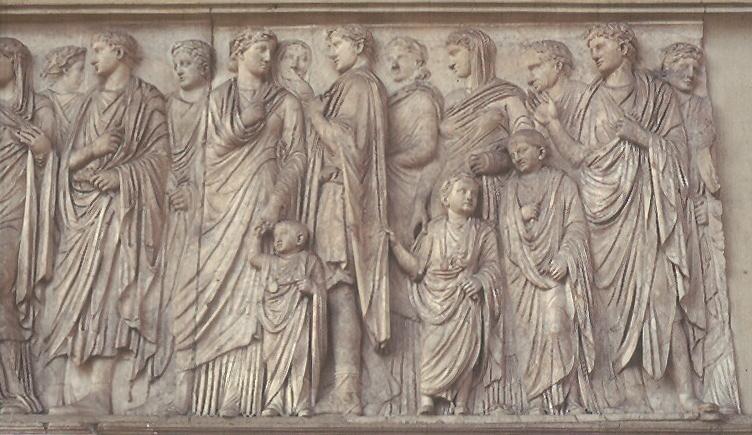
familiaris - keep it in the family The Latin adjective and noun familiaris carries meanings related to intimacy, household, and personal association. As an adjective, it denotes something 'of the household', 'intimate', or 'friendly'; as a noun, it refers to a close...

by Ian | Aug 5, 2025 | dBG Book 1
noster - our town The Latin adjective noster (feminine nostra, neuter nostrum) means 'our' and functions as a possessive determiner, indicating shared ownership or association with the speaker and others. It belongs to the first/second declension and must agree in...

Recent Comments