
Juno and Aeolus: The Marriage Proposal of Deiopea
In Vergil’s Aeneid, the discussion between Juno and Aeolus regarding the nymph Deiopea is a fascinating exploration of beauty, power, and divine intervention. Deiopea, one of Juno’s fourteen nymphs, is promised in marriage to Aeolus, the king of the winds, as a reward for his assistance in shipwrecking the Trojan refugees. This arrangement highlights the intricate relationships among the gods and their influence over mortal affairs.
Vergil describes Deiopea with the phrase praestanti corpore, which translates to “most excellent in beauty” in the 1885 Mackail translation. This description emphasizes her physical allure, making her an ideal candidate for marriage, particularly in the context of producing a beautiful lineage. The notion of beauty in this context is not merely superficial; it symbolizes the potential for creating a race of children who embody the grace and power of their divine heritage.
The marriage between Deiopea and Aeolus serves as a strategic alliance, showcasing how beauty and power intertwine in the realm of the gods. Juno’s manipulation of Aeolus through the promise of Deiopea reflects her desire to exert control over the unfolding events in the Trojan saga. This dynamic illustrates the broader themes of fate and divine influence that permeate the Aeneid, where personal desires often intersect with larger cosmic forces.
In essence, the discussion of Deiopea’s marriage encapsulates the complexities of relationships among the gods, the significance of beauty, and the intricate web of alliances that shape the narrative of the Aeneid. It invites readers to reflect on the interplay between love, power, and destiny in both divine and mortal realms.
Aeolus Sets the Winds Loose
Aeolus continues his discussion with Juno and then sets loose the East, West and South-Westerly winds with a strike of the hollow hill with his spear and they head out to do their damage.
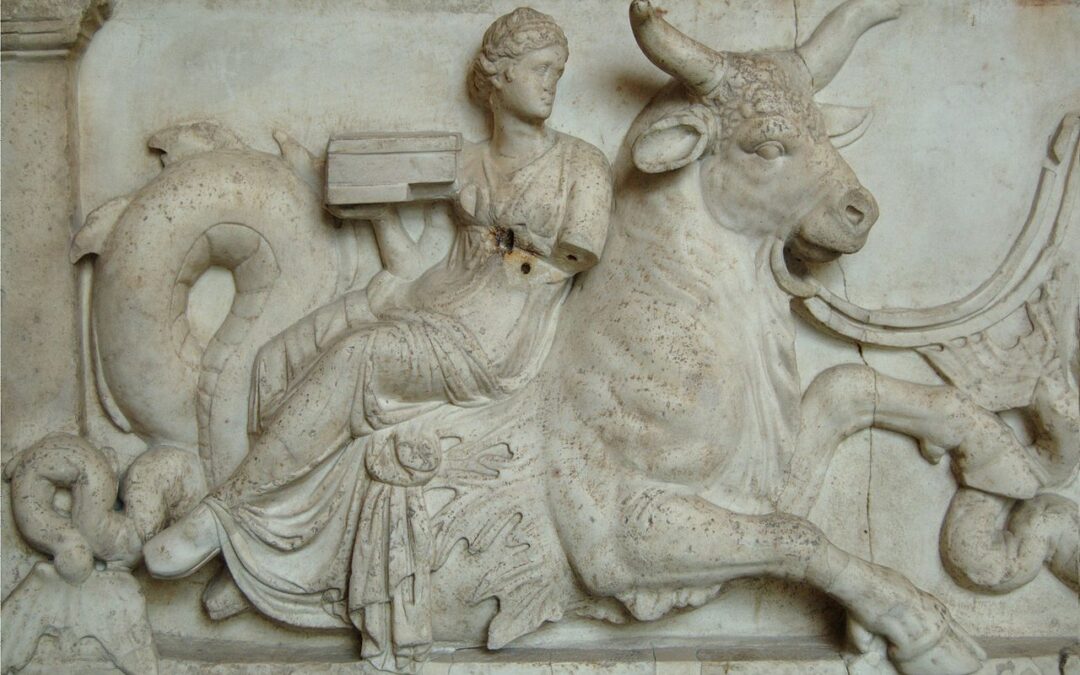
Today's Artwork is the so-called:
“Altar of Domitius Ahenobarbus” or “Statue Base of Marcus Antonius”,
The relief freize of a monumental statue group base. Sea thiasos for the wedding of Poseidon and Amphitrite, 2nd half of the 2nd century BC.
Detail: Nereid on a sea-bull, bringing a present (front panel).
Here is a text only version. (See below for an interactive version)
"...Sunt mihi bis septem praestanti corpore nymphae,
quarum quae forma pulcherrima Deiopea,
conubio iungam stabili propriamque dicabo,
omnis ut tecum meritis pro talibus annos
75 exigat, et pulchra faciat te prole parentem.”
Aeolus haec contra: “Tuus, O regina, quid optes
explorare labor; mihi iussa capessere fas est.
Tu mihi, quodcumque hoc regni, tu sceptra Iovemque
concilias, tu das epulis accumbere divom,
80 nimborumque facis tempestatumque potentem.”
Haec ubi dicta, cavum conversa cuspide montem
impulit in latus: ac venti, velut agmine facto,
qua data porta, ruunt et terras turbine perflant.
Incubuere mari, totumque a sedibus imis
85 una Eurusque Notusque ruunt creberque procellis
Africus, et vastos volvunt ad litora fluctus.
Need Help Understanding the Latin?
You might find it helpful to start with the Side-by-Side Version which allows you to see my own very literal translation of the text which is almost a word-for-word translation - in an attempt to make it easier to understand the Latin!
Finally come back to this page - Classical Text and you should be able to better understand and competently read the original Latin text.
Vocabulary Version
I have prepared a Vocabulary Version of the passage (link at bottom of the page) which highlights the 3057 Most Common Words in the texts of Vergil, Caesar and Cicero that we will explore on CentumVerba.com
If you are serious about building your vocabulary, the FLASHCARD set should help you learn them.
How To Read the Interactive Text
To Read the Interactive Text Below Without a Dictionary-
On a Computer: you hover over a word and get all the possible parts of speech; declensions; and conjugations of every word.
Need Help Understanding the Latin?
You might find it helpful to start with the Side-by-Side Version which allows you to see my own very literal translation of the text which is almost a word-for-word translation - in an attempt to make it easier to understand the Latin!
Finally come back to this page - Classical Text and you should be able to better understand and competently read the original Latin text.
Vocabulary Version
I have prepared a Vocabulary Version of the passage (link at bottom of the page) which highlights the 3057 Most Common Words in the texts of Vergil, Caesar and Cicero that we will explore on CentumVerba.com
If you are serious about building your vocabulary, the FLASHCARD set should help you learn them.
How To Read the Interactive Text
To Read the Interactive Text Below Without a Dictionary-
On a Phone or Tablet: don't 'hover' -'tap' the word. To remove the 'definition box' you 'tap' to the side of the text box.
INTERACTIVE DICTIONARY FREE TEXT
"...Sunt mihi bis septem praestanti corpore Nymphae, quarum quae forma pulcherrima Deiopea,
conubio iungam stabili propriamque dicabo,
omnis ut tecum meritis pro talibus annos
exigat et pulchra faciat te prole parentem.”
You Need to be a Member to Access the Interactive Dictionary
Aeolus haec contra: “Tuus, O regina, quid optes
explorare labor; mihi iussa capessere fas est.
Tu mihi, quodcumque hoc regni, tu sceptra¹ Iovemque concilias, tu das epulis accumbere divom,
nimborumque facis tempestatumque potentem.”
Haec ubi dicta, cavum conversa cuspide montem
impulit in latus: ac venti, velut agmine facto,
qua data porta, ruunt et terras turbine perflant.
Incubuere mari, totumque a sedibus imis
una Eurusque Notusque ruunt creberque procellis
Africus, et vastos volvunt ad litora fluctus.
¹sceptra - plural indicates more fulness of kingly power than singular.
INTERACTIVE DICTIONARY FREE TEXT
"... Sunt mihi bis septem praestanti corpore Nymphae, quarum quae forma pulcherrima Deiopea, conubio iungam stabili propriamque dicabo, omnis ut tecum meritis pro talibus annos exigat, et pulchra faciat te prole parentem.”
You Need to be a Member to Access the Interactive Dictionary
Aeolus haec contra: “Tuus, O regina, quid optes explorare labor; mihi iussa capessere fas est.
Tu mihi, quodcumque hoc regni, tu sceptra¹ Iovemque concilias, tu das epulis accumbere divom, nimborumque facis tempestatumque potentem.”
Haec ubi dicta, cavum conversa cuspide montem impulit in latus: ac venti, velut agmine facto, qua data porta, ruunt et terras turbine perflant.
Incubuere mari, totumque a sedibus imis una Eurusque Notusque ruunt creberque procellis Africus, et vastos volvunt ad litora fluctus.
Recent Comments