
by Ian | May 8, 2025 | Aeneid Vocab
The Versatility of the Latin Adjective 'rarus' rarus (feminine rara, neuter rarum); first/second-declension adjective [comparative rarior, superlative rarissimus, adverb rara or rare] In the rich tapestry of the Latin language, few adjectives are as versatile as...

by Ian | May 1, 2025 | Aeneid Vocab
The Power of 'frango': Breaking Boundaries in Latin frango (present infinitive frangere, perfect active fregi, supine fractum); third conjugation Sent by Copilot: In the rich tapestry of Latin, few verbs encapsulate the duality of strength and fragility as effectively...

by Ian | Apr 24, 2025 | Aeneid Vocab
The Resonance of 'clamor': Voices of Protest and Joy clamor m (genitive clamoris); third declension meaning a loud call, a shout or an outcry or protest. Sent by Copilot: In the rich landscape of Latin, the noun clamor (genitive clamoris) stands out as a powerful term...

by Ian | Apr 17, 2025 | Aeneid Vocab
The Versatility of 'proprius': Embracing Individuality proprius (feminine propria, neuter proprium); first/second-declension adjective Sent by Copilot: In the rich lexicon of Latin, the adjective proprius (feminine propria, neuter proprium) stands out for its...
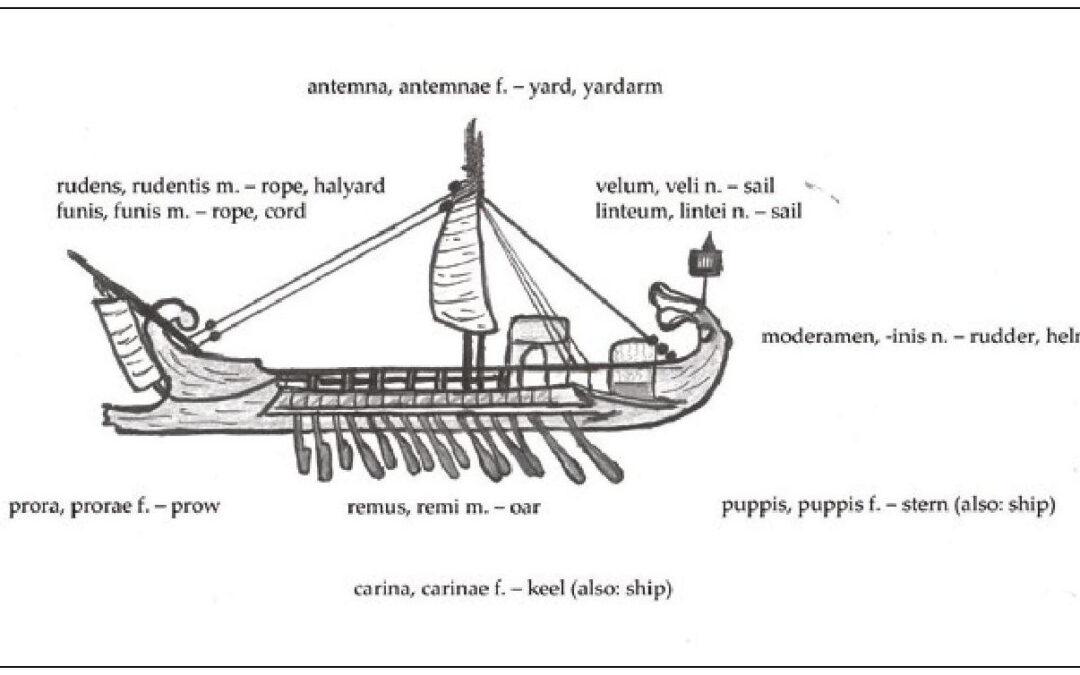
by Ian | Apr 10, 2025 | Aeneid Vocab
Understanding puppis: The Synecdoche of Ship Anatomy Sent by Copilot: The Latin word puppis refers specifically to the back of a ship, but it can also serve as a noun for the entire vessel. This usage exemplifies a figure of speech known as synecdoche, where a part is...

by Ian | Apr 3, 2025 | Aeneid Vocab
carcer VOCAB VERSION of Vergil: Aeneid Book 1.39 The noun carcer, masculine (genitive carceris), belongs to the third declension and is translated as a prison, jail or jailbird. Prison or jail is its use in this passage. Interestingly it can also mean the barriers at...

Recent Comments