
Marcus Tullius Cicero Posts
ALL Cicero Posts From Most Recent to Earlier
Naked Latin Highlighter Strip: Cicero de Oratore
Highlighter Strip of this Full Original Sentence Cogitanti mihi saepe numero et memoria vetera repetenti perbeati fuisse, Quinte frater, illi videri solent, qui in optima re publica, cum et honoribus et rerum gestarum gloria florerent, eum vitae cursum tenere potuerunt, ut vel in negotio sine periculo vel in otio cum dignitate esse possent; ac fuit cum mihi quoque initium requiescendi atque animum ad utriusque nostrum praeclara studia referendi fore iustum et prope ab omnibus concessum...
Marcus Tullius Cicero: Life, Works, and Legacy
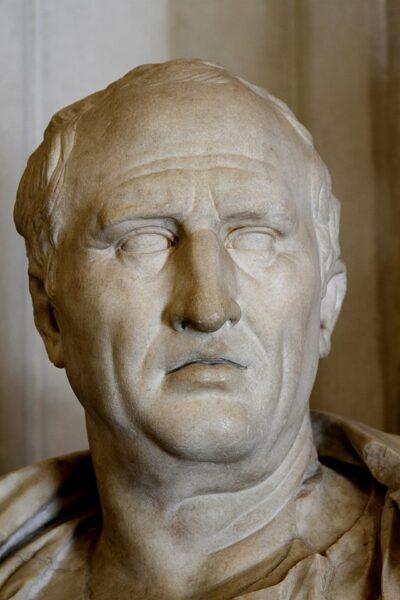
Explore the profound impact of Cicero on literature and philosophy, and understand his enduring influence on Western thought.Intro Marcus Tullius Cicero (106–43 BC) was a Roman statesman, orator, and writer who played a pivotal role in the politics of the late Roman Republic. Renowned for his eloquence and philosophical writings, Cicero's career was marked by his efforts to uphold the principles of the Republic against the rise of autocratic power. His most notable achievements include his...
etenim (in Catilinam 26)
etenim - for indeed The Latin conjunction etenim functions as a nuanced connective, typically translated as 'for indeed' or 'and in fact'. It combines et and enim, reinforcing the causal or explanatory force of a statement while also signalling its rhetorical emphasis. In classical literature, etenim often appears in argumentative or narrative contexts where the speaker seeks to justify, elaborate, or underscore a preceding claim. Cicero makes frequent use of etenim in his orations and...
patrius (in Catilinam 25)
patrius - inherited duty The Latin verb careo (first person careo, infinitive carere, perfect carui) means ‘to be without’, ‘to lack’, or ‘to be free from’, and it governs the ablative case. It is used in classical Latin literature to express absence, deprivation, or voluntary renunciation, often with moral, emotional, or philosophical implications. In Cicero’s prose, careo frequently appears in ethical and rhetorical contexts. He uses it to describe the absence of virtues, resources, or...
vita (in Catilinam 24)
careo - nothing to do with care The Latin verb careo (first person careo, infinitive carere, perfect carui) means ‘to be without’, ‘to lack’, or ‘to be free from’, and it governs the ablative case. It is used in classical Latin literature to express absence, deprivation, or voluntary renunciation, often with moral, emotional, or philosophical implications. In Cicero’s prose, careo frequently appears in ethical and rhetorical contexts. He uses it to describe the absence of virtues, resources,...
careo (in Catilinam 23)
careo - nothing to do with care The Latin verb careo (first person careo, infinitive carere, perfect carui) means ‘to be without’, ‘to lack’, or ‘to be free from’, and it governs the ablative case. It is used in classical Latin literature to express absence, deprivation, or voluntary renunciation, often with moral, emotional, or philosophical implications. In Cicero’s prose, careo frequently appears in ethical and rhetorical contexts. He uses it to describe the absence of virtues, resources,...
sermo (in Catilinam 22)
sermo - let's have a word The Latin noun sermo (genitive sermonis) refers primarily to spoken discourse, conversation, or dialogue, and is distinct from more formal or elevated terms like oratio or dictio. In classical Latin literature, sermo often connotes informal, everyday speech, and is frequently used to contrast with stylized or rhetorical language. Cicero employs sermo in philosophical dialogues to denote the exchange of ideas in a conversational tone, as opposed to declamatory or...
induco (in Catilinam 21)
induco - follow my leadThe Latin verb induco, meaning 'to lead in', 'to bring forward', or 'to introduce', appears in a variety of contexts in Cicero’s corpus, often with rhetorical or philosophical nuance. Its basic sense of physical or metaphorical introduction lends itself well to Cicero’s style, particularly in his orations and dialogues, where argumentation and persuasion hinge on the careful presentation of ideas, characters, or emotions. In his rhetorical works, such as De Oratore,...
quiesco (in Catilinam 20)
quiesco - I take a restThe Latin verb quiesco, meaning 'to rest', 'to be quiet', or 'to be inactive', is derived from quies, denoting rest or repose. In classical Latin literature, quiesco often conveys more than mere physical stillness—it suggests a withdrawal from action, a suspension of movement, or a deliberate pause in the rhythm of life. Its semantic range allows it to appear in contexts both literal and metaphorical, from battlefield lulls to philosophical meditations. In Virgil’s...
refero (in Catilinam 19)
refero - bring it backThe verb refero, meaning ‘to bring back’, ‘to report’, or ‘to relate’, is densely woven into the rhetorical and narrative texture of classical Latin literature. It is a compound of fero with the prefix re-, marking return or repetition, and its usage ranges from formal communication to interpretive reflection. In Cicero, refero is central to the political lexicon. During Senate debates, to referre ad senatum meant to formally present a matter for deliberation. In In...
Cicero in Catilinam Posts From Most Recent to Earlier
etenim (in Catilinam 26)
etenim - for indeed The Latin conjunction etenim functions as a nuanced connective, typically translated as 'for indeed' or 'and in fact'. It combines et and enim, reinforcing the causal or explanatory force of a statement while also signalling its rhetorical emphasis. In classical literature, etenim often appears in argumentative or narrative contexts where the speaker seeks to justify, elaborate, or underscore a preceding claim. Cicero makes frequent use of etenim in his orations and...
patrius (in Catilinam 25)
patrius - inherited duty The Latin verb careo (first person careo, infinitive carere, perfect carui) means ‘to be without’, ‘to lack’, or ‘to be free from’, and it governs the ablative case. It is used in classical Latin literature to express absence, deprivation, or voluntary renunciation, often with moral, emotional, or philosophical implications. In Cicero’s prose, careo frequently appears in ethical and rhetorical contexts. He uses it to describe the absence of virtues, resources, or...
vita (in Catilinam 24)
careo - nothing to do with care The Latin verb careo (first person careo, infinitive carere, perfect carui) means ‘to be without’, ‘to lack’, or ‘to be free from’, and it governs the ablative case. It is used in classical Latin literature to express absence, deprivation, or voluntary renunciation, often with moral, emotional, or philosophical implications. In Cicero’s prose, careo frequently appears in ethical and rhetorical contexts. He uses it to describe the absence of virtues, resources,...
careo (in Catilinam 23)
careo - nothing to do with care The Latin verb careo (first person careo, infinitive carere, perfect carui) means ‘to be without’, ‘to lack’, or ‘to be free from’, and it governs the ablative case. It is used in classical Latin literature to express absence, deprivation, or voluntary renunciation, often with moral, emotional, or philosophical implications. In Cicero’s prose, careo frequently appears in ethical and rhetorical contexts. He uses it to describe the absence of virtues, resources,...
sermo (in Catilinam 22)
sermo - let's have a word The Latin noun sermo (genitive sermonis) refers primarily to spoken discourse, conversation, or dialogue, and is distinct from more formal or elevated terms like oratio or dictio. In classical Latin literature, sermo often connotes informal, everyday speech, and is frequently used to contrast with stylized or rhetorical language. Cicero employs sermo in philosophical dialogues to denote the exchange of ideas in a conversational tone, as opposed to declamatory or...
induco (in Catilinam 21)
induco - follow my leadThe Latin verb induco, meaning 'to lead in', 'to bring forward', or 'to introduce', appears in a variety of contexts in Cicero’s corpus, often with rhetorical or philosophical nuance. Its basic sense of physical or metaphorical introduction lends itself well to Cicero’s style, particularly in his orations and dialogues, where argumentation and persuasion hinge on the careful presentation of ideas, characters, or emotions. In his rhetorical works, such as De Oratore,...
quiesco (in Catilinam 20)
quiesco - I take a restThe Latin verb quiesco, meaning 'to rest', 'to be quiet', or 'to be inactive', is derived from quies, denoting rest or repose. In classical Latin literature, quiesco often conveys more than mere physical stillness—it suggests a withdrawal from action, a suspension of movement, or a deliberate pause in the rhythm of life. Its semantic range allows it to appear in contexts both literal and metaphorical, from battlefield lulls to philosophical meditations. In Virgil’s...
refero (in Catilinam 19)
refero - bring it backThe verb refero, meaning ‘to bring back’, ‘to report’, or ‘to relate’, is densely woven into the rhetorical and narrative texture of classical Latin literature. It is a compound of fero with the prefix re-, marking return or repetition, and its usage ranges from formal communication to interpretive reflection. In Cicero, refero is central to the political lexicon. During Senate debates, to referre ad senatum meant to formally present a matter for deliberation. In In...
receptus (in Catilinam 18)
receptus - are you receiving me? The Latin word receptus, derived from the verb recipio, functions both as a noun meaning ‘retreat’, ‘shelter’, or ‘haven’, and as a participle denoting the act of receiving or having been received. Cicero’s prose utilizes both meanings with distinct rhetorical intention, shaping arguments around refuge, acceptance, and strategic withdrawal. In his speeches and legal defenses, Cicero uses receptus to highlight civic protection and ethical asylum. In Pro Sestio,...
quaestio (in Catilinam 17)
quaestio - what do you want to know?In Latin, quaestio primarily means ‘question,’ ‘inquiry,’ or ‘investigation,’ originating from the verb quaerere—‘to seek’ or ‘to ask.’ Its scope extends far beyond casual interrogation, becoming a technical term across grammar, science, philosophy, and law. Fundamentally, quaestio represents the disciplined pursuit of knowledge—a notion central to Roman intellectual culture. Grammatically, quaestio is a feminine noun of the third declension. It is often...
Cicero pro Caelio Posts From Most Recent to Earlier
No Results Found
The page you requested could not be found. Try refining your search, or use the navigation above to locate the post.
Cicero Phillipics Posts From Most Recent to Earlier
Phillipic 2 (1-2)
FULL DICTIONARY VERSION [1] Quonam meo fato, patres conscripti, fieri dicam, ut nemo his annis viginti rei publicae fuerit hostis, qui non bellum eodem tempore mihi quoque indixerit? Nec vero necesse est quemquam a me nominari; vobiscum ipsi recordamini. Mihi poenarum illi plus, quam optarem, dederunt: te miror, Antoni, quorum facta imitere, eorum exitus non perhorrescere. Atque hoc in aliis minus mirabar. Nemo enim illorum inimicus mihi fuit voluntarius, omnes a me rei publicae causa...