
careo - nothing to do with care
The Latin verb careo (first person careo, infinitive carere, perfect carui) means ‘to be without’, ‘to lack’, or ‘to be free from’, and it governs the ablative case. It is used in classical Latin literature to express absence, deprivation, or voluntary renunciation, often with moral, emotional, or philosophical implications.
In Cicero’s prose, careo frequently appears in ethical and rhetorical contexts. He uses it to describe the absence of virtues, resources, or qualities, often to contrast ideal states with deficient ones. For example, in his philosophical works, careo may be used to highlight the lack of wisdom or justice in political life. In speeches, it can underscore the moral failings of opponents, especially when they careant integrity or public trust.
Virgil uses careo sparingly but effectively in the Aeneid, often to evoke emotional or existential loss. When characters carent homeland, peace, or companionship, the verb conveys more than physical absence—it suggests a rupture in identity or destiny. The ablative construction allows for a compact expression of what is missing, often with poetic resonance.
In Horace’s Odes, careo is used to express philosophical detachment or contentment. The poet may claim to careat wealth or ambition, aligning himself with Epicurean ideals. This usage reflects a cultivated simplicity, where lacking something is not a deficiency but a deliberate choice. The verb thus becomes a marker of self-sufficiency and moderation.
Seneca employs careo in his Stoic writings to articulate the ideal of freedom from passions or external dependencies. To careo fear, desire, or luxury is to attain inner peace. The verb is central to his ethical vocabulary, expressing the Stoic goal of autonomy and rational control.
In elegiac poetry, such as Ovid’s Amores, careo often appears in the context of romantic or emotional deprivation. The lover caret the beloved’s presence or affection, and the verb captures the pain of absence with lyrical intensity.
Thus, careo in classical Latin literature is not merely a verb of negation but a nuanced expression of loss, choice, and philosophical stance, shaped by genre and authorial voice.
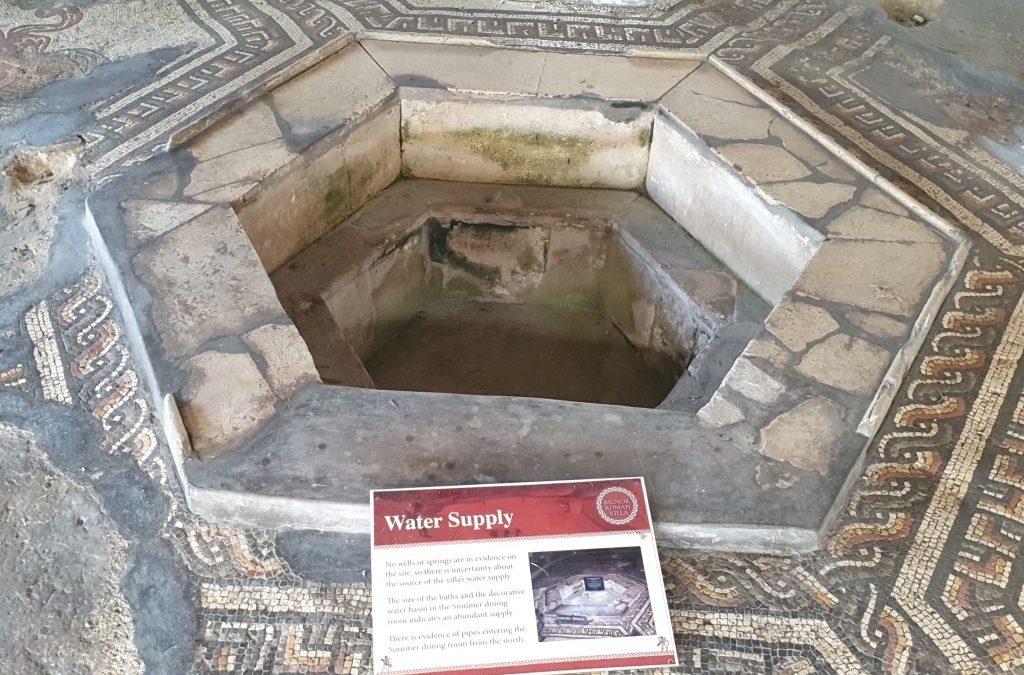
Today's Image: A Decorative Water Basin
Source: My Own Photo
Here is a text only version
tu ut illa carere diutius possis quam venerari ad caedem proficiscens solebas, a cuius altaribus saepe istam impiam dexteram ad necem civium transtulisti?
CAPUT X
[25] ibis tandem aliquando quo te iam pridem tua ista cupiditas effrenata ac furiosa rapiebat; neque enim tibi haec res adfert dolorem, sed quandam incredibilem voluptatem. ad hanc te amentiam natura peperit, voluntas exercuit, fortuna servavit. numquam tu non modo otium sed ne bellum quidem nisi nefarium concupisti. nactus es ex perditis atque ab omni non modo fortuna verum etiam spe derelictis conflatam improborum manum.
[26] hic tu qua laetitia perfruere, quibus gaudiis exsultabis, quanta in voluptate bacchabere, cum in tanto numero tuorum neque audies virum bonum quemquam neque videbis!
Need Help Understanding the Latin?
You might find it helpful to start with the Side-by-Side Version which allows you to see my own very literal translation of the text which is almost a word-for-word translation - in an attempt to make it easier to understand the Latin!
Finally come back to this page - Classical Text and you should be able to better understand and competently read the original Latin text.
Vocabulary Version
I have prepared a Vocabulary Version of the passage (link at bottom of the page) which highlights the 3057 Most Common Words in the texts of Vergil, Caesar and Cicero that we will explore on CentumVerba.com
If you are serious about building your vocabulary, the FLASHCARD set should help you learn them.
How To Read the Interactive Text
To Read the Interactive Text Below Without a Dictionary-
On a Computer: you hover over a word and get all the possible parts of speech; declensions; and conjugations of every word.
Need Help Understanding the Latin?
You might find it helpful to start with the Side-by-Side Version which allows you to see my own very literal translation of the text which is almost a word-for-word translation - in an attempt to make it easier to understand the Latin!
Finally come back to this page - Classical Text and you should be able to better understand and competently read the original Latin text.
Vocabulary Version
I have prepared a Vocabulary Version of the passage (link at bottom of the page) which highlights the 3057 Most Common Words in the texts of Vergil, Caesar and Cicero that we will explore on CentumVerba.com
If you are serious about building your vocabulary, the FLASHCARD set should help you learn them.
How To Read the Interactive Text
To Read the Interactive Text Below Without a Dictionary-
On a Phone or Tablet: don't 'hover' -'tap' the word. To remove the 'definition box' you 'tap' to the side of the text box.
INTERACTIVE DICTIONARY FREE TEXT
tu ut illa carere diutius possis quam venerari ad caedem proficiscens solebas, a cuius altaribus saepe istam impiam dexteram ad necem civium transtulisti?
You Need to be a Member to Access the Interactive Dictionary
Become a Member
CAPUT X
[25] ibis tandem aliquando quo te iam pridem tua ista cupiditas effrenata ac furiosa rapiebat;
neque enim tibi haec res adfert dolorem, sed quandam incredibilem voluptatem.
ad hanc te amentiam natura peperit, voluntas exercuit, fortuna servavit. numquam tu non modo otium sed ne bellum quidem nisi nefarium concupisti.
nactus es ex perditis atque ab omni non modo fortuna verum etiam spe derelictis conflatam improborum manum.
[26] hic tu qua laetitia perfruere, quibus gaudiis exsultabis, quanta in voluptate bacchabere, cum in tanto numero tuorum neque audies virum bonum quemquam neque videbis!
Recent Comments