
tandem -finally at last
The adverb tandem, often translated as ‘finally’ or ‘at last’, functions as more than mere temporal punctuation in classical Latin. It frequently carries emotional weight, signifying relief, frustration, or anticipation reaching its resolution. The nuanced tone of tandem is context-bound—sometimes celebratory, sometimes bitter, occasionally ironic.
Cicero uses tandem with rhetorical flair, particularly when driving home the culmination of an argument or exposing delayed justice. In his In Catilinam speeches, tandem appears pointedly: quo usque tandem abutere patientia nostra, a line trembling with exasperation. Here, tandem marks not just the chronological end of endurance but the speaker’s rising indignation. It sets the cadence for a larger emotional explosion, emphasizing the urgency behind Cicero’s accusations.
In poetic texts, tandem often introduces transformation or release. Vergil, in the Aeneid, employs it to signal closure, movement, or reprieve. When Aeneas tandem sets sail from Carthage, it denotes an agonizing turning point—after inner turmoil and divine interventions, action finally breaks through paralysis. The word functions as a hinge between contemplation and action. Similarly, in moments of battle or divine revelation, tandem conveys the arrival of clarity or climax.
Livy, whose historical prose weaves moral instruction into narrative, uses tandem to underscore turning points in civic or military struggle. The Roman people, deliberating with inertia, may tandem choose virtue; generals, after strategic delay, may tandem engage the enemy. Here tandem punctuates the lessons of history: indecision gives way to valor, hesitation yields to reform.
Horace’s lyrics draw upon tandem to balance philosophical resignation with narrative tension. Whether in pleas for moderation or commentary on fleeting pleasure, tandem reminds the reader of temporal boundaries and shifting moods. It resonates with both culmination and consequence.
Thus, tandem in classical Latin literature is more than a marker of time—it is a literary device that shapes tone, underscores emotional trajectories, and distinguishes climax from continuation. Its subtle power lies in its capacity to imply everything that came before, just as the word arrives.
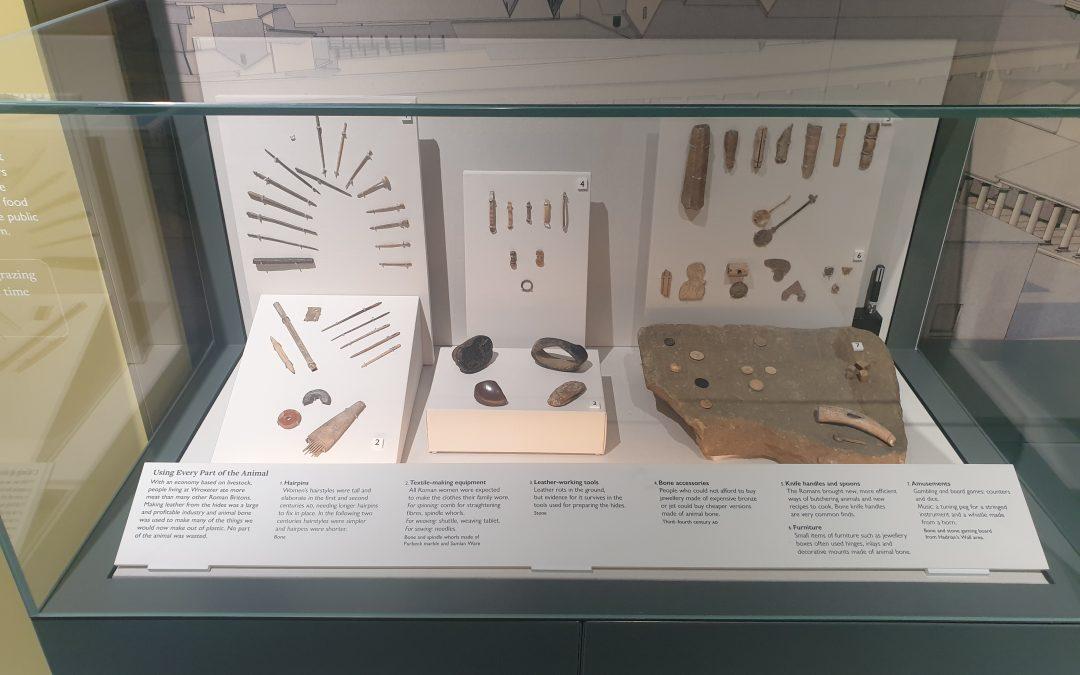
Today's Image: Roman tools and instruments made from various parts of animals
Source: My own Photo
Here is a text only version. (See below for an interactive version)
20 Tandem post multa pericula Iason in eundem locum pervenit unde olim profectus erat. Tum e navi egressus ad regem Peliam, qui regnum adhuc obtinebat, statim se contulit et vellere aureo monstrato ab eo postulavit ut regnum sibi traderetur; Pelias enim pollicitus erat, si Iason vellus rettulisset, se regnum ei traditurum.
Postquam Iason ostendit quid fieri vellet Pelias primum nihil respondit, sed diu in eadem tristitia tacitus permansit; tandem ita locutus est. “Vides me aetate iam esse confectum neque dubium est quin dies supremus mihi adsit. Liceat igitur mihi dum vivam hoc regnum obtinere; tum, postquam ego e vita discesserd, tu in meum locum venies.” Hac oratione adductus Iason respondit se id facturum quod ille rogasset.
How To Read the Interactive Text
To Read the Interactive Text Below Without a Dictionary-
On a Computer: you hover over a word and get all the possible parts of speech; declensions; and conjugations of every word.
How To Read the Interactive Text
To Read the Interactive Text Below Without a Dictionary-
On a Phone or Tablet: don't 'hover' -'tap' the word. To remove the 'definition box' you 'tap' to the side of the text box.
INTERACTIVE DICTIONARY FREE TEXT
20 Tandem post multa pericula Iason in eundem locum pervenit unde olim profectus erat.
You Need to be a Member to Access the Interactive Dictionary
Tum e navi egressus ad regem Peliam, qui regnum adhuc obtinebat, statim se contulit et vellere aureo monstrato ab eo postulavit ut regnum sibi traderetur;
Pelias enim pollicitus erat, si Iason vellus rettulisset, se regnum ei traditurum.
Postquam Iason ostendit quid fieri vellet Pelias primum nihil respondit, sed diu in eadem tristitia tacitus permansit; tandem ita locutus est. “Vides me aetate iam esse confectum neque dubium est quin dies supremus mihi adsit.
Liceat igitur mihi dum vivam hoc regnum obtinere; tum, postquam ego e vita discesserd, tu in meum locum venies.”
Hac oratione adductus Iason respondit se id facturum quod ille rogasset.
Recent Comments