
Stop Translating Latin Word by Word — Do This Instead
Almost every Latin learner begins with translating Latin word‑by‑word.
It feels careful. Responsible. Safe.
Unfortunately, it builds habits that actively interfere with reading.
Why Word‑by‑Word Translation Feels Necessary
Latin gives you very little in the order you expect:
- verbs arrive late
- subjects disappear
- adjectives wander far from their nouns
So learners compensate by tackling words one at a time, hoping meaning will emerge through accumulation.
It rarely does.
Instead, you end up with:
- half‑translated fragments
- English sentences that sound unnatural
- and constant doubt about whether you understood anything correctly
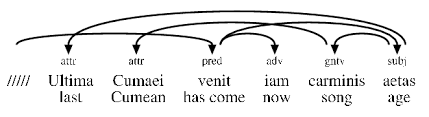
The Real Problem: False Focus
Translating Latin word-by-word assumes that every word deserves equal attention.
Latin doesn’t work that way.
Some words anchor the sentence.
Others merely ornament it.
Treating them the same overwhelms your attention and hides what actually matters.
A Better Question to Ask
Instead of starting with translation, start with orientation.
Ask:
- Where is the main verb?
- What elements are essential to this verb?
- What can safely be ignored — for now?
This does not mean guessing or skipping grammar. It means sequencing your attention.
Strong Latin readers postpone precision until structure is clear.
Reading Before Translating
Translation is not the enemy — premature translation is.
When you translate before you understand the sentence’s internal hierarchy, English becomes a distraction rather than a tool.
Once the structure is clear, translation becomes almost effortless — sometimes unnecessary.
This is how advanced readers work: they understand first, phrase second.
What to Practice Instead
When facing a Latin sentence:
1.Identify the main action.
2.Find its indispensable participants.
3.Temporarily remove anything optional.
4.Confirm meaning.
5.Reintroduce complexity deliberately.
This process mirrors how Latin itself expects to be read.
It is slower at first — and vastly faster later.
Next step:
Recent Comments