
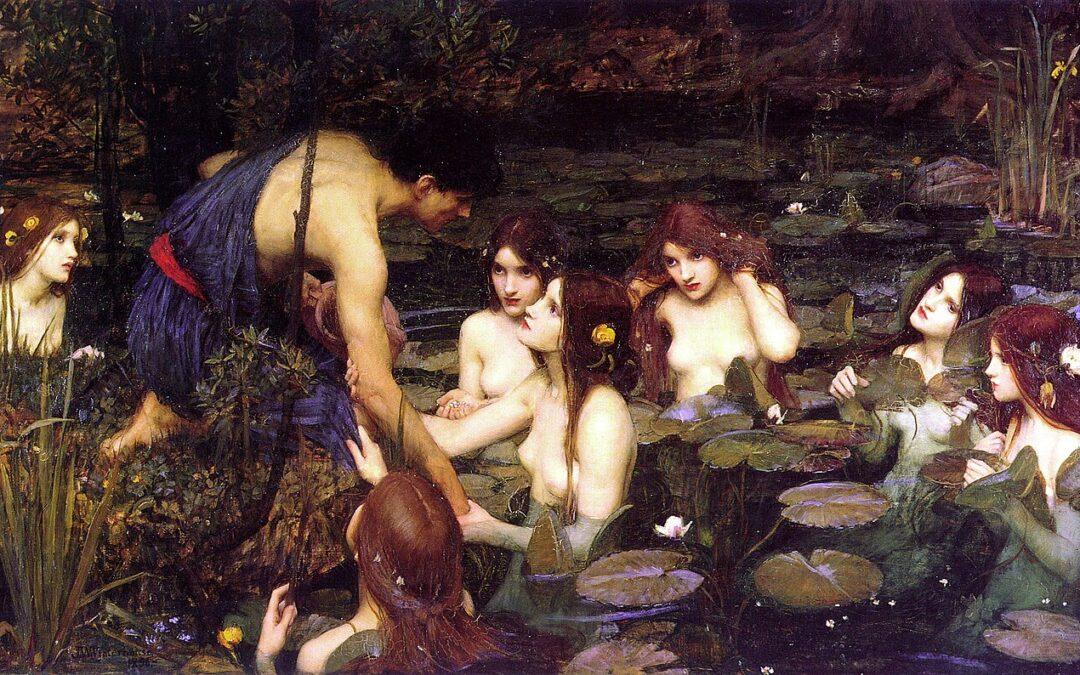
Hylas
Hylas, a handsome youth from Greek mythology, is famously known as the beloved companion of Heracles (Hercules). His story intertwines with the mythical Argonauts' journey in search of the Golden Fleece. While the Argonauts were anchored in Mysia, Hylas ventured to fetch water from a spring.
Beauty
However, his striking beauty caught the attention of the nymphs residing in the waters. Enchanted by his appearance, the nymphs reached out and pulled Hylas into the depths of the spring, wishing to keep him with them forever.
Heracles
Heracles, devoted to Hylas, embarked on a frantic search when he realized Hylas was missing. Despite his desperate efforts, Hylas was never found. This tale echoes themes of love, beauty, and loss and has been celebrated in various works of art, literature, and music throughout history. The story highlights the power of attraction and the sorrow that often accompanies beauty.
Nymphs
The legend of Hylas and the nymphs remains a poignant reminder of the fleeting nature of human life and beauty, and the mysterious allure of the natural world. It captivates imaginations and continues to inspire storytelling even today.
Today's Artwork: Hylas and a group of nymphs
Painting by: John William Waterhouse 1896
Source: Manchester Art Gallery
Here is a text only version. (See below for an interactive version)
7 Postridie eius diei Iason, tempestatem satis idoneam esse arbitratus, summa enim tranquillitas iam consecuta erat, ancoras sustulit et pauca millia passuum progressus, ante noctem Mysiam attigit. Ibi paucas horas in ancoris exspectavit; a nautis enim cognoverat aquae copiam quam secum haberent iam deficere, quam ob causam quidam ex Argonautls in terram egressi aquam quaerebant. Horum in numero erat Hylas quidam, puer forma praestantissima, qui dum fontem quaerit a comitibus paulum secesserat.
Nymphae autem, quae fontem colebant, cum iuvenem vidissent, ei persuadere conatae sunt ut secum maneret; et cum ille negaret se hoc facturum esse puerum vi abstulerunt. Comites eius, postquam Hylam amissum esse senserunt, magno dolore adfecti, diu frustra quaerebant; Hercules autem et Polyphemus, qui vestigia pueri longius secuti erant, ubi tandem ad litus redierunt, Iasonem solvisse cognoverunt.
How To Read the Interactive Text
To Read the Interactive Text Below Without a Dictionary-
On a Computer: you hover over a word and get all the possible parts of speech; declensions; and conjugations of every word.
How To Read the Interactive Text
To Read the Interactive Text Below Without a Dictionary-
On a Phone or Tablet: don't 'hover' -'tap' the word. To remove the 'definition box' you 'tap' to the side of the text box.
INTERACTIVE DICTIONARY FREE TEXT
7 Postridie eius diei Iason, tempestatem satis idoneam esse arbitratus, summa enim tranquillitas iam consecuta erat,
You Need to be a Member to Access the Interactive Dictionary
ancoras sustulit et pauca millia passuum progressus, ante noctem Mysiam attigit.
Ibi paucas horas in ancoris exspectavit; a nautis enim cognoverat aquae copiam quam secum haberent iam deficere, quam ob causam quidam ex Argonautls in terram egressi aquam quaerebant.
Horum in numero erat Hylas quidam, puer forma praestantissima, qui dum fontem quaerit a comitibus paulum secesserat.
Nymphae autem, quae fontem colebant, cum iuvenem vidissent, ei persuadere conatae sunt ut secum maneret; et cum ille negaret se hoc facturum esse puerum vi abstulerunt.
Comites eius, postquam Hylam amissum esse senserunt, magno dolore adfecti, diu frustra quaerebant; Hercules autem et Polyphemus, qui vestigia pueri longius secuti erant, ubi tandem ad litus redierunt, Iasonem solvisse cognoverunt.
Recent Comments