
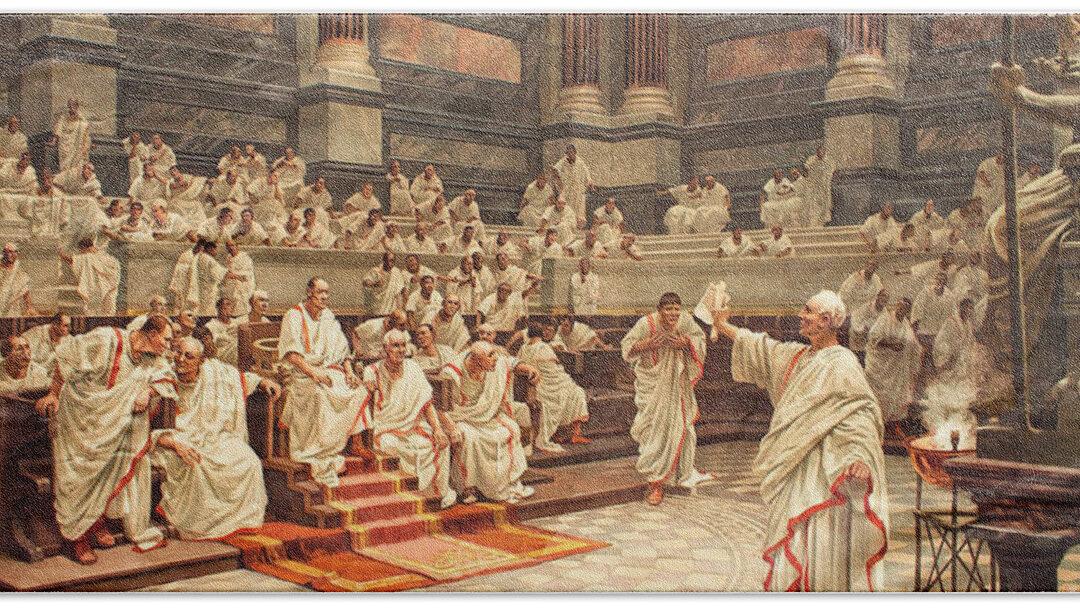
Discover the Legacy of Cicero
Marcus Tullius Cicero: Life, Works, and Legacy
Explore the profound impact of Cicero on literature and philosophy, and understand his enduring influence on Western thought.
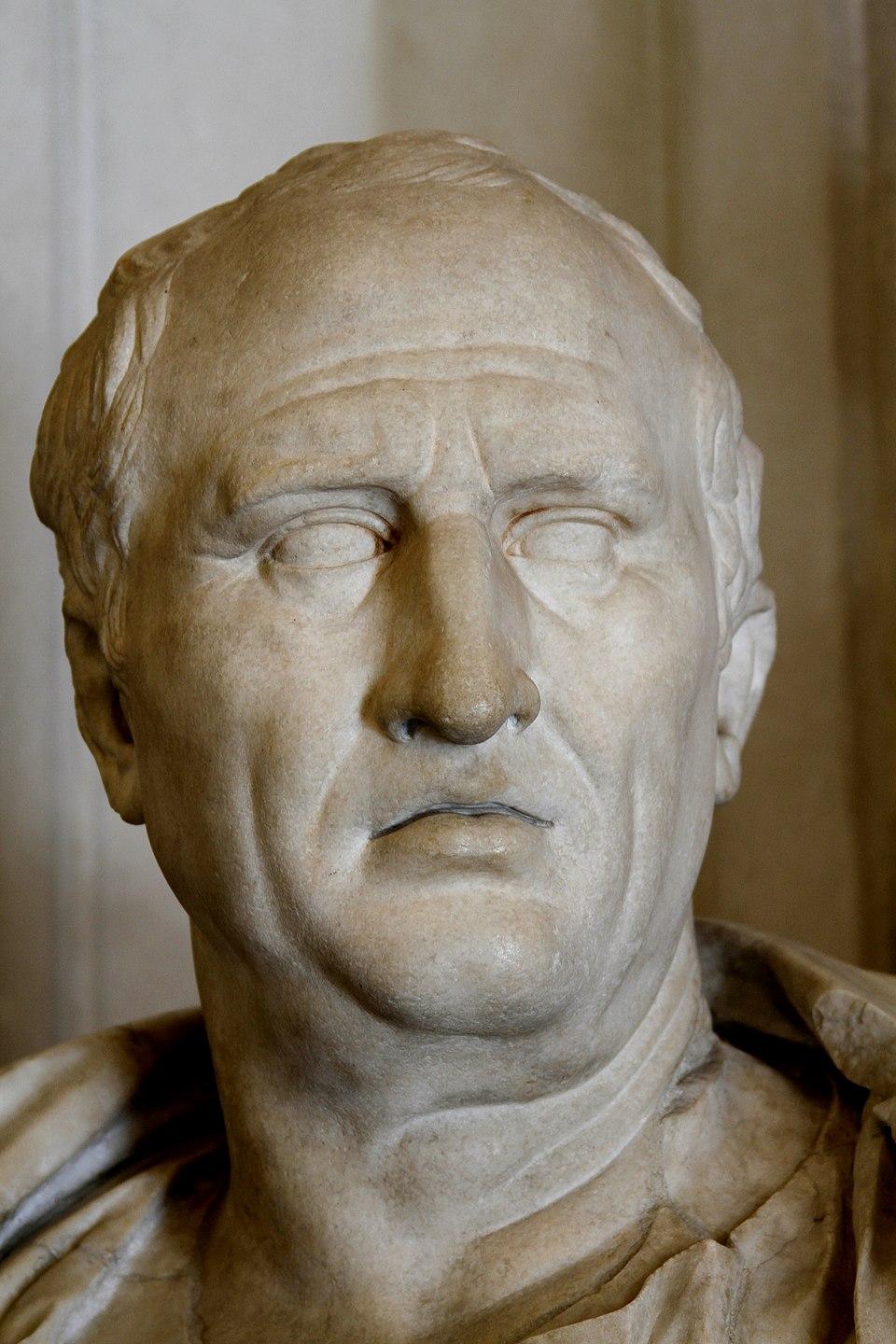
Marcus Tullius Cicero
Intro
Marcus Tullius Cicero (106–43 BC) was a Roman statesman, orator, and writer who played a pivotal role in the politics of the late Roman Republic. Renowned for his eloquence and philosophical writings, Cicero's career was marked by his efforts to uphold the principles of the Republic against the rise of autocratic power. His most notable achievements include his prosecution of the corrupt governor Verres and his staunch opposition to the dictatorship of Julius Caesar. Cicero's influence extended beyond his lifetime, as his works on rhetoric, law, and philosophy became foundational texts in Western education.
Historical Context
Cicero lived during the crisis of the late Republic:
Social War (91–88 BCE): Italian allies fought for citizenship.
Factional Struggles: Optimates vs. Populares.
Dictatorship of Sulla: Proscriptions and constitutional upheaval.
Civil Wars: Power concentrated in Pompey, Caesar, and later Antony and Octavian. Rome’s expansion brought wealth and inequality, fueling unrest. Cicero stood for constitutional order amid chaos.
Early Life
Born 3 January 106 BCE in Arpinum.
Equestrian family; educated in rhetoric and philosophy in Rome and Greece.
Influenced by Greek thought, Cicero adapted philosophical vocabulary into Latin (humanitas, qualitas).
Political Career
Quaestor (75 BCE), Praetor (66 BCE), Consul (63 BCE).
63 BCE: Exposed the Catilinarian Conspiracy, earning the title pater patriae.
Later governed Cilicia (51–50 BCE), navigated alliances with Caesar and Pompey.
Exile and Return
Exiled in 58 BCE after political clashes; recalled in 57 BCE. His later years were marked by efforts to preserve the Republic.
Philosophy and Literature
Oratory: In Verrem, In Catilinam, Philippics.
Philosophy: De Officiis, De Re Publica, Tusculanae Quaestiones.
Letters to Atticus: invaluable historical source.
Cicero codified rhetoric in De Oratore, emphasizing docere, delectare, movere (teach, delight, move).
Final Years
After Caesar’s assassination (44 BCE), Cicero opposed Antony in the Philippics. Executed in 43 BCE during the proscriptions; his head and hands displayed on the rostra.
Legacy
Model of Latin style for Renaissance humanists.
Ideas on law and republicanism influenced Augustine, Aquinas, Enlightenment thinkers, and the U.S. Founding Fathers.
Timeline
106 BCE: Birth
63 BCE: Consulship; Catilinarian Conspiracy
58 BCE: Exile
51 BCE: Governed Cilicia
44 BCE: Caesar assassinated
43 BCE: Death
Cicero's Lasting Influence
The Legacy of Marcus Tullius Cicero
Marcus Tullius Cicero, a towering figure in Roman history, has left an indelible mark on the fields of language, law, and political thought. His eloquence and mastery of Latin prose set a standard that has influenced writers and orators for centuries. Cicero's works, including his speeches and philosophical treatises, have been studied for their rhetorical brilliance and have shaped the development of the Latin language. His ideas on justice, governance, and civic duty continue to resonate, providing a foundation for modern legal and political systems. Cicero's legacy is a testament to the enduring power of words and ideas.
Beyond his linguistic contributions, Cicero's philosophical writings offer profound insights into ethics and human nature. His exploration of topics such as friendship, duty, and the nature of the gods has enriched the intellectual landscape of Western thought. Cicero's ability to blend philosophical discourse with practical political advice has made his works a valuable resource for scholars and statesmen alike. As we delve into his writings, we uncover a mind deeply engaged with the complexities of human society, offering wisdom that transcends time and continues to inspire new generations of thinkers.
The Catilinarian Conspiracy: Cicero’s Defining Moment
Background
Catiline plotted to overthrow the government, assassinate senators, and ignite rebellion. Cicero, as consul, exposed the conspiracy through four speeches—the Catilinarian Orations.
Latin Highlights from the Orations
1. Opening Challenge
Latin:
Quo usque tandem abutere, Catilina, patientia nostra?
Translation:
“How long, Catiline, will you abuse our patience?”
#Latin3057 words: quo, usque, tandem, patientia, nostra.
Rhetoric: Rhetorical question + anaphora. Creates urgency.
2. Moral Outcry
Latin:
O tempora, o mores!
Translation:
“Oh the times! Oh the customs!”
#Latin3057 words: tempora, mores.
Effect: Appeals to shared Roman values.
3. Exposure of Plot
Latin:
Nonne intellegis tua consilia esse detecta?
Translation:
“Do you not realize your plans have been exposed?”
#Latin3057 words: nonne, intellegis, tua, consilia, esse.
Effect: Logical dismantling of Catiline’s position.
4. Climactic Repetition
Latin:
Abiit, excessit, evasit, erupit.
Translation:
“He has gone, he has departed, he has escaped, he has broken out.”
#Latin3057 words: abiit, excessit, evasit, erupit.
Effect: Gradatio (climactic repetition) signals triumph.
Outcome
Catiline fled Rome; conspirators executed without trial—a controversial act that later led to Cicero’s exile. Cicero earned the title pater patriae and eternal fame.
Why It Matters
Shows the fragility of the Republic.
Demonstrates Cicero’s rhetorical genius.
Raises timeless questions about legality vs. necessity.
Reflections on Cicero's Impact
On Cicero’s Fusion of Rhetoric and Philosophy
“The harmonic fusion of political virtues, rhetorical strategies and philosophical wisdom marks out Cicero’s ideal vir bonus dicendi peritus: free from any form of dogmatism, Cicero sees the combination of good eloquence and practical philosophy as crucial to the formation of the educated politician.”
— Giuseppe La Bua, Power and Persuasion in Cicero’s Philosophy, Cambridge University Press (2023)
On Cicero’s Influence on Western Thought
“Few philosophers present themselves with as much complexity as Marcus Tullius Cicero. At once a philosopher, statesman, orator, and lawyer, Cicero consciously fashioned his own image for posterity and wrote philosophical texts as invitations for his readers to think for themselves. His philosophy has continued to unfold over the centuries, repeatedly inspiring new and independent philosophical positions.”
— Andree Hahmann & Michael Vazquez, Cicero as Philosopher: New Perspectives on His Philosophy and Its Legacy, De Gruyter Brill (2025)
On Cicero’s Role in Shaping the Concept of Philosophy
“By writing philosophical texts in Latin that achieved such a wide circulation, Cicero had a decisive influence on the growth in the western Roman world of a conception of philosophy he had not intended to promote, but which subsequently became dominant.”
— Cicero and Philosophy as Text, Classical Journal (JSTOR) [jstor.org]
On Cicero’s Rhetorical Ideal
“Cicero recognized that rhetoric was a powerful art and that it was necessary to develop virtue and integrity in those trained as orators. In De Oratore, he seeks to reunify the subjects of philosophy and rhetoric for the purpose of preparing orators to use the faculty of rhetoric for the proper ends.”
— Janessa Blythe, Rhetoric and Philosophy: Cicero’s Model for Moral Education, Baylor University Honors Thesis (2018)
On Cicero as a Symbol of Republican Crisis
“Cicero became a universal icon for the problem of political morality, which, according to ancient authors, lay at the basis of the fall of the Republic.”
— L.M. Jansen, Cicero, Statesmanship, and Republicanism in Roman Historiography, Leiden University Dissertation (2022)
On Cicero’s Enduring Role in Political Thought
“Cicero’s ideas continue to resonate because they address perennial questions of constitutionalism, social power, and the moral foundations of politics. His vision of law as rooted in reason and nature remains a cornerstone for modern debates on justice and governance.”
— Dean Hammer, Cicero’s Legacy in Contemporary Political Thought, in The Ciceronian Tradition in Political Theory, University of Wisconsin Press (2021)

Discover More About Cicero
Embark on a journey through the rich tapestry of Latin literature with CentumVerba.com. Dive into the works of Cicero and other classical authors, and experience the thrill of reading Latin with ease and understanding. Our platform offers hover-text definitions and side-by-side translations, making it simple to explore complex texts without interruption. Whether you're a seasoned scholar or a curious beginner, there's always more to discover about Cicero's profound influence on language and thought. Join us at CentumVerba.com and unlock the secrets of the past, one word at a time.
Works of Cicero (Chronological Overview)
Early Career (81–70 BCE)
- Pro Quinctio (81 BCE) — Oratory
- Pro Roscio Amerino (80 BCE) — Oratory
- Pro Q. Roscio Comoedo (77 BCE) — Oratory
- In Verrem (70 BCE) — Oratory
Consular Period (69–63 BCE)
- Pro A. Caecina, Pro M. Fonteio, Pro M. Tullio (69 BCE) — Oratory
- Pro Cluentio, Pro Lege Manilia (66 BCE) — Oratory
- In Catilinam I–IV (63 BCE) — Oratory
- Pro Murena, Pro C. Rabirio, De Lege Agraria (63 BCE) — Oratory
Exile and Return (62–57 BCE)
- Pro Archia, Pro Sulla (62 BCE) — Oratory
- Pro Flacco (59 BCE) — Oratory
- De Domo Sua, Post Reditum ad Quirites, Post Reditum ad Senatum (57 BCE) — Oratory
Middle Period (56–52 BCE)
- Pro Balbo, Pro Caelio, Pro Sestio, In Vatinium (56 BCE) — Oratory
- De Haruspicum Responsis, De Provinciis Consularibus (56 BCE) — Political
- De Oratore (55 BCE) — Rhetoric
- In Pisonem (55 BCE) — Oratory
- Pro Plancio, Pro Rabirio Postumo (54 BCE) — Oratory
- Pro Milone (52 BCE) — Oratory
Philosophical Works (51–46 BCE)
- De Re Publica, De Legibus (51 BCE) — Philosophy
- Brutus, Orator, Paradoxa Stoicorum (46 BCE) — Rhetoric / Philosophy
- Pro Ligario, Pro Marcello, De Optimo Genere Oratorum (46 BCE) — Oratory
Final Years (45–43 BCE)
- Academica, De Finibus Bonorum et Malorum, Tusculanae Disputationes (45 BCE) — Philosophy
- Pro Rege Deiotaro (45 BCE) — Oratory
- Topica, De Senectute, De Amicitia, De Divinatione, De Officiis (44 BCE) — Philosophy
- Philippicae (44–43 BCE) — Oratory

Scholarship Spotlight University of Glasgow: Matthew Fox & Catherine Steel
I owe a great deal to these two for stimulating my interest in Cicero, particularly Professor Fox, who for almost two years laboured one-on-one to help me through my degree.
Professor Matthew Fox
- Cicero’s Philosophy of History (Oxford University Press, 2007)
Explores how Cicero uses historical narrative as a philosophical tool, blending historiography and ethics.
Oxford University Press - Cicero and the Evolution of Philosophical Dialogue
In The Oxford Handbook of Roman Philosophy (2023), Fox examines Cicero’s innovation in dialogue form, situating philosophical debate in political contexts.
Oxford Handbook
Professor Catherine Steel
- Cicero, Rhetoric and Empire (Oxford University Press, 2002)
Analyzes Cicero’s rhetorical strategies and their role in shaping Roman imperial ideology.
Oxford University Press - Reading Cicero: Genre and Performance in Late Republican Rome (Duckworth, 2005)
Shows how Cicero’s speeches functioned as literary and performative texts in political life. - The Cambridge Companion to Cicero (Cambridge University Press, 2013)
Comprehensive essays on Cicero’s life, works, and influence.
Conclusion: Why Cicero Still Matters
Marcus Tullius Cicero was more than a statesman and orator—he was a thinker who bridged the worlds of politics, philosophy, and literature. His life reflects the turbulence of the late Roman Republic, and his works remain a cornerstone of classical education. From the fiery Catilinarian Orations, which saved the Republic from immediate collapse, to his philosophical treatises that shaped Western ideas of law and morality, Cicero’s legacy endures because he addressed questions that remain timeless:
- What is justice?
- How should power be exercised?
- What role does virtue play in public life?
Through his mastery of rhetoric—combining docere, delectare, movere (to teach, to delight, to move)—Cicero demonstrated that words can be weapons as powerful as armies. His speeches are not mere relics; they are living lessons in persuasion, ethics, and civic responsibility.
For learners, Cicero offers a unique opportunity: his Latin is elegant yet accessible, his arguments logical yet passionate. By studying his works, especially the Catilinarian Orations, you gain insight into both language and leadership.
Next Steps for Readers
- Explore the Latin on this website and deepen your vocabulary by going to the Vocabulary Posts.
- Read Cicero’s philosophical dialogues (even in English) to see how he wrestled with moral questions.
- Check out the Scholarship Spotlight featuring Professors Matthew Fox and Catherine Steel for modern perspectives on Cicero’s thought.
- Visit the Discover More About Cicero section for primary texts, scholarly works, and interactive tools.
Cicero’s voice still speaks across two millennia—reminding us that eloquence and integrity are the twin pillars of a free society.
Recent Comments