
ingens - it's huge
ingens a Latin adjective (genitive ingentis) means ‘huge,’ ‘vast,’ or ‘enormous.’ It is a third-declension adjective frequently used in classical Latin literature to describe immense size, extraordinary power, or overwhelming force. The word conveys a sense of grandeur and excess, making it a favorite among poets and historians.
In Virgil’s Aeneid, ingens appears frequently to describe towering figures, massive structures, and overwhelming emotions. For example, Virgil uses ingens to depict the colossal stature of warriors and the vastness of landscapes, reinforcing the epic’s themes of heroism and destiny. The word enhances the dramatic effect, making scenes more vivid and imposing.
Livy, in his Ab Urbe Condita, employs ingens to describe significant military forces and monumental events. He uses it to emphasize the scale of battles and the power of Rome’s enemies, creating a sense of urgency and grandeur in his historical narrative. The adjective helps convey the magnitude of Rome’s challenges and triumphs.
Ovid, in his Metamorphoses, applies ingens to supernatural transformations and mythical creatures. The word often appears in descriptions of gods and monsters, highlighting their extraordinary nature. By using ingens, Ovid enhances the mythical and fantastical elements of his poetry, making his stories more immersive.
The flexibility of ingens allows it to be used in various contexts, from physical descriptions to metaphorical expressions. It can describe immense sorrow, overwhelming joy, or boundless ambition, making it a versatile term in Latin literature. Its presence in poetry, history, and philosophy underscores its importance in conveying scale and intensity.
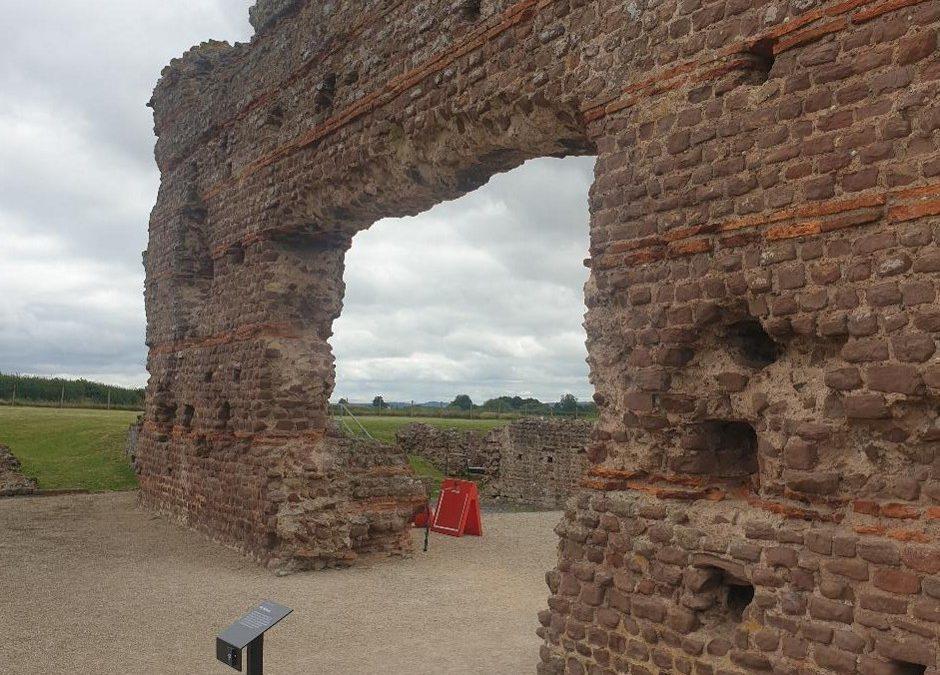
Today's Artwork: My own photo showing the largest remaining Roman wall in Britain.
Source: Wroxeter Roman City
Here is a text only version. (See below for an interactive version)
13 Ubi is dies venit quem rex ad arandum agrum edixerat, Iason orta luce cum sociis ad locum constitutum se contulit.
Ibi stabulum ingens repperit in quo tauri inclusi erant; tum portis apertis tauros in lucem traxit et summa cum difficultate iugum imposuit.
At Aeetes, cum videret tauros nihil contra Iasonem valere, magno opere miratus est; nesciebat enim filiam suam auxilium ei dedisse.
Tum Iason omnibus aspicientibus agrum arare coepit, qua in re tantam diligentiam praebuit, ut ante meridiem totum opus confecerit.
Hoc facto, ad locum ubi rex sedebat adiit et dentis draconis postulavit.
Quos ubi accepit, in agrum quem araverat magna cum diligentia sparsit.
Horum autem dentium natura erat talis ut in eo loco ubi insiti essent viri armati miro quodam modo gignerentur.
Red and Green Vocab
The words in red and green are found among the 3057 Most Common Words in the Classical Latin texts that we will explore on CentumVerba.com and are essential to your understanding of the texts of Caesar, Vergil and Cicero. The green words appear frequently (at least five times) among Vergil's Aeneid (books I-VI), Caesar de bello Gallico (books I-V) and in Cicero's works - in Catilinam (books I-IV), de lege Manilia (also known as de Imperio Cn. Pompei), and pro Achia. These works constituted the curriculum for Latin over 4 years in American High Schools at the start of the 20th Century. The bulk of my information is taken from The Vocabulary of High School Latin by Gonzalez Lodge. I have added to these 2000 words from varioius other sources to compile my own list of The 3057 Most Common Latin Words.
The black words do not appear frequently in Classical Latin.
The red words are the first occurrences of these words in this author and this word will appear as green the next time you encounter it.
If you are serious about building your vocabulary then you should learn the red words as they occur and you should already know the green ones!
I have provided a FLASHCARD set to help - see below.
How To Read the Interactive Text
To Read the Interactive Text Below Without a Dictionary-
On a Computer: you hover over a word and get all the possible parts of speech; declensions; and conjugations of every word.
Red and Green Vocab
The words in red and green are found among the 3057 Most Common Words in the Classical Latin texts that we will explore on CentumVerba.com and are essential to your understanding of the texts of Caesar, Vergil and Cicero. The green words appear frequently (at least five times) among Vergil's Aeneid (books I-VI), Caesar de bello Gallico (books I-V) and in Cicero's works - in Catilinam (books I-IV), de lege Manilia (also known as de Imperio Cn. Pompei), and pro Achia. These works constituted the curriculum for Latin over 4 years in American High Schools at the start of the 20th Century. The bulk of my information is taken from The Vocabulary of High School Latin by Gonzalez Lodge. I have added to these 2000 words from varioius other sources to compile my own list of The 3057 Most Common Latin Words.
The black words do not appear frequently in Classical Latin.
The red words are the first occurrences of these words in this author and this word will appear as green the next time you encounter it.
If you are serious about building your vocabulary then you should learn the red words as they occur and you should already know the green ones!
I have provided a FLASHCARD set to help - see below.
How To Read the Interactive Text
To Read the Interactive Text Below Without a Dictionary-
On a Phone or Tablet: don't 'hover' -'tap' the word. To remove the 'definition box' you 'tap' to the side of the text box.
INTERACTIVE DICTIONARY FREE TEXT
13 Ubi is dies venit quem rex ad arandum agrum edixerat, Iason orta luce cum sociis ad locum constitutum se contulit. You Need to be a Member to Access the Interactive Dictionary
Ibi stabulum ingens repperit in quo tauri inclusi erant; tum portis apertis tauros in lucem traxit et summa cum difficultate iugum imposuit.
At Aeetes, cum videret tauros nihil contra Iasonem valere, magno opere miratus est; nesciebat enim filiam suam auxilium ei dedisse.
Tum Iason omnibus aspicientibus agrum arare coepit, qua in re tantam diligentiam praebuit, ut ante meridiem totum opus confecerit.
Hoc facto, ad locum ubi rex sedebat adiit et dentis draconis postulavit.
Quos ubi accepit, in agrum quem araverat magna cum diligentia sparsit.
Horum autem dentium natura erat talis ut in eo loco ubi insiti essent viri armati miro quodam modo gignerentur.
I have prepared online Flashcards at CRAM.com to make learning the vocabulary much easier. I have no financial gain from you using the app as it is FREE to use.
I have created a stack of the 22 new words in this passage.
YOU NEED TO SIGN UP AS A TRIAL MEMBER TO ACCESS THE FLASHCARDS
Here is the link to the FLASHCARDS
USING THE FLASHCARD APP:
To make the most of the online Flashcards use the "Click or use spacebar to begin" and the Latin word should appear. (The 'Shuffle' button will take the cards out of alphabetical order.) Type 'H' to get the conjugation / declension of the word if you want to see it. 'H' takes tyou back to the word. Click 'See Answer' or use the Spacebar to see the English.
If you were correct or close enough then select "I was right" or else "I was wrong". After you have completed the set it will start again but it will only display the ones you got wrong.
Continue through this process to learn all the words. I hope this is helpful!
Recent Comments