
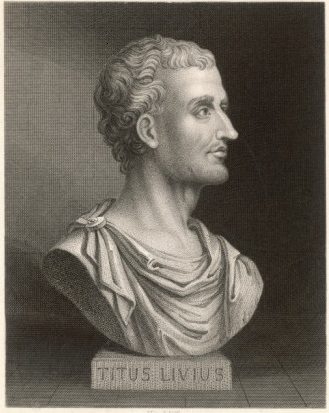
Unveiling Livy's Structural Genius
Classical Opening Sentences — Livy Opening Sentence Analysis
Livy's Opening Sentence
iam primum omnium satis constat Troia capta in ceteros saevitum esse Troianos:
Simply 'HOVER' over a word for a full Dictionary Definition
Full text at Perseus
Simply 'TAP' a word for a full Dictionary Definition
Then Tap away from highlighted text to release the definition
What Stands Out Immediately
This Livy opening sentence analysis shows that Roman history begins not with action but with judgment. Livy opens by establishing what is already agreed — not what happens first. His priority is to set an authoritative frame before introducing any movement or narrative detail.
Connecting Livy's Structure to Orientation
One Structural Choice
The anchor is satis constat — “it is sufficiently established.”
Livy could have begun with:
- the sack of Troy
- Aeneas’ escape
- the founding legends
He chooses instead to frame the entire narrative as settled history.
This single choice establishes the tone: Livy writes as a historian claiming ground, not as a storyteller entertaining uncertainty.
Highlighter Stripping System





Yellow or Not?
Yellow appears to be present — iam, primum omnium.
But both elements perform real historiographical work.
They clarify sequence, scope, and priority.
If you peel them away, Livy's stance weakens.
So: Yellow exists, but it resists removal.
Orange or Not?
Yes — Livy carries two ideas at once:
- Judgment: what is established (satis constat)
- Event: what actually happened (saevitum esse Troianos)
Neither is secondary.
They coexist in tension and must be held together.
This is where Orange does real work: it helps us see Livy opening with a layered claim, not a simple statement.
What This Reveals
Livy’s opening announces that his project is not mere narrative but historiography.
From the first sentence, we see that he:
- prioritises evaluation over plot
- presents Roman origins as a matter of consensus
- writes from a position of interpretive authority
- balances judgment and event simultaneously
This is an author who frames before he narrates.
Orientation Connection
The full course shows you how to read with them.
Recent Comments