
Summary of the Aeneid
This is a brief summary of the Aeneid, an epic poem by the Roman poet Virgil in the first century BC. Recognized as a cornerstone of classical literature, the poem delves into profound themes such as duty, and destiny. The narrative follows Aeneas, a Trojan prince, who escapes the devastation of Troy after its fall. His journey is not merely a flight from destruction; it transforms into a heroic quest to establish a new homeland in Italy with the founding of a great nation. This new land is destined to become Rome, with the pursuit symbolizing hope and renewal.
Aeneas encounters numerous challenges throughout his travels, including fierce battles, divine interventions, and personal sacrifices. His character embodies the virtues of piety and leadership, making him a model for future generations. The summary of the Aeneid highlights not only Aeneas’s physical journey but also his internal struggles and growth as a leader. Ultimately, Virgil’s work serves as a celebration of Roman values and the idea of fate. This illustrates how individual actions contribute to the larger tapestry of history. If you are interested in exploring specific books or themes further, just let me know!
At the bottom of the page, I include a link to the summary of the Aeneid Book 1.
Fall of Troy
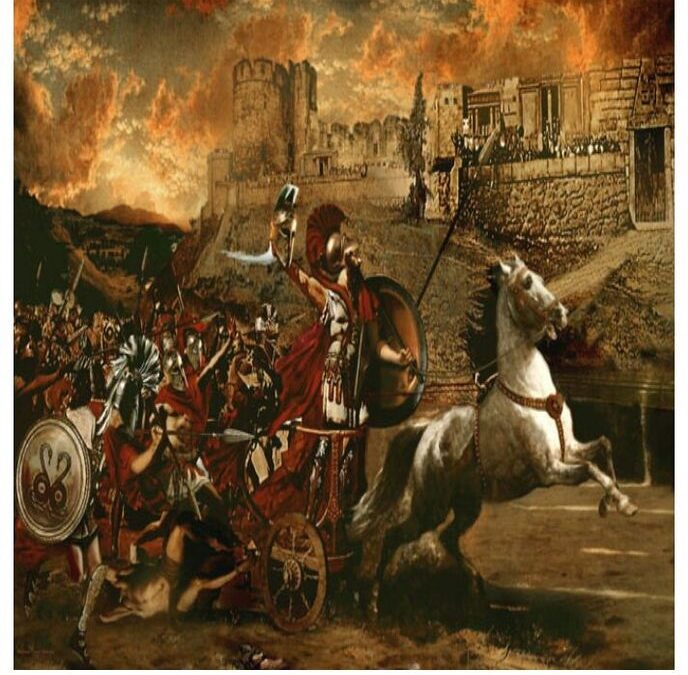
The narrative of the Aeneid follows Aeneas from the fall of Troy. As the poem opens, the Trojans are engulfed in chaos, desperately attempting to escape their burning city. The fall of Troy marks a pivotal moment, driving Aeneas and his family forward, propelled by fate and the will of the gods. Despite the overwhelming grief of his people, Aeneas emerges as a beacon of hope. He embodies the virtues of bravery, sacrifice, and resilience.
His journey is fraught with numerous challenges that test his strength and resolve. Aeneas must navigate the treacherous waters of the Mediterranean. He must face fierce storms, mythical creatures, and rival suitors who threaten his mission. Each obstacle serves to reinforce his leadership qualities, as he remains steadfast in his commitment to his people and their destiny. Throughout the epic, Aeneas’s character evolves, showcasing his ability to inspire and unite those around him. His unwavering determination to fulfil his fate cements his legacy but also lays the groundwork for the future glory of Rome. This journey from the ashes of Troy to a new homeland is a testament to the enduring human spirit.
Hostility of Juno
Central to the story of the Aeneid is the profound influence of divine beings. In particular the hostility of Juno, the queen of the gods who harbours a deep-seated grudge against the Trojans. This stemmed from the events surrounding the Trojan War and her favouritism towards the Greeks. Her relentless pursuit of Aeneas adds a significant layer of complexity to the narrative. This pursuit illustrates the intricate interplay between fate and free will. Juno’s animosity manifests in various obstacles that Aeneas must overcome. Tension and conflict result from this throughout his journey.
Despite the hostility of Juno, Aeneas is not without support. He receives guidance and encouragement from other deities, most notably Venus, his mother. Venus is fiercely protective of her son and actively seeks to ensure his triumph against the odds. The divine intervention of numerous deities heightens the epic’s tension. Aeneas must navigate both physical challenges and the supernatural hurdles posed by the gods. The struggle between Juno’s hostility and Venus’s support encapsulates the broader themes of the poem. Ultimately, Aeneas’s journey becomes a testament to resilience, as he strives to fulfil his fate amidst the capricious whims of the gods.
Journey of Aeneas
Aeneas’s journey leads him to various lands, each filled with unique challenges and encounters. One of the most significant stops is Carthage in North Africa, Here he meets Dido, the queen of Carthage, who falls deeply in love with him. This relationship serves as a poignant subplot, underscoring themes of love, loss, and duty. Aeneas’s eventual decision to leave Dido highlights the intense conflict between personal desire and public duty. His sense of destiny drives this decision. The emotional weight of this episode is profound. Dido’s despair and tragic fate reflect the sacrifices that Aeneas must make in pursuit of his mission.
Aeneas’ struggle
A central theme in the Aeneid is Aeneas' struggle to balance his feelings for Dido with the demands of fate. Initially, Aeneas is drawn to Dido and their relationship blossoms in Carthage. This provides him with a sense of comfort and love amidst the chaos of his journey. However, Aeneas is acutely aware of his destiny to found a new homeland for the Trojans in Italy. This sense of duty is deeply ingrained in him. He understands that his personal desires must ultimately take a backseat to the greater purpose laid out by the gods.
Aeneas’ Emotions
As the story unfolds, Aeneas grapples with his emotions. He feels genuine affection for Dido, yet he knows that staying with her would mean abandoning his mission. This internal conflict is poignantly illustrated when he ultimately decides to leave Carthage. Propelled by the divine mandate which he cannot ignore. His departure is heart-wrenching for both him and Dido, highlighting the tragic nature of their love. Dido’s despair and eventual fate serve as a stark reminder of the sacrifices inherent in Aeneas’s quest. This emphasises the tension between personal happiness and the responsibilities of leadership. In this way, Aeneas embodies the struggle between human emotion and the inexorable pull of destiny.
The Shores of Italy
As Aeneas continues his voyage, he reaches the shores of Italy, where he faces further challenges. This new land is not uninhabited. It is home to various tribes and fierce warriors, including Turnus, the leader of the Rutulians. The tension between Aeneas and Turnus escalates, setting the stage for inevitable conflict. Aeneas must navigate these political and military challenges while remaining true to his destiny.
Conflict between Aeneas and Turnus
The conflict between Aeneas and Turnus embodies the power struggle. A clash of cultures, and the profound consequences of war. As Aeneas arrives in Italy, he encounters Turnus who views Aeneas as a threat to his authority and the sovereignty of his people. This rivalry escalates into a dramatic confrontation. This tests Aeneas' physical prowess and challenges his resolve and commitment to his mission of founding a new civilization.
The epic battle serves as a microcosm of Aeneas’s internal conflict. While he is a warrior, Aeneas is also a leader burdened with the responsibility of his people’s future. He grapples with the weight of his destiny, knowing that he must prioritize the greater good over personal desires. Aeneas understands that his actions will have lasting repercussions for the Trojans and the native tribes.
Turnus' Hostility
Turnus’ hostility towards Aeneas is driven by several specific motivations that reflect both personal and cultural dimensions:
- Defence of Honour: Turnus feels a deep sense of honour and duty to protect his homeland and people. Aeneas’s arrival in Italy threatens the established order and Turnus’s position as a leader. He sees Aeneas as an invader who must be confronted to defend his territory.
- Cultural Clash: Turnus represents the native Italian tribes, while Aeneas embodies the Trojan legacy. The conflict symbolizes a broader clash between different cultures and ways of life, with Turnus fighting to maintain his people’s traditions against the encroaching Trojan influence.
- Divine Manipulation: The gods play a significant role in inciting Turnus’s hostility. Juno, in particular, supports Turnus and stirs his anger against Aeneas, framing the conflict as part of a larger divine plan.
- Desire for Glory: Turnus is motivated by a personal ambition for glory and recognition. Defeating Aeneas would not only solidify his status but also ensure his legacy as a great warrior.
These motivations intertwine to create a complex character whose actions are driven by a mix of personal vendetta, cultural pride, and divine influence, making the conflict between him and Aeneas both compelling and tragic.
Ultimately, the confrontation with Turnus is not just a fight for survival but a pivotal moment that defines Aeneas’s character. It forces him to reconcile his warrior instincts with his role as a founder, and the sacrifices required to fulfill one’s destiny.
Fate and Prophecy
Throughout the Aeneid, Virgil intricately weaves themes of fate and prophecy. This creates a rich tapestry that explores the complexities of destiny and free will. The concept of fate is paramount, as his journey frequently reminds him. Aeneas is guided by a predetermined destiny, one that has been foretold by the gods. This sense of inevitability shapes his actions and decisions, instilling in him a profound sense of duty.
However, the characters in the poem often engage in acts of free will that significantly influence outcomes. This interplay creates a nuanced exploration of the balance between fate and individual agency. For instance, Aeneas' choices demonstrate how personal decisions can alter the course of events.
This tension reflects the Roman belief in the importance of duty to one’s family, country, and the gods. Aeneas embodies these values, as he consistently prioritizes his responsibilities over personal desires. The moral framework within which he operates reinforces the idea that while fate may guide one’s path, it is the choices made along the way that define one’s character and legacy. Ultimately, Virgil presents a world where fate and free will coexist. These shape the destinies of both individuals and nations.
Prophecies
Prophecies play a crucial role in influencing Aeneas’s decisions throughout the Aeneid. They serve as guiding forces that shape his journey and actions. From the outset, Aeneas is aware of his destined role in founding Rome. This fate is foretold by various oracles and divine messages. These prophecies instil in him a sense of purpose and urgency. These compel him to pursue his mission despite numerous challenges.
One significant prophecy comes from the Sibyl of Cumae, who reveals Aeneas’s future and the trials he must face. This prophecy not only reinforces his commitment to his destiny but also prepares him for the obstacles ahead, including his eventual confrontation with Turnus. The knowledge of his fate encourages Aeneas to act with resolve, even when faced with personal desires, such as his love for Dido.
Moreover, prophecies often serve as reminders of the divine will, emphasizing the importance of duty to the gods and his people. Aeneas’s decisions are frequently influenced by these prophetic insights, as he strives to align his actions with the expectations set forth by fate. Ultimately, prophecies in the Aeneid highlight the interplay between destiny and individual choice, illustrating how Aeneas navigates his path while remaining true to his predetermined role.
Aeneid Summary by Book
Book 1: The Storm
Aeneas, a Trojan hero, is fleeing the fall of Troy. He and his companions are caught in a storm sent by Juno, who harbors resentment against the Trojans. They land in Carthage, where Queen Dido welcomes them.
Book 2: The Fall of Troy
Aeneas recounts the fall of Troy to Dido, describing the Greeks’ cunning use of the wooden horse. He details the destruction of the city and his escape with his father, Anchises, and son, Ascanius.
Book 3: The Journey Begins
Aeneas and his crew set sail, facing various challenges, including encounters with the Harpies and a visit to the land of the dead, where he meets his father, who reveals Aeneas’s destiny to found Rome.
Book 4: Dido’s Love
Dido falls in love with Aeneas, and they begin a passionate affair. However, Aeneas is reminded of his duty to found a new city and decides to leave, leading to Dido’s despair and eventual suicide.
Book 5: The Games
Aeneas holds funeral games in honor of his father. The Trojans face challenges from Juno, who sends storms and a rival fleet, but they ultimately prevail.
Book 6: The Underworld
Aeneas visits the Underworld, guided by the Sibyl. He meets the spirits of the dead, including Dido, and learns about the future glory of Rome.
Book 7: Arrival in Italy
Aeneas arrives in Italy and seeks an alliance with King Latinus. However, Turnus, a local warrior, opposes him, leading to tensions between the Trojans and the Latins.
Book 8: The Shield of Aeneas
Aeneas receives a magnificent shield from Vulcan, depicting the future of Rome. This symbolizes his destined role in founding the Roman Empire.
Book 9: The Siege of the Trojans
Turnus attacks the Trojan camp while Aeneas is away. The Trojans defend bravely, but the situation becomes dire as they face overwhelming odds.
Book 10: The Battle Rages
Aeneas returns to find the Trojans in peril. A fierce battle ensues, showcasing the valor of both sides. Key characters, including Pallas, are killed, heightening the stakes.
Book 11: The Death of Pallas
The Trojans mourn Pallas, who was killed by Turnus. Aeneas vows revenge, and the battle intensifies as both sides prepare for a final confrontation.
Book 12: The Duel
Aeneas and Turnus face off in a climactic duel. Despite Turnus’s bravery, Aeneas ultimately triumphs. In a moment of mercy, Aeneas hesitates but is driven by rage when he sees Pallas’s belt on Turnus, leading to Turnus’s death.
Short Summary of the Aeneid - Conclusion
In its conclusion, the Aeneid encapsulates the notion of sacrifice, highlighting the burdens of leadership. Aeneas emerges victorious, yet his triumph is shadowed by personal loss and tragedy. His journey serves as a metaphor for the struggles inherent in the foundation of Rome, illustrating that greatness often comes with hardship and sorrow. The epic concludes with Aeneas achieving his goal, but the cost of his victory is palpable, reminding readers of the profound complexities of heroism.
Piety, Duty, and Perseverance
The Aeneid is not just a powerful narrative of one man’s journey; it also reflects Roman ideals and cultural identity. Through Aeneas, Virgil emphasizes the virtues of piety, duty, and perseverance, laying the groundwork for the Roman ethos. This poem has endured through the centuries, influencing literature, art, and cultural narratives, and continues to resonate with audiences today.
This summary of the Aeneid reveals that it is more than a tale of adventure; it is a profound exploration of duty, fate, and the human experience. Aeneas’s journey illustrates the triumphs and tribulations of seeking one’s destiny while making sacrifices for the greater good. Ultimately, it becomes a symbol of resilience. Virgil’s masterful storytelling and rich characterizations create a timeless epic that invites reflection on the nature of heroism and the enduring quest for a place in the world. As readers follow Aeneas from the ashes of Troy to the shores of Italy, they are reminded of the complexities of longing, the burdens of leadership, and the indomitable spirit of humanity in the face of adversity.
Next up - The Aeneid book 1
Recent Comments