
How to Read Latin: Why Understanding Sentences Matters More Than Memorisation
Who this guide is for
This page is for learners who know Latin grammar — or have studied it before — but still struggle with how to read Latin sentences with confidence.
If you’ve memorised forms, learned rules, and accumulated vocabulary, yet still feel lost when facing authors like Caesar, Cicero, or Virgil, this guide explains why — and what to change.
Most people who study Latin are not actually trying to read it.
They are trying to survive it.
They memorise charts.
They learn rules.
They accumulate vocabulary.
And yet, when faced with a real Latin sentence — especially from an author like Caesar, Cicero, or Virgil — comprehension collapses.
This leads to a deeply discouraging conclusion:
“Latin just doesn’t make sense to me.”
In reality, Latin makes sense perfectly well.
What usually doesn’t make sense is how learners have been trained to approach it.
This page is a guide to the single most important shift in Latin learning:
moving from decoding forms to understanding sentences.
If you understand this shift, everything else gets easier.

The Real Problem: Latin Is Taught as Parts Instead of Wholes
Traditional Latin instruction often treats the language as a collection of components:
- noun endings
- verb forms
- constructions
- rules with exceptions
These are taught thoroughly — and often well.
But reading does not happen at the level of components.
Reading happens at the level of sentences.
A sentence is not just a string of parsed words.
It is a structured act of meaning: a claim, an action, a description, a command.
When learners are trained to focus on individual words first and sentences second (or not at all), they develop a habit of fragmentation.
They know what something is —
but not what it does.
👉 This problem is explored in depth in What Actually Makes Latin Sentences Hard?
What “Reading” Means in This Guide
Before going further, it’s important to be clear about terms.
In this guide, reading does not mean:
- producing a polished translation
- justifying every grammatical choice
- explaining a construction after the fact
Reading means:
recognising what a sentence is doing as it unfolds —
identifying its main action, seeing what depends on it,
and letting meaning resolve before every detail is fixed.
Grammar supports this process.
But grammar is not the starting point.
Why “Knowing the Grammar” Often Doesn’t Help
One of the most common frustrations among Latin learners sounds like this:
“I understand the grammar, but I still can’t read.”
This is not a paradox.
Grammar knowledge answers questions like:
- What case is this noun?
- What tense is this verb?
- What construction might this be?
Reading requires a different kind of awareness:
- What is the sentence asserting?
- Where is the central action?
- Which elements matter first — and which can wait?
When grammar is applied too early, it competes with understanding instead of supporting it.
Learners end up juggling too many details before the sentence has even revealed its basic structure.
👉 This sequencing problem is the focus of Grammar Isn’t the Problem — Timing Is
The Wrong Goal: Producing a Translation
Many learners — often without realising it — adopt the wrong goal.
They aim to produce a translation as quickly and accurately as possible, but this is not how to read Latin.
This habit is understandable.
It is rewarded by exams, exercises, and mark schemes.
But translation is not the same thing as reading.
Translation is a product.
Reading is a process.
A learner who can justify a translation after twenty minutes of analysis may still be unable to follow a sentence in real time.
Good reading allows understanding to arise first.
Translation, if needed, comes later — and often more easily.
Latin Sentences Are Hard Because They Delay Resolution
Latin does not behave like English.
English tends to:
- state its main action early
- signal sentence type quickly
- limit how much information is suspended
Latin often does the opposite.
Latin sentences frequently:
- delay the main verb
- open with subordinate clauses
- interleave description and action
- expect readers to hold material in memory
This is not a flaw.
It is a stylistic expectation built into the language.
But if you are trained to expect immediate clarity, Latin will feel hostile.
The problem is not your intelligence.
It is a mismatch between reader expectations and authorial design.
The Single Most Important Skill: Finding the Main Verb
If there is one skill that unlocks Latin reading, it is this:
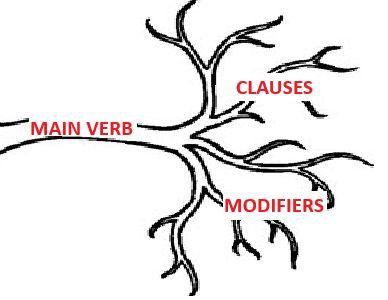
finding the governing verb — and the sentence core — before worrying about details.
Everything else depends on it.
Without the main verb:
- noun cases float without purpose
- clauses feel unanchored
- meaning dissolves into fragments
With it:
- structure snaps into place
- subordinate material makes sense
- translation becomes optional rather than necessary
This skill is rarely taught directly in how to read Latin.
Learners are often expected to infer it through exposure and correction.
👉 A clear, practical guide is given in How to Find the Main Verb in Even the Longest Latin Sentence
A Simple Illustration (No Grammar Required)
Imagine a sentence where descriptive phrases and subordinate material appear first, but the main verb arrives only at the end.
If you translate word by word, the sentence feels incoherent until the final moment.
If you locate the governing verb early, everything that precedes it suddenly has a place to attach.
Nothing about the sentence has changed.
Only the order in which you look.
Why Word‑by‑Word Translation Actively Works Against You
Many learners are taught — implicitly or explicitly — that careful reading means translating every word.
Unfortunately, word‑by‑word translation encourages the worst possible habits for Latin.
It:
- treats every word as equally important
- forces premature decisions
- turns Latin into bad English before meaning is secure
- prevents the sentence from resolving naturally
Strong readers do not translate as they go.
They understand first.
They translate later — if at all.
Virgil: Where Weak Reading Habits Are Exposed
No author reveals weak reading habits faster than Virgil.
Students often say:
- “Virgil is impossible.”
- “The poetry makes no sense.”
- “I know the grammar, but I’m lost.”
Virgil is not impossible.
He simply assumes you know how to read sentences as structures rather than strings.
He uses:
- delayed verbs
- separated adjective–noun pairs
- compressed syntax
- long‑range dependencies
If you translate him word by word, his Latin disintegrates.
If you read him structurally, it coheres.
👉 This transition is explained in Why Virgil Feels Impossible (and Why He Isn’t)

Reading Latin vs Solving Latin
At this point, an uncomfortable distinction emerges.
Many learners are excellent at solving Latin:
- identifying constructions
- justifying translations
- explaining grammar choices
- analysing sentences after the fact
But solving is not reading.
Reading is not about proof.
It is about recognition.
Reading allows:
- provisional understanding
- delayed certainty
- sentences to reveal themselves over time
Most learners get stuck because they never make this transition.
👉 This difference — and why it matters — is unpacked in Reading Latin vs Solving Latin
What Changes When You Read Sentences First
When learners shift attention from parts to structure, several things happen quickly:
- sentences stop feeling hostile
- dictionary dependence drops sharply
- confidence rises quietly
- reading speed improves without strain
Most importantly, Latin begins to feel like language rather than an examination.
Grammar does not disappear.
It finally has a job it can do well: confirming understanding instead of replacing it.
Why This Works for Adult, Self‑Taught, and AP Learners
Sentence‑first reading is especially powerful for:
- adult learners returning to Latin
- self‑taught readers outside classrooms
- AP Latin students overwhelmed by authentic texts
These learners already know a great deal.
What they lack is a reliable way to orchestrate attention inside real sentences.
Once that framework is in place, progress accelerates.
If You Remember Only One Thing
Latin becomes readable when you stop treating every word as equally urgent.
Meaning lives in structure, not accumulation.
You do not need to know more.
You need to look in the right order.
Where to Go Next
If you arrived here struggling with how to read Latin sentences, begin with these guides:
- What Actually Makes Latin Sentences Hard?
- How to Find the Main Verb in Even the Longest Latin Sentence
- Why Virgil Feels Impossible (and Why He Isn’t)
- Grammar Isn’t the Problem — Timing Is
- Reading Latin vs Solving Latin
Together, they map the transition from decoding Latin to genuinely reading it.
If you want guided, step‑by‑step practice applying these principles to real Latin — with controlled stripping, rebuilding, and explanation — that is exactly what Naked Latin is designed to teach.
Recent Comments