
Discover the Legacy of Cicero
Virgil: Life, Works, and Legacy
Few names in the history of literature resonate as powerfully as Publius Vergilius Maro, known to the world simply as Virgil.
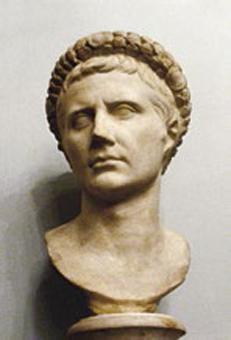
Publius Vergilius Maro
Intro
Virgil's poetry shaped Roman culture, influenced Western literature for centuries, and continues to inspire readers today. This post explores Virgil’s life, his major works, and the enduring legacy that secures his place among the greatest poets of all time.
Historical Context
- Birth and Background: Virgil was born in 70 BCE near Mantua in Cisalpine Gaul, a region recently integrated into Roman territory, giving him a provincial perspective on Roman life.
- Late Roman Republic: His lifetime coincided with the decline of the Roman Republic, marked by political instability, social unrest, and civil wars.
- Civil Wars and Land Confiscations: After Julius Caesar’s assassination in 44 BCE, Rome plunged into civil conflict. Land confiscations during the proscriptions affected Virgil personally, influencing themes of loss in his Eclogues.
- Rise of Augustus: Octavian (later Augustus) defeated Antony and Cleopatra at Actium in 31 BCE, ending decades of turmoil and establishing the Principate.
- Augustan Age: This new era emphasized peace, stability, and moral renewal. Augustus promoted literature and art as tools of propaganda to legitimize his rule.
- Virgil’s Role: Virgil became a central figure in this cultural program, producing works that aligned with Augustan ideals—Eclogues (pastoral poetry), Georgics (agricultural themes), and the Aeneid (Rome’s mythic origins).
- Ideological Themes: The Aeneid glorifies Rome’s destiny and Augustus’ leadership, presenting Aeneas as a model of pietas (duty to gods, family, and country).
- Underlying Tensions: Despite its celebratory tone, Virgil’s poetry reflects ambivalence—acknowledging the human cost of war and empire alongside national pride.
- Death and Legacy: Virgil died in 19 BCE before completing the Aeneid, but his work became foundational for Roman identity and Western literary tradition.
Early Life
Virgil was born on October 15, 70 BCE, near Mantua in northern Italy, during a period of political upheaval in the late Roman Republic. His family was of modest means, yet they provided him with an excellent education. Virgil studied rhetoric, philosophy, and medicine in Cremona, Milan, and later in Rome, but his true passion lay in poetry.
Public Life
Despite his literary fame, Virgil was known for his quiet and reserved nature. He avoided public life and political office, preferring the company of scholars and patrons. Among these patrons was Maecenas, a close advisor to Augustus, who recognized Virgil’s talent and supported his work. This relationship would prove pivotal, as Virgil’s poetry became intertwined with the cultural program of the new Roman Empire
Final Years
Virgil died in 19 BCE in Brundisium (modern Brindisi) while returning from a trip to Greece. According to tradition, he wished to burn his unfinished masterpiece, the Aeneid, but Augustus intervened and ordered its preservation—a decision that changed literary history.
Legacy and Influence
Virgil’s impact on Western culture is immeasurable. In antiquity, his works were studied as models of Latin style and moral wisdom. During the Middle Ages, Virgil was revered almost as a prophet; his Fourth Eclogue, which speaks of a miraculous child, was interpreted by Christians as foretelling the birth of Christ.
Perhaps the most famous tribute to Virgil comes from Dante Alighieri, who chose him as a guide through Hell and Purgatory in the Divine Comedy. For Dante, Virgil symbolized human reason and poetic excellence.
Virgil’s influence extends beyond literature. His themes of destiny, leadership, and resilience have inspired artists, composers, and thinkers for centuries. Today, his works remain central to classical studies and continue to captivate readers seeking beauty and meaning in the ancient world.
Major Works
Virgil’s literary career is marked by three principal works, each reflecting a different stage of his poetic development and the evolving political landscape of Rome.
- The Eclogues (or Bucolics)
Written around 39–38 BCE, the Eclogues are a collection of ten pastoral poems inspired by Greek poet Theocritus. These verses depict an idealized rural life, filled with shepherds, songs, and nature’s beauty. Beneath the surface, however, Virgil weaves subtle commentary on contemporary Roman society, including themes of land confiscation and displacement following civil wars.
- The Georgics
Composed between 37–29 BCE, the Georgics is a didactic poem in four books that celebrates agriculture and rural labor. While ostensibly a farming manual, it is deeply philosophical, exploring humanity’s relationship with nature and the moral value of hard work. Written during a time of political consolidation under Augustus, the poem reflects Virgil’s vision of stability and harmony after years of turmoil.
- The Aeneid
Virgil’s crowning achievement, the Aeneid, was written between 29–19 BCE. This epic poem of twelve books tells the story of Aeneas, a Trojan hero who journeys to Italy and becomes the ancestor of the Roman people. More than a tale of adventure, the Aeneid serves as a national epic, glorifying Rome’s origins and Augustus’s rule. Themes of duty, fate, and sacrifice permeate the work, making it both a political statement and a profound meditation on human experience.
Virgil's Lasting Influence
Virgil’s Literary Style
Virgil’s poetry is celebrated for its elegance, depth, and emotional resonance. His mastery of Latin hexameter set a standard for epic poetry, while his ability to blend myth, history, and philosophy gave his works universal appeal. The Aeneid, in particular, balances grandeur with intimacy—heroic battles alongside moments of personal grief, such as Aeneas’s farewell to Dido.
Why Virgil Still Matters
Virgil’s poetry speaks to timeless questions: What is the cost of duty? How do individuals reconcile personal desires with collective destiny? In an age of uncertainty, his vision of perseverance and hope resonates as strongly as it did two thousand years ago.
The Aeneid: Structure, Themes, Political Context, and Reception
Structure
The Aeneid is a twelve-book epic poem composed in dactylic hexameter, modeled on Homer’s Iliad and Odyssey but adapted to serve Roman ideals. The first six books recount Aeneas’ wanderings after the fall of Troy, echoing the Odyssey, while the last six describe the wars in Italy, paralleling the Iliad. This bipartite structure allows Virgil to merge Greek epic tradition with Roman destiny. Each book is carefully crafted with narrative unity, vivid imagery, and dramatic pacing, combining heroic action with moments of introspection and lyric beauty. Virgil’s integration of prophecy and divine intervention reinforces the inevitability of Rome’s imperial mission, while his use of similes, speeches, and pathos elevates the poem’s emotional depth.
Themes
Central to the Aeneid is the concept of pietas—duty to gods, family, and country—which defines Aeneas as a hero who sacrifices personal desires for collective destiny. Fate and divine will dominate the narrative, presenting Rome’s rise as preordained. Yet Virgil complicates this triumphal vision with themes of loss and suffering: Dido’s tragic love, the grief of war, and the tension between individual happiness and public obligation. The poem explores exile, identity, and the cost of empire, making it both a celebration of Roman greatness and a meditation on its human price. These themes resonate across cultures and eras, giving the Aeneid enduring relevance.
Political Context
Written during the Augustan Age, the Aeneid served as a cultural cornerstone for the new regime. Augustus sought to legitimize his power after decades of civil war by promoting ideals of stability, morality, and divine sanction. Virgil’s epic aligns with this program by tracing Rome’s origins to Aeneas, a figure embodying Augustan virtues. Prophecies within the poem explicitly link Aeneas’ mission to the eventual reign of Augustus, framing the emperor as the culmination of Rome’s destiny. However, Virgil’s nuanced portrayal of war and sacrifice suggests ambivalence: while endorsing imperial ideology, the poem acknowledges the suffering required to achieve peace.
Reception
The Aeneid quickly became Rome’s national epic, studied and memorized by generations of students. In antiquity, it was regarded as the pinnacle of Latin poetry, influencing authors from Ovid to Lucan. During the Middle Ages, Virgil was revered as a sage and even imagined as a Christian prophet, while Renaissance humanists celebrated him as a model of poetic artistry. Modern readers continue to find relevance in its exploration of exile, duty, and the moral complexities of power. Its impact extends beyond literature into art, music, and political thought, securing Virgil’s place as one of the most influential poets in history.
Reflections on Virgil's Impact
Modern Translators on Virgil’s Depth and Ambiguity
Rice University classicists Scott McGill and Susannah Wright observe that while the Aeneid is Rome’s national epic, it also transcends propaganda. They highlight Virgil’s “artistic independence,” noting that the poem navigates between celebrating imperial power and critically examining the moral complexities of conquest, suggesting Virgil subtly diverged from what Augustus might have fully endorsed. They argue this enduring tension in the text—between duty and personal cost—continues to speak powerfully to contemporary readers. [news.harvard.edu]
Literary Critics on Virgil’s Universal Significance
“Few According to eNotes, “It is impossible to imagine western literature without Virgil’s Aeneid.” The critic emphasizes how Virgil’s melding of personal emotion with collective destiny created a work that speaks not only to Roman or political identity, but to broader human experience—marking a critical shift from Homer’s heroic individualism to a more socially and morally engaged epic narrative. [enotes.com]
Scholars on Political Ambiguity and Intertextuality
In The Cambridge Companion to Virgil, Duncan F. Kennedy notes Virgil became “a mirror in which every reader found what he wished,” his epic adopted by diverse ideologies across the twentieth century—from fascism to democracy. Meanwhile Brill’s scholarship on intertextuality highlights that Virgil’s Aeneid is “first and foremost a rewriting of Homer, and an ‘ethical’ rewriting at that,” illustrating how its literary complexity stems from deep engagement with Greek models. [cambridge.org]
Medieval Interpretations: Poet and Prophet
Medieval scholars often cast Virgil in almost magical and prophetic roles. His Fourth Eclogue was widely interpreted as a messianic prophecy, with theologians like Lactantius and Eusebius presenting him as a virtuous pagan seer who foretold Christ’s birth. In legendary narratives, Virgil appears as a sorcerer and advisor—especially in Naples—while in Dante’s Divine Comedy, he guides the poet through Hell, symbolizing human reason and classical virtue even as he remained a pagan in Limbo. [en.wikipedia.org], [mail-archive.com] [cmrs.ucla.edu], [jstor.org]
Medieval Scholastic Commentary and Allegory
From late antiquity through the 12th century, Virgil was the subject of extensive scholastic commentary—by Servius, Fulgentius, and Bernard Silvestris—using allegorical readings that framed the Aeneid as moral and spiritual allegory rather than mere myth. Justin Haynes notes that medieval epics like Alexandreis and Anticlaudianus were shaped less by direct reading of Virgil and more by the interpretive traditions built around him, demonstrating the robust influence of his exegetical legacy on later Latin poetry. [cmrs.ucla.edu], [bmcr.brynmawr.edu] [bmcr.brynmawr.edu]
Renaissance Humanist Commentary
Renaissance humanists reasserted Virgil’s literary and philosophical significance. Petrarch praised him as an exemplar of moral perfection, while Cristoforo Landino offered a Platonic-allegorical reading of the Aeneid in his Disputationes Camaldulenses. David Scott Wilson-Okamura points out that Renaissance editions of Virgil were heavily annotated—the most prolifically commented classical texts of the era—attesting to the poet’s central place in education and the flourishing of scholarly debate about his meanings. [link.springer.com], [oxfordbibl...aphies.com] [oxfordbibl...aphies.com], [jstor.org]
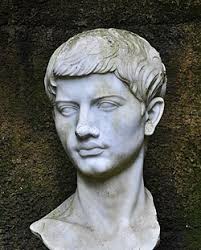
Discover More About Virgil
Embark on a journey through the rich tapestry of Latin literature with CentumVerba.com. Dive into the works of Cicero and other classical authors, and experience the thrill of reading Latin with ease and understanding. Our platform offers hover-text definitions and side-by-side translations, making it simple to explore complex texts without interruption. Whether you're a seasoned scholar or a curious beginner, there's always more to discover about Virgil's profound influence on language and thought. Join us at CentumVerba.com and unlock the secrets of the past, one word at a time.
Works of Virgil(Chronological Overview)
-
Eclogues (Bucolica) –
c. 42–39 BC
Georgics –
c. 37–29 BC
-
Aeneid –
c. 29–19 BC
Conclusion: Why Virgil Still Matters
- Virgil still matters because his works address timeless human questions and shaped the foundations of Western culture. Here are key reasons:What is justice?
- How should power be exercised?
- What role does virtue play in public life?
1. Universal Themes
The Aeneid explores duty, sacrifice, fate, and identity—issues that resonate across centuries. Aeneas’ struggle between personal desire and public responsibility mirrors dilemmas faced by individuals and societies today.
2. Literary Influence
Virgil set the gold standard for Latin poetry. His style influenced countless writers, from Dante and Milton to modern poets like T. S. Eliot and Seamus Heaney. Epic traditions in European literature owe much to Virgil’s innovations.
3. Cultural and Educational Legacy
For over two millennia, Virgil was central to education. His works taught language, rhetoric, and ethics, shaping intellectual traditions from Rome to the Renaissance and beyond.
4. Political and Moral Reflection
Virgil’s nuanced portrayal of empire—glorious yet costly—offers insights into power, leadership, and the human price of ambition. These questions remain relevant in today’s global context.
Next Step for Readers
If you enjoyed exploring Virgil’s Latin, here are some ways to deepen your understanding:
- Read More Virgil
Try a short passage from Aeneid Book I or IV. Focus on spotting familiar words and phrases before reaching for a dictionary. - Compare Translations
Look at two different English translations of the same lines. Notice how choices in tone and word order affect the meaning. - Spot the #Latin3057 Words
Highlight the most common Latin words in the passage. These are your building blocks for reading fluently. - Listen to Virgil Aloud
Hearing the rhythm of dactylic hexameter brings the poetry to life. Search for an audio recording and follow along. - Join the Conversation
Share your thoughts or questions in the comments—or post your favorite Virgil line on social media with #My100LatinWords.
Recent Comments