
Unlock the Secrets of Latin Mastery
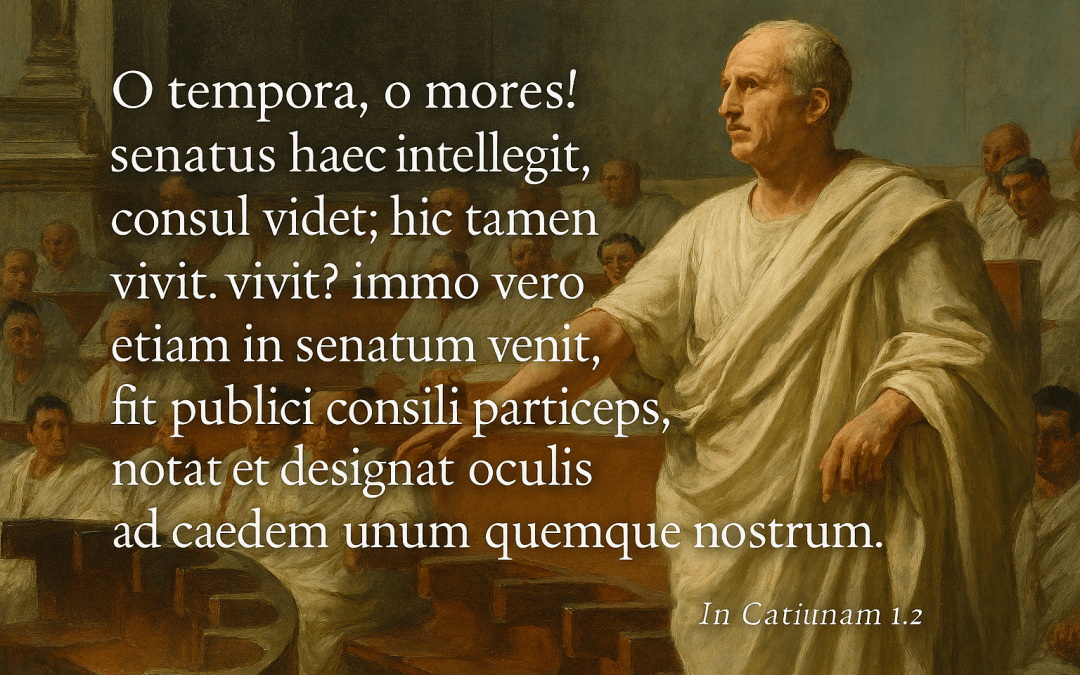
“O Tempora, O Mores! Cicero’s Outrage in In Catilinam Bk1 1.2”
Experience the thrill of reading Latin without interruptions. Our unique approach combines hover-text definitions and side-by-side translations to keep you immersed in the text.
Exploring the Depths of Latin Texts
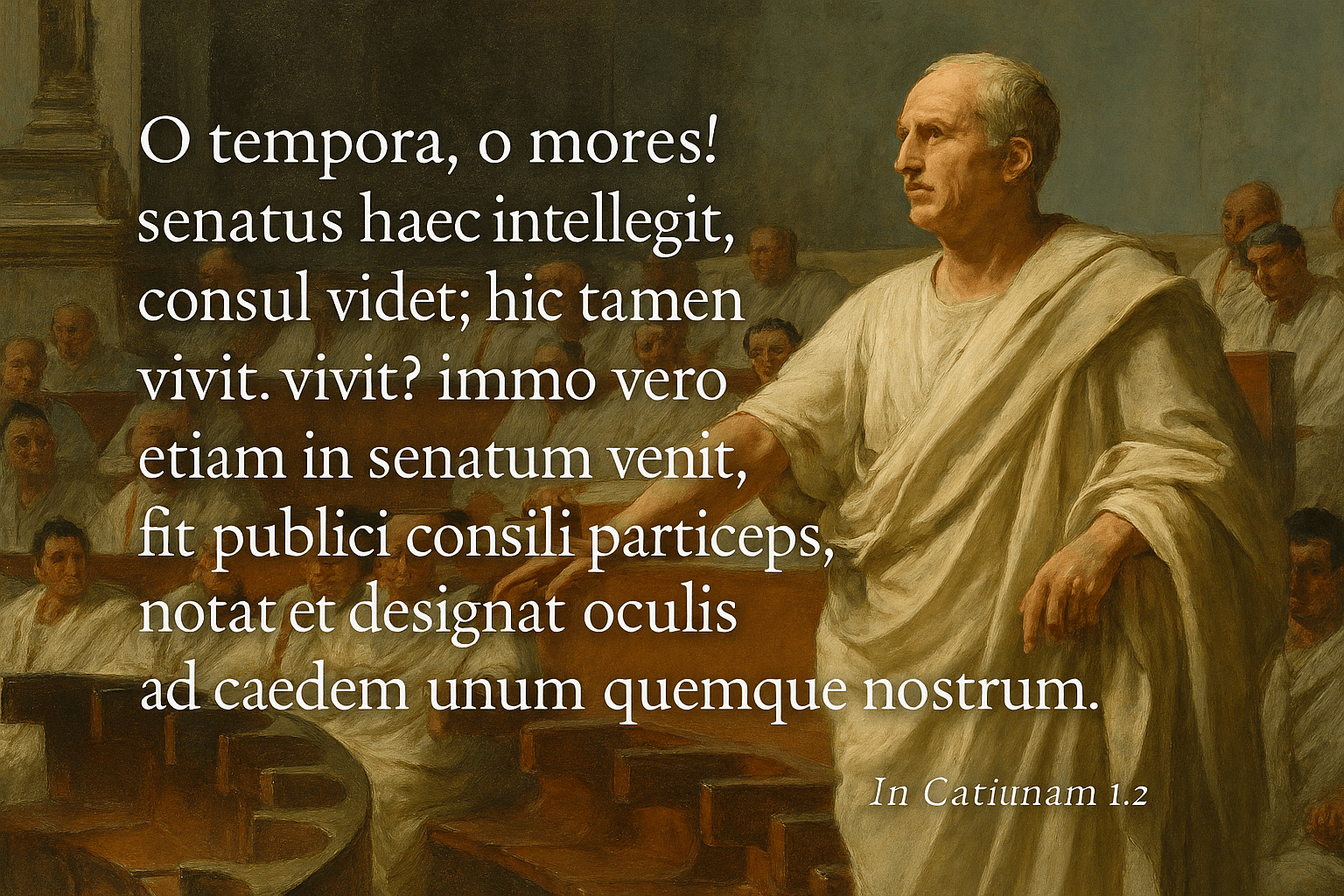
“O Tempora, O Mores! Cicero’s Outrage in In Catilinam I 1.2”
Few lines in Latin literature are as famous as O tempora, o mores!—“Oh the times! Oh the customs!” Cicero’s cry of despair sets the tone for one of the most dramatic passages in Roman oratory. Let’s explore why this section is so powerful.
1. Exclamatory Force
O tempora, o mores!
This is pure rhetorical thunder. The repetition of o and the pairing of abstract nouns (times, customs) create a sweeping condemnation of the age. Cicero isn’t just attacking Catiline—he’s indicting the moral decay of Rome.
2. Short, Punchy Clauses
senatus haec intellegit, consul videt; hic tamen vivit.
Notice the rhythm: three crisp statements, each with a strong verb (intellegit, videt, vivit). The final clause—hic tamen vivit (“yet this man lives”)—lands like a hammer blow. Cicero uses asyndeton (omitting conjunctions) for urgency.
Unveiling the Intricacies of Latin Literature
Latin literature is a treasure trove of linguistic artistry and cultural insight. Each phrase carries layers of meaning shaped by syntax, word choice, and rhetorical devices. From Cicero’s thunderous exclamations to Virgil’s measured elegance, Latin texts reveal a world where grammar becomes persuasion and vocabulary paints vivid imagery.
3. Dramatic Repetition
vivit? immo vero etiam in senatum venit…
The echo of vivit followed by a rhetorical question intensifies Cicero’s outrage. Then comes the shocking escalation: not only does Catiline live, he walks into the Senate and joins public deliberations.
4. Vivid Imagery
notat et designat oculis ad caedem unum quemque nostrum.
“He marks and designates with his eyes each one of us for slaughter.” The verbs notat and designat are chilling—Cicero paints Catiline as a predator silently choosing his victims. The phrase ad caedem (for slaughter) leaves no doubt about the t
Why This Matters
This passage is a masterclass in rhetorical escalation:
- Exclamation to shock (O tempora, o mores!).
- Rapid-fire clauses for urgency.
- Repetition and questions to dramatise outrage.
- Imagery of violence to make the danger visceral.
It’s Cicero at his most theatrical—and most persuasive.
Access to Resources
Dive Deeper into the Text
Explore the Original Work
Discover the Source Material
Join Our Latin Learning Community
Immerse yourself in the world of Latin with our engaging posts. Subscribe now to receive updates on new content and enhance your understanding of this timeless language. Don't miss out on the opportunity to deepen your knowledge and connect with fellow enthusiasts.
Recent Comments